Tuesday, February 11, 2014

"90 Minutes in Heaven"


Books in this vein are becoming a cliche. I'd like to briefly comment on this review:


i) To begin with, unless a reported NDE has veridical features, then, minimally, I'm entitled to suspend judgment about the reported experience. In the nature of the case, NDEs are essentially private experiences. Absent veridical features, an outsider can't directly evaluate the claim. I didn't experience what you allegedly did. All I have is your word for it. 

ii) Mind you, that doesn't mean inverdical NDEs are inherently suspect. We shouldn't expect all or most NDEs to have veridical features. Certain advantageous circumstances must be in place for that to happen. A controlled setting. So many NDEs could be real, but inverdical. The main value of veridical NDEs is to establish the category as a factual experience, whether or not any particular candidate is factual.

iii) An objection to Don Piper's alleged experience is that it's trite. Pedestrian. And it seems to be easily explainable in terms of projecting his materialistic interpretation of Revelation onto the underlying experience, assuming his account has any basis in fact. 

Likewise, I agree with Patton that this account reflects "folk theology." 

iv) But with those caveats duly registered, I'd like to take issue with one of Patton's objections:

His description of people. He says that he was greeted by many people who were the same age as when they died. All of these people were those that influenced him in his spiritual walk throughout his life. Yet he talks about their physical appearance for quite some time. Most interestingly, he says that they all looked the same age as when they died. While the Bible does not tell us much about the state of existence between death and resurrection (the intermediate state), it is clear that our bodies are left behind until the resurrection. It is hard for me to conceive that the disembodied souls of believers have the physical appearance of their former selves. It is even harder for me to conceive that they look the same age as when they died. In the intermediate state their is no material bodily form which causes this type of recognition. As believers, it seems best to remain agnostic about how and if others will be recognized in the intermediate state.

I find that no more puzzling than when we dream about dead relatives. 

Since departed Christians haven't been glorified, they haven't been physically rejuvenated, as of yet. So if they were to appear us, I don't find it surprising that they'd appear as we remembered them. 

In principle, they could appear much younger, but that might make them less recognizable. That would be confusing or distracting. 

I'd add that this isn't confined to the issue of NDEs. The same principle applies to apparitions or premonitory dreams. 

At the moment I'm not vouching for any of this. Just saying that if it were to happen, it wouldn't be surprising if it took this form. If anything, that's to be expected. 

Interactive dualism

http://www.whatswrongwiththeworld.net/2014/02/substance_doesnt_mean_what_you.html

Takes a lickin' and keeps on tickin'


JIM S I think it is still enormously problematic to suggest that God created Adam and Eve with a false appearance of Age.
This can be illustrated by asking whether Adam's and Eve's cells and organs had physical indicators that they had been alive for twenty (or so) years. For example, according to this scenario God presumably created Adam and Eve with adult-sized hearts. But it doesn't follow from this that these hearts bore the wear and tear of having been beating for twenty years -- he created them brand new, not with a false appearance of age. Let me reiterate that: they would have appeared adult-sized AND brand new. The claim that being created as adults means being created with an appearance of age presupposes that size and age are essentially the same thing. This is obviously false. 
Rob Bowman Another problem is that while God might make things "mature" (and therefore looking "older" than they really are), it doesn't seem likely that he would make them appear *aged* beyond their actual years. For example, God might make Adam and Eve as young adults, but he would not make them with 18 years of tooth decay or with hard callouses on their hands and feet. 

i) What does it mean to say something has the appearance of age, much less a false appearance of age? For instance, if you never saw a child before, would you infer from its appearance that the child was an immature human? Conversely, if you never saw an adult before, would you infer from its appearance that the adult was a mature human? Fact is, humans don't appear to be any particular age to an inexperienced observer.

ii) Both critics treat the body like a machine, which begins to wear out as soon as it comes into use. In a sense, car is already old if it has 100,000 miles on it, even if the car is just a year old. But is the heart of a 16-year-old like a car with 20,000 miles on the odometer? Still in great shape, but no longer as good as when it was brand-new? 

At what point does a human body begin to undergo irreversible deterioration? Is the heart of a 16-year-old like a mechanical pump that already has some wear and tear? Or does it only begin to wear out when senescence kicks in? If you could keep the teenager at 16 for 90 years, would his heart eventually wear out? Or would it keep on ticking indefinitely, so long as he stays in his youthful prime? 

Does the heart suffer from planned obsolescence? Does it have a preset number of beats? Do athletes die younger because they increase their heart rate (more beats per minute), thereby exhausting their allotment quicker? Do you die sooner if you make your heart run faster, because you used up your quota early on? 

This isn't just an academic question. If body parts and organs inevitably wear out, then a resurrection cannot confer immortality. God must repeatedly rejuvenate the saints. 

Likewise, even if God might make the light from a star reach us much earlier than its actual distance, I don't think he would make it appear that the light has been diffusing through interstellar dust for millions of years if that hadn't actually happened.

Is the speed of light designed to indicate the passage of time? Or do we simply find it convenient to treat some natural processes as if they were chronometers? 

In the end I am suspicious of all ad hoc arguments that claim that things aren't what they appear. The geocentrists in Galileo's day argued that it only appeared that moons were orbiting Jupiter. Dawkins admits that life looks designed but insists it isn't really. The YEC that the universe only looks billions of years old is the same kind of argument.

But that cuts both ways. Aren't geocentrists appealing to apparent motion? Couldn't they say heliocentricism is deceptive? 

Theologically, the question is whether that theory can avoid implying that God deliberately deceives us into thinking that the universe is older than it really is.
The analogy with Christ turning water into wine doesn't work. Christ turned the water into wine instantly, and once it was wine it functioned just like regular wine. Christ did not put the wine in bottles and label them with varying vintage dates to make it appear that some of the wine was much older than other bottles of wine.

But it's not the vintner who put a time stamp on the bottle. Rather, scientists draw inferences about the passage of time from natural processes–whose function is not to indicate the passage of time. 

The question is whether we have a justifiable expectation that these processes are reliable time-markers. Take Orson Welles reading War of the Worlds on the radio. That caused some listeners to panic. They thought it was a real news broadcast. But it's not as if Welles intended to deceive them. And who's to blame if they were spooked? Is it his fault that some listeners were gullible? Don't confuse fiction with deception. 

If all we had was the starlight problem, one of these ad hoc explanations might seem at least plausible, given one's belief that the Bible must teach an age of the universe of only some thousands of years. But the Bible doesn't teach an age of the universe or of the earth, and there are lots of other scientific evidences, independent of the starlight velocity evidence, that the world is more than several thousand years old. The YEC position must then come up with additional ad hoc explanations for all of those lines of evidence...

But if mature creation is true, then those are not in fact independent variables. 

Are theistic ethics subjective?

Here's a common objection:
Sorry buddy, your God isnt objective, because he is a person anything that is based on a person is not objective. If he was objective he would do things that are considered good INDEPENDENT of his own opinion. EVERYTHING in your worldview is just the personal emotional opinion of your god.
This is simply an equivocation with the word "subjective." Objectivity in meta-ethics concerns whether there are objective moral norms, i.e., moral principles that are transcendent, unchanging, and universally binding on humanity. The only basis for such moral norms is theistic. These are based in God’s nature, not in his emotional whims. If ethics were a standard extrinsic to God to which he must submit, he would not be God, which is incoherent.

Christian morality is rooted in the eternal will of God and the unchanging nature of God, both of which he has revealed to us and has made universally binding upon us. Yes, God is personal, but ethics must be personal by necessity in order for them to be normative. Law is an expression of God’s Covenant Lordship. This is not "subjective" in the relevant sense.

The question is how can any morality be normative without a Person who holds individuals accountable? Ethics must be personal. But it cannot merely be based in the human person or culture, otherwise it forfeits objectivity.

Another way of putting this is that ethics must be personal, but they cannot be person-variant in order to be meaningful. That is the important distinction between the two senses of the word "subjective."

The Historicity Of The Star Of Bethlehem (Part 1)

(This will be a six-part series. The whole series will be linked in a single post at the end.)

Later this year, the University of Groningen will be hosting a colloquium on the star of Bethlehem. One of the participants will be Aaron Adair, who recently wrote a book arguing against the historicity of the star (The Star Of Bethlehem: A Skeptical View [England: Onus Books, 2013]). It's been getting some media attention, like here and here. The book has a foreword by Bob Berman, an astronomer. Richard Carrier calls Adair's book "the definitive takedown" of the star's historicity.

“Creation as an epistemic source of God’s character”

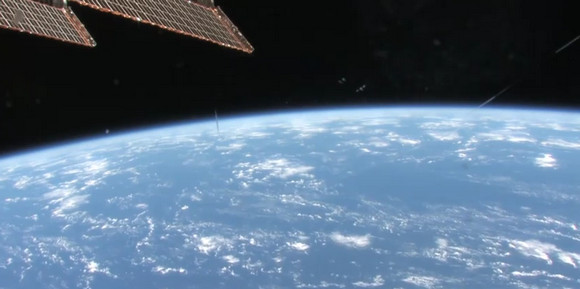
First astronaut Yuri Gagarin:
“The Earth is blue [...] How wonderful. It is amazing.”
“Humans are meant for creation; creation is our home.”

Stephen Wolfe asks, “If creation is so glorious, how ‘full of glory’ God must be?” Citing Robert Daly, he says, “If the created world was a source of beauty and delight for the Puritan poet, it was also an a fortiori argument for the beauty and generosity of its Creator and the delights He had prepared for His people….Only when compared to God and heaven do the joys of the sensible world sink to nothingness.”

Creation as an epistemic source of God’s character was an important component of early Calvinist thought. The Belgic Confession states, the “universe is before our eyes like a beautiful book in which all creatures, great and small, are as letters to make us ponder the invisible things of God: God’s eternal power and divinity.” Calvin argued that “the world was founded for this purpose, that it should be the sphere of the divine glory” and that “the very beautiful fabric of the world [is the place] in which he wishes to be seen by us.” The knowledge imparted through creation was sufficient for pre-lapsarian man to have a complete creaturely knowledge of God. But this knowledge is knowledge of God not via negativa, but through analogy. Our knowledge of God’s beauty is not univocally God’s beauty; it is his beauty as analogized ‘into’ creation. And this beauty-as-symbol communicates sufficient knowledge of God. The sufficiency of creational knowledge is an important notion to understand. We often want something more than the sufficient: we want to know God’s essence, not just mere analogy. We want to climb some chain of being and experience the divine. In our fallenness, we want to become like God (italics is the author’s; the bold face is mine).

Protology and eschatology


Norm Geisler has a new essay entitled "DOES BELIEVING IN INERRANCY REQUIRE ONE TO BELIEVE IN YOUNG EARTH CREATIONISM?"

I'd like to make a brief point. I haven't read Geisler's systematic theology, but to my knowledge, he's a dispensationalist. If, however, he combines a dispensational eschatology with an old-earth protology, then he apparently construes Ezekiel and Revelation more literally than Genesis.  

Deceptive to whom?


Rob Bowman  I mentioned one problem above -- supernova have occurred that were visible from earth and that the distance would indicate exploded 20,000 years ago, long before the stars were created according to the YEC position. I cannot think of an explanation that is not ad hoc for why God would make it look like a star exploded before he made it.

One of the things I find striking about these objections is how reversible they are. Modern critics use modern assumptions as their frame of reference for what's deceptive. But what about an ancient observer? 

To an earthbound observer, the sun looks much smaller than the earth. Actually, our sun is far larger. But it looks smaller because it's 93 million miles away. 

I assume ancient stargazers thought the sun, moon, and stars were far closer to the earth than we do. They didn't measure the universe in lightyears. They didn't know the speed of light was 186,000 miles per second,

Wouldn't our modern understanding of the cosmos be "deceptive" to them

The moon looks larger on the horizon. That's illusory. Is God deceiving us? 

To some extent, deception is culturebound. If absence of deceptive appearance is the standard of comparison, whose standard should we use? What would be deceptive to a modern audience? Or the original audience? 

If you told an ancient Israelite that the circumference of the sun was really a hundred times larger than the earth, suppose he objected because that would implicate God in a web of deception?  

Spaceship earth


Rob Bowman Theologically, the question is whether that theory can avoid implying that God deliberately deceives us into thinking that the universe is older than it really is. 
JIM S Now this scenario is extremely contrived or ad hoc. But that's not the problem I have with it: the problem I have is that it ascribes deception to God. God is painting scenes on the sky that never happened, he is manipulating the universe to make it appear differently than what it actually is. 
http://bedejournal.blogspot.com/2014/01/on-appearance-of-age-or-putting-omph-in.html

I'm struck by how many otherwise smart, sophisticated Christians think this old chestnut is a convincing objection to young-earth creationism. I'd like to make three points:

i) The disapproving description of God painting scenes on the sky that never happened is unintentionally amusing. What about parents who put starry wallpaper on the ceiling of the nursery? When their child is old enough to make the shocking discovery that those are paper stars instead of real stars, can he justifiably accuse his parents of "deliberate deception? 

ii) Communication is a two-way street. For instance, there are some literal-minded adults who are tone-deaf to satire. They never recognize satire. They always read it straight. Then someone has to painfully explain to them that it's satirical. Was the satirist guilty of deception because some readers are naive?

iii) Finally, let's take a comparison. Most of us have grew up with science fiction. The furniture of science fiction includes artificial planets. Suppose an ancient civilization built a huge space station on the edge of its solar system. Suppose they made it look like their home planet. Why? So that colonists would feel right at home. 

Suppose a catastrophe overtakes the home planet. Communications are lost. Suppose a generation grows up on the space station, not knowing that this is an artificial planet. The history of the station is long forgotten. 

Suppose a geologist makes a surprising discovery. He uncovers an elevator that takes him to a subterranean control room. The planet is actually a space station! The climate is controlled by computers. Below the organic surface, with its rocks and rivers, fauna and flora, the planet is actually made of alloys, with subterranean machinery to regulate various terrestrial and atmospheric processes.

Does the archeologist conclude that the engineers deliberately deceived the survivors? No. He simply corrects his operating assumption. He made a reasonable, but mistaken assumption that they were living on a natural planet. In fact, he admires the technology. 

Or suppose I was raised on a holodeck. I never knew any better. The holodeck was the real world. Real for me. I have no other frame of reference. 

If I later find out it was just a holodeck, do I have reason to feel betrayed? Why? Am I entitled to expect that I wouldn't or shouldn't grow up on a holodeck? Was I supposed to be informed ahead of time that this is actually a holodeck? Or is that a presumptuous expectation? 

Real life is full of surprises. Especially in the past, many people were geographically isolated. Some never saw snow. To them a frozen pond would be unimaginable.  

Monday, February 10, 2014

The One True divided church

http://www.washingtonpost.com/national/pope-francis-faces-church-divided-over-doctrine-global-poll-of-catholics-finds/2014/02/08/e90ecef4-8f89-11e3-b227-12a45d109e03_story.html

Intelligible Design

Casey Luskin reviews Intelligible Design: A Realistic Approach to the Philosophy and History of Science co-edited by Julio Gonzalo and Manuel Carreira.

Academically adrift

Bill Gates reviews the book Academically Adrift: Limited Learning on College Campuses by Richard Arum and Josipa Roksa.

Star light, star bright

"The Distance to the Stars" by Peter Pike.

Over the wall


These two articles share a common thread. Liberals love to rhetorically bemoan the haves and the have-nots, yet liberals create a society in which they are the haves. And that's a common theme in science fiction utopias. Science fiction utopias are disguised dystopias. 
On the one hand, you typically have a privileged class that exists within a "perfect" metropolis. The inhabits are the product of eugenics. They are cocooned within a technological paradise, where every creature comfort is met. Their lives are physically pampered and pleasant. 
But then you have others who subsist outside the metropolis. Outside the domed city or over the wall. It's this separation that makes the utopia possible. 
The outside world is lawless, primitive, wild. Devoid of technological amenities. 
Yet there's also a sense in which the utopian metropolis is dystopian. In order to achieve this artificial utopia, their lives must be totally regulated. All important decisions are taken out of their hands. A rulebound existence in which they have no freedom. That's the price they pay for their luxurious, risk-free existence. They are kept under round-the-clock surveillance. Any infraction, any whiff of dissent, is severely punished.  
Although existence outside utopia is rough and hazardous, the inhabitants enjoy freedom. That's the tradeoff. More control, less freedom. More freedom, less control. 

A-moonism

http://opinionator.blogs.nytimes.com/2014/02/09/is-atheism-irrational/

Elect in Christ


3 Blessed be the God and Father of our Lord Jesus Christ, who has blessed us in Christ with every spiritual blessing in the heavenly places, 4 even as he chose us in him before the foundation of the world, that we should be holy and blameless before him. In love 5 he predestined us for adoption as sons through Jesus Christ, according to the purpose of his will, 6 to the praise of his glorious grace, with which he has blessed us in the Beloved. 7 In him we have redemption through his blood, the forgiveness of our trespasses, according to the riches of his grace (Eph 1:3-7).
I'm going to comment on this post, by a Barthian universalist:
In the first place, there is no obvious why the predestination here being described could not possibly be understood in an inclusive as opposed to exclusive way.
Only if we isolate the passage from Paul's statements about eschatological judgment.
Secondly, the predestinarian affirmations are always qualified by the important locution “in Christ” (or also “in him”). The repetition of this phrase over and over again throughout the span of a few verses suggests that this is a critical aspect of Paul’s understanding of God’s predestination. As I understand Paul, he is speaking about a revelation of God’s plan and intentions which have been revealed through the story of Christ — his incarnation, life lived in obedience, death, resurrection, and ascension. Now because the election of Christ is understood from the very title christos — anointed by God for some task — it seems to me proper to understand Paul’s deriving our election from the election of Christ who acts for us; we are elect because Christ is chosen to act for us, on our behalf, in our stead, for our sake.
i) 1:4 doesn't say Christ is chosen. Christ is not the object of the verb. Christians are. 
ii) It's certainly possible that to be chosen in Christ is a compact way of saying that Christians were chosen in union with Christ, as their federal head, who acted on their behalf. That, however, doesn't furnish any evidence for universalism.
iii) Moreever, I  think that contextually, it's best to understand v4 in relation to v7. We were chosen in Christ to be redeemed in Christ. We aren't elected apart from the work of Christ. Rather, election and redemption are tightly correlated. Those, and only those, whom the Father elects, the Son redeems. 

Calvinism and the origin of sin

http://confessingourhope.com/blog/2014/02/10/calvinism-and-the-origin-of-sin/

Traffic etiquette


Bnonn is a bit mystified by his recent experience visiting the US:


Why did all the most hard-working people I met not have American accents?
White liberals support immigration to spare white liberals from working menial jobs, which–in turn–gives white liberals the leisure time to promote worthy causes like illegal immigration. 
Can you teach our drivers about stopping for pedestrians? Are red lights really like stop signs, so you can go through them if no one is coming? It makes good sense to me, but I have my doubts.
I understand how that might be confusing to a tourist. Here's a basic glossary of traffic etiquette:
Green light: finish texting your classmates
Yellow light: accelerate through intersection
Red light: proceed with caution unless police car is in view
Green Arrow: wait until arrow expires, then floor accelerator to beat oncoming traffic
Bicycle lane: bonus points for clipping bikers with Green slogans
Crosswalk: bonus points for running over pedestrians with toy dogs
Sidewalk: passing lane for rush hour 

Sunday, February 09, 2014

Evolution from the outside


i) Let's begin by considering how young-earth creationism and intelligent design theory appear to critics. To an outsider, these theories aren't driven by the evidence. It's not a positive position. Rather, they are poking holes in perceived weaknesses in evolution. They cobble together an ad hoc alternative, based on bits and pieces of unrelated scientific data. 

And, to be honest, I think there's a grain of truth to that allegation. However, I don't think that's a damning admission.

ii) Suppose, for the sake of argument, that the critics are right. Suppose that young-earth creationism is hopelessly wrongheaded. To judge by sympathetic reviews, Ken Ham gave a so-so performance in his debate with Bill Nye. He missed many opportunities.

Yet within hours of the debate, you had young-earth creationists like Jay Wile, Sal Cordova, and CMI filling in the lacunae. All it takes is a little ingenuity, a little imagination, for young-earth creationists to counter stock objections raised by Nye. 

Yet if young-earth creationism is as bad as the critics allege, one wonders why a blatantly false theory has the internal resources to field tough objections. Wouldn't you expect young-earth creationists to be at a loss if their position is that misguided? How is it that they have any comeback? 

iii) Which brings me to the next point. I began by describing how young-earth creationism appears to an outsider. But that's reversible. Looking at evolutionary biology from the outside, we could level the same objections to evolution. Darwinians aren't just following the evidence wherever it leads. Take Richard Lewontin's notorious admission:

Our willingness to accept scientific claims that are against common sense is the key to an understanding of the real struggle between science and the supernatural. We take the side of science in spite of the patent absurdity of some of its constructs, in spite of its failure to fulfill many of its extravagant promises of health and life, in spite of the tolerance of the scientific community for unsubstantiated just-so stories, because we have a prior commitment, a commitment to materialism. It is not that the methods and institutions of science somehow compel us to accept a material explanation of the phenomenal world, but, on the contrary, that we are forced by our a priori adherence to material causes to create an apparatus of investigation and a set of concepts that produce material explanations, no matter how counter-intuitive, no matter how mystifying to the uninitiated. Moreover, that materialism is absolute, for we cannot allow a Divine Foot in the door. The eminent Kant scholar Lewis Beck used to say that anyone who could believe in God could believe in anything. To appeal to an omnipotent deity is to allow that at any moment the regularities of nature may be ruptured, that miracles may happen.  
http://www.drjbloom.com/Public%20files/Lewontin_Review.htm

Now a Darwinian might object that it's unfair to keep quoting Lewontin's oft-anthologized confession. Why presume that he speaks for every secular scientist? 

But the problem with that complaint is that his statement is representative. To begin with, he explicitly champions methodological atheism. But that's hardly an idiosyncratic position. Secular scientists routinely insist on methodological atheism. It's dogma. To be sure, they usually couch their position in more diplomatic terms. They avoid his tactless, colorful characterization. But it's the same position. 

In addition, they do resort to just-so stories. They interpolate evolutionary narratives to fill in the many gaps in the natural record. Evolutionary postulates substitute for concrete evidence. So they, too, cobble together an ad hoc paradigm.

iv) Which brings me to my final point. Science has an abundance of facts at its fingertips. Many data-points. But the challenge is where to draw a line through the graph. How to connect this diversity of information into a cohesive and comprehensive explanation. Both sides of the debate start with the same facts, but arrange them differently. And that illustrates the underdetermination of theory by evidence. Science has uncovered many individually useful facts. But do they point in one direction? Getting them to line up one way rather than another often goes beyond the available evidence.  

The Moral Landscape

http://bnonn.thinkingmatters.org.nz/sam-harris-moral-landscape-challenged/

When heaven is hell


This is a sequel to my previous post:


A friend of my wondered if, when some unbelievers reportedly experience positive NDEs, that isn't hell in disguise. Let's consider how that might work.

i) As I've remarked on another occasion, one way of punishing a villain is to make him think he won. There's the initial elation before he discovers that he was tricked. This is a common plot motif. Screenwriters love to tell stories about the villain who gets his comeuppance by seeming to succeed, only to have that snatched away. This often involves a the apparent prize being swapped out for something worthless or worse. Poetic justice. 

There are many examples. Off the top of my head, here are three. In The Book of Eli, the villain (Carnegie) is hellbent on obtaining the last extant copy of the Bible. He thinks he can use the Bible as a talisman to expand his power. He will stop at nothing to get it. He murders without compunction.

He finally obtains the prize, only to find, to his consternation, that it's a Braille Bible, which he can't read. His wife can read Braille, but because he abused his wife and daughter, she refuses to do him any favors. 

Another example is The Ninth Gate, in which the villain (Boris) is determined to obtain a book of spells, which reputedly confers immorality on whoever can decrypt the message. His operatives leave a trail of bodies in pursuit of the prize. He finally gets hold if it. He imagines that he is now fireproof, which he puts to the test. Unfortunately for him, he misinterpreted the cryptic message. 

Finally, I remember an episode ("The Caterpillar") of Rod Serling's The Night Gallery which I saw as a kid. It trades on the urban legend of the earwig. Back in the days when the sun never set on the British Empire, a civil servant (Macy) is stationed in Borneo. He resides with a couple. The husband is getting up in years. But he's married to a gorgeous young wife. Macy is smitten by her, but he must eliminate the husband to have a clear shot at the wife.

He arranges with a local assassin to have an earwig planted in the husband's ear when he's sleeping. Once inside, there's not enough space for the earwig to turn around. It can only exit by eating its way through the brain of the host until it reaches the other ear. 

Next morning, the three are having breakfast when Macy feels stabbing pain in his head. He puts a napkin to his ear. The napkin is bloody. To his horror, it dawns on him that the assassin got the bedrooms mixed up. He's the victim of his own murder plot. Accidents will happen. 

He's tied to his bed (to prevent him from clawing his face off) until the earwig emerges–no doubt causing brain damage. The worst is behind him. Or so he thinks. But the doctor informs him that the earwig was pregnant, so she probably laid eggs in his brain during her journey. Eggs ready to hatch. 

ii) There's another common plot motif. Horror stories don't always begin horrifically. Indeed, they often begin idyllically. According to one trope, teenagers spend spring break at a tourist resort. At first, it's a paradise. Natural beauty. A lavish hotel. Sunshine and sandy beaches. 

But then things begin to go down hill. There's a storm. They lose power. They are cut off from the mainland. The ski boat is sabotaged. There's a psychopath on the rampage. Maybe one of their own party. 

These are fictional examples. Yet fiction sometimes illustrates our intimations of hell and just desert. 

Saturday, February 08, 2014

Hellish NDEs


One theological criticism of NDEs I've run across is that NDEs are heretical inasmuch as there are so many heavenbound NDEs in contrast to hellbound NDEs. Now, I haven't done as much study of NDEs as Jason Engwer, so I'm going to discuss the objection from a hypothetical standpoint.

i) One issue is whether we have reliable statistical data on how many unbelievers reportedly experience heavenbound NDEs, in contrast to Christians. 

ii) But here's another consideration. Let's assume, for the sake of argument, that some clinically dead patients catch a glimpse of hell before they are resuscitated. It wouldn't surprise me if hellish NDEs are underreported. (Just as it wouldn't surprise me if heavenly NDEs are overreported or misreported.) Unlike a heavenbound NDE, where there's an incentive to report it, isn't there a disincentive to report a hellbound NDE?

To take a comparison, from what I've read, many people who have horrific experiences in wartime (to take one example) may never discuss their experience. Or it may be years before they talk about. Or they may refuse to talk about it even when they are questioned about their experience. Their experience was so horrific that they try to push it as far back in their minds as they can. Try to think about anything except that searing experience.

Likewise, if you actually had a hellish NDE, it might be so unnerving, so terrifying, that it's not something you'd ever talk about. 

iii) On a related note, wouldn't it be embarrassing to say "I went to hell when I died on the operating table!" That's a pretty self-incriminating admission. That's telling other people what a terrible person you must be. How many people are going to volunteer that information?

iv) Of course, some people might tell a tale about their hellish NDE as a get-rich-quick scheme. Tell a juicy story about their wicked life as an unbeliever, then say they were converted when they had a hellish NDE. Go on TBN to recount the alleged experience. A good way to sell books. 

But, of course, we'd be justifiably skeptical about hellish NDEs of that variety. 

v) Now I'd like to make a few general observations about NDEs. There are Christians who are understandably nervous or disapproving of putting any stock in NDEs. We shouldn't crave for extrabiblical confirmation of the afterlife. We should rely on Scripture alone concerning the afterlife. To that I'd say a few things:

vi) This isn't necessarily a case of going on a quest for extrabiblical confirmation of the afterlife. Rather, reported NDEs are thrust upon us whether we like it or not. We don't have to solicit these reports or go in search of them. It's just a modern fact of life that in the age of medical science, where clinically dead patients are sometimes resuscitated, that there's going to be a cumulative record of reported NDEs. That will just proliferate over time. This fell into our lap, unbidden. So it's a question of how or whether we should respond. There's a difference between seeking evidence of the afterlife and responding to prima facie evidence of the afterlife.

vii) It's because we have the Bible that Christians are especially well-positioned to evaluate NDEs. If we vacate the field, then the interpretation of NDEs will be left to New Age pluralists. By contrast, Christians have a standard of comparison. 

viii) Of course, once you decide to evaluate NDEs, that commits you to investigate NDEs. What are the best sources? Who are the most reliable researchers? What are the most credible cases? You have to sift through the literature. Find out who's worth reading. 

ix) I think some or many Christian critics of NDEs are conflicted about corroborative evidence. It's my impression that many Christians who criticize empirical confirmation of the afterlife have no problem with empirical confirmation of other Biblical truths. They generally support Biblical archeology. They generally support scientific confirmation of Genesis. Or corroborative evidence for the historicity of the Pentateuch or the Gospels. Or corroborative evidence for the traditional date of Daniel. Or corroborative evidence for the resurrection of Christ. 

If so, it's arbitrary for them to draw the line with the afterlife. 

x) We also need to be clear on the limitations of NDE evidence. Assuming that some NDEs are veridical, the main thing they establish is the fact that human consciousness can exist apart from the brain. And I don't see any theological reason why Christians should object to empirical evidence for substance dualism. How's that essentially different from empirical evidence for other things Christians believe in? 

For instance, prolife Christians often include scientific arguments regarding conception and gestation. Likewise, Christian social conservatives cite scientific evidence promoting heteronormative behavior. 

xi) We also need to be clear on what we mean by "hell." We need to distinguish between the intermediate state of the damned and the final state of the damned. 

Soft science


According to reviews of the Ham/Nye debate, Ham drew a hardline distinction between historical sciences and observational sciences. Nye countered by citing astronomy. Ham may well have overstated the case. But it's possible to overstate the case in both directions. Can we generalized about different branches of science? Is there an overlap between observational and historical science in every branch of science? Or does Ham's dichotomy hold in some branches of science, but not others? Likewise, which branches of science intersect with creation science? For instance, paleontology has a reputation for being a soft science. 

Is Kentucky a scientific backwater?

http://blogs.answersingenesis.org/blogs/ken-ham/2014/02/08/answering-bill-nye-rebutting-nyes-argument-that-kentucky-is-backward-technologically/

Friday, February 07, 2014

Missing links

"5 Christian Arguments Left Out of the Ken Ham, Bill Nye Debate"

I'll note in passing I don't agree with everything in the article. But I'm glad to see other possible focal points in the debate over "Christianity and science" broached. At the least they help better round out what should be involved in such a debate.

"Sneering Calvinists"


A blogger for TGC recently did a post on "Sneering Calvinists." I'll just make a few brief comments:

i) I had an aunt who was a lifelong Arminian. A doctrinaire Arminian. She was one of the two most saintly Christians I ever knew. So I think it's possible for an Arminian to be a very pious, very godly Christian. Just to get that out of the way.

ii) But in my extensive experience, I'd say that, with few exceptions, Internet Arminians are the most prideful, bigoted, hypocritical professing believers I regularly encounter. 

Notice I said Internet Arminians. I think that's largely due to the fact that the Internet is a magnet for militants. Ideologues. 

I don't use that as a pejorative characterization. The Internet attracts militant Arminians, militant Lutherans, militant Catholics, militant Democrats, militant libertarians, and militant Calvinists–to name a few. To state the obvious, I myself am a militant Calvinist. 

So Internet Arminians are a self-selected subset of Arminians generally. And I think it brings out the worst of the worst. 

iii) As I've said on another occasion, I think that's largely due to the fact that Internet Arminians define themselves in reference to Calvinism. They constantly define themselves in contrast to Calvinists and Calvinism. That's the invidious frame of reference against which they measure themselves. Incessantly comparing yourself to others is bound to cultivate a prideful attitude. And it renders them impervious to self-criticism. It's the team-player mentality in excelsis. They love their own. They excuse their own. 

For a current example, just spend a few months reading the comment threads at Jerry Walls' Facebook page. 

iv) Finally, there's a stock rejoinder to this: "two wrongs don't make a right!" Just because there are bad Arminians doesn't justify your bad behavior.  

However, that rejoinder is confused on two levels:

a) To begin with, the critics single out Calvinists, alleging that Calvinists have a distinctive reputation in this regard. But if that's the charge, then it's a logical refutation to note that's not distinctive to Calvinists. It's not as if there's something about Calvinism that makes this alleged attitude more prevalent amount Calvinists. 

b) In addition, the allegation is vague. From what I've read, this usually comes down to is the fact that Arminians resent Calvinists who regard Calvinism as theologically superior to Arminianism. They bristle at that attitude.

That, however, isn't a matter of Calvinists feeling superior to Arminians, but Calvinists deeming Reformed theology to be superior to Arminian theology. That's comparing one theological tradition to another, and judging one to be better than another. There's nothing wrong with that. It's unavoidable. We ought to make those comparative assessments. And both sides of the debate do that very thing. 

Compartmentalized Christians


Secular scientists, as well as many professedly Christian scientists, espouse the uniformity of nature. They regard that as a prerequisite to science. The uniformity of nature makes nature predictable. Not only does that make it easier to extrapolate from the present to the future, but to extrapolate from the present to the past–which is important in the historical sciences. In addition, it makes it easier to interpolate. In the historical sciences, there are often gaps in the surviving evidence. If, however, nature is uniform, if the same kinds of events occur, then it's easier to postulate what happened in the absence of direct, extant evidence. Because nature is continuous, change is incremental. 

As a result, many professedly Christian scientists are scientific deists. They believe God's contribution is to put the initial conditions in place, then conserve the status quo. Everything occurs with law-like regularity.

As a further result, many professedly Christian scientists have a very compartmentalized belief system. Take Ard Louis, who's a Reader in Theoretical Physics and a Royal Society University Research Fellow at the University of Oxford. He's also a contributor to BioLogos.

What's ironic about Louis is that he's a charismatic theistic evolutionist. A charismatic who subscribes to methodological naturalism. To illustrate:

"I remember one girl who had a very severe back injury. She was in traction and about to be airlifted back home to the United States. Before she left, one of my friends prayed for her to be healed. She instantly jumped up and started running around. Though I found this incredible, I did recognize that this girl's experience of prayer and healing matched exactly what I had read in the Bible." 
On another occasion Louis was sick with the early stages of malaria. He called two of his friends to pray for him and within moments felt completely recovered. "I was sincerely shocked." Thinking that he might be imagining the change, he went to a dorm wall where he had often jumped to see how high he could touch. Now, he jumped and touched higher than he had ever done before. 
"In my work, we have a very peculiar way of looking at the world, a very powerful way we call methodological naturalism. As a Christian I can make a good argument for it. It would be odd if there were miracles in my lab or in my calculations. What I am studying are the regular ways God sustains the world. If there is a God who is faithful, then I expect his rules to be trustworthy and regular, and if God is intelligent I might even need to understand his rules. 
"I think Western cessationism comes from people acting like that all day long, and they think that's the way it is. But I don't think that's the way it is. If you read the Bible, that's not the way it was. It's particularly important for me as a scientist to be involved in something like praying for the sick because that does act on a different plane." 
Louis believes that pentecostal and charismatic Christians have a particular contribution to make to the discussion of evolution. 
T. Stafford, ed. The Adam Quest (T. Nelson 2013),  chap. 9.

Louis is oddly oblivious to the glaring ironies of his position. He's a cessationist in the lab, but a charismatic in church. 

What kind of world do we live in if God sometimes heals a terminal cancer patient in answer to prayer? That introduces an element of discontinuity into natural processes. That makes nature less linear. Less predictable. 

The outcome is no longer like a machine that always does just what it's programmed to do. For God can and sometimes does override the default setting. And that, in turn, introduces more uncertainty into historical sciences like astronomy and paleontology. 

How does Louis combine methodological naturalism, medical science, and miraculous healing? Something has to give. If God is rule-bound, then God can't intervene to miraculously heal a patient. That would interrupt the usual chain of cause and effect.

Thursday, February 06, 2014

Jonathan Sarfati's double life

Jonathan Sarfati is best-know for his day job as a creation scientist. However, our undercover reporter found out that Sarfati moonlights as the King of Hell. The photographic evidence is incontrovertible:

http://creationwiki.org/File:Jonathan_Sarfati.jpg

http://static1.wikia.nocookie.net/__cb20131123182647/supernatural/images/6/60/Crowleyseason9.jpg

The moral of the story is that it's hazardous to get on Sarfati's bad side. No wonder Dawkins will never debate him.

The One True stray sheep

http://www.reuters.com/article/2014/02/03/us-vatican-family-germany-idUSBREA121EH20140203

http://ncronline.org/print/blogs/ncr-today/german-theologians-critique-church-teachings-propose-new-sexual-understanding

http://www.spiegel.de/international/world/catholic-survey-shows-deep-frustration-within-the-church-a-946069.html

Ender's Game review

I saw Ender's Game the other day, and I thought it was really good.

Warning: spoilers ahead.

Starling murmurations

From Dr. Timothy Standish:

Why might someone, other than a Darwinist, perceive in starling murmurations a strong suggestion of design? As Jerry Coyne points out, echoing the clip from Flight, in the cold hard world of survival of the fittest, starlings that stick with the group may enhance their odds of surviving predation. But such an effect is an emergent property of the murmuration. Attributing the origin of murmurations to enhanced survival requires first that murmurations exist, thus making for a circular argument. To circumvent this problem, a Darwinist might invoke cooption. Maybe the ancestors of modern starlings gathered together for some other practical purpose and then, in a lucky coincidence, gained the survival advantage provided by murmurations. But think about the resources consumed by daily migrations followed by considerable time flying about with other starlings. It's unclear why any other proposed reason for investing resources this way would not be equally vulnerable to the criticism of circularity.

Flying in formation has advantages that humans quickly recognized once we mastered powered flight. The most obvious of these involves multiple sets of eyes looking out for enemies or obstacles. If human intelligence can figure this out, perhaps clever starlings can as well. But if there is a genetic component to the behavior -- a reasonable assumption given that starlings form murmurations wherever they are in the world while other birds do not -- then a mechanism for creating the required genetic changes would need to anticipate the need fulfilled by murmurations. Darwinian evolution is blind and unguided, incapable by definition of anticipating anything. In the case of human flight, various types of formation flying were developed in anticipation of a need. Generally that was to survive during battles in the air. Formation flying is not something that pilots stumbled upon in the middle of a dogfight then stuck with; it is a solution to an anticipated need. Intelligence alone has been shown to have produced such solutions.

When it comes to design and murmurations, the elephant in the room is the other abilities birds must possess to achieve the phenomenon. They must have the inclination to fly long distances and to congregate. They must have the ability to navigate, the ability to fly, the ability to perceive and react to the other birds they are flying with, and any number of other wonders. Most people, scientists or not, can see this; but Darwinism demands that we turn a blind eye to such things.

One might note, finally, that understanding starling murmurations in terms of design liberates us from a depressing view: that life is nothing more than a struggle for survival. Perhaps starlings share the same joy humans experience in reuniting at the end of the day. Perhaps as they dance this spectacular dance, they enjoy the warmth of one another's company. Dancing, you might imagine, has to be more fun up in the air. When you have observed murmurations on a lovely clear evening, the argument from beauty to intelligent design is only natural. Perhaps in witnessing this, we share some of the joy that starlings themselves feel.

(Source)