
Showing posts with label Poetry. Show all posts
Showing posts with label Poetry. Show all posts
Saturday, May 16, 2020


Saturday, February 15, 2020
George Herbert
Herbert was a major Anglican poet and devotional writer. His work is edifying for contemporary Christians:
https://www.youtube.com/watch?v=TFOWyCe3N0E
https://www.youtube.com/watch?v=TFOWyCe3N0E
Tuesday, November 19, 2019
Milton's flawed masterpiece
1. Milton's Paradise Lost is a flawed masterpiece. Now, when a great artist fails by overreaching, his work may still touch heights of genius that flawless work by a lesser artist can only dream of. But it's interesting to ask what makes a flawed masterpiece flawed?
2. Part of the problem is the unrelieved heavy style. It becomes oppressive and monotonous.
3. Then there's the subject matter. The plot operates on two levels: the fall of Adam and the fall of Lucifer. Now Gen 1-3 doesn't provide much material to scale up into an epic poem. Mind you, life in the garden could be fleshed out in some detail, but that doesn't interest Milton. He doesn't seem to have the romantic view of natural scenery. And domesticity isn't his forte. That demands the lighter touch of a lyric poet rather than an epic poet. Shakespeare or Racine could expand on the relationship of the first couple, but that's not Milton's metier.
4. Regarding the fall of Adam, Eve is the protagonist while Lucifer is the Tempter. But I doubt that's dramatically satisfying for Milton since they are so ill-matched. There's no contest. Moreover, given Milton's very masculine outlook, a woman is not an adequate protagonist to face off with Lucifer. Indeed, in the original account, the Tempter presumably picked on her because she was more vulnerable.
But even Adam would be no match for Lucifer. Whether or not Lucifer is smarter than Adam and Eve, he's certainly more sophisticated and experienced. And he enjoys the tactical advantage that they are unsuspecting.
5. Scripture says even less about the fall of angels than the fall of Adam. However, that gives Milton free rein to fill out the backstory with his own imagination.
In heaven, the Son is the protagonist while Lucifer is the antagonist. In principle, that's more promising dramatic material. Milton gravitates to larger-then-life figures. And he can flesh it out on heroic scale in a way he can't do with life in the garden.
6. But there's a catch. And that is Milton's low Christology. There are scholarly debates about whether he was a closet Arian (or Socinian). If he was, then that generates tensions in the characterization.
7. In one respect it simplifies his task. The backstory requires him to assign a motive for the fall of angels. If the Son is merely an eminent creature, like the Archangel Michael, then the celestial civil war is ignited by sibling rivalry. Many angels resent the Father exalting the Son over them because he's not essentially their superior. So, from a dramatic standpoint, that explains their resentment.
Moreover, it provides dramatic parity between the protagonist and the antagonist. Lucifer and the Son are the same kind of beings.
8. But if that's the implicit Christological presupposition of the plot, then that comes at a twofold cost. First of all, Milton must conceal his low Christology to garner a favorable reception for his poem. Arianism was a crime. So that leaves an unresolved tension in the characterization–he can't afford to relieve the tension by laying his cards on the table. It's unclear to the reader what exactly the Son is? What's his ontological relationship to the angels? Is he one of them? That would explain why they bristle at his promotion, which comes at the corollary cost of their demotion. But Milton dare not make that explicit, so the crucial psychological dynamic remains fuzzy.
9. The other dramatic toll this exacts is that if Lucifer and the Son are both creatures, both angels, then this becomes a plot trope about fraternal rivalry, where the father is guilty of favoritism. On the one hand is the good son. The dutiful, submissive, obedient son. And on the other hand is the independent son. The bad boy.
And in general, the audience finds bad boy characters more appealing than good boy characters. Good boy characters are usually a foil for bad boy characters. The good boy, the loyal son, is insipid, docile, and domesticated–while the bad boy, the rebellious son, is virile and daring.
It also means that Milton can't help having a sneaky admiration for the character of Lucifer, because Milton himself was so manly. For that reason, the characterization of the Son does not and cannot ignite his dramatic imagination in the same way as the characterization of Lucifer. So that's another point of tension. Not in terms of how the characters relate to each other, but how the poet relates to his characters.
One might object that that's too anthropomorphic, but if Milton is tacitly operating with a low Christology, then that's not anthropomorphic. Lucifer and the Son are metaphysically two of a kind.
Friday, September 06, 2019
Cowper's grave

Last Sunday I posted a little bit of the story of William Cowper's conversion as background for his hymn There Is a Fountain Filled with Blood. I'd like to be able to tell you that his conversion immediately solved all his problems, but it wasn't so. Cowper continued to suffer bouts of mental illness throughout his life, and his conversion didn't keep him from attempting suicide again, either. He'd come from a family with mental illness in its history, but beyond that, he'd been a sensitive child who had suffered greatly in his younger years. Little William's mother died when he was six, and his father almost immediately shipped him off to boarding school, where he was, by his own account, treated cruelly.
Thursday, April 04, 2019
"No crying he makes"
"Away in a Manger" is a favorite Christmas carol. (I prefer the Kirkpatrick tune.) The line "no crying he makes" is often chided as Gnostic or Docetic. It's true that the sentiment may be unrealistic, although babies don't cry all the time.
However, I think the criticism is overly censorious. The problem is that hymnodists must function within a very restrictive scheme of rhythm and rhyme. That severely limits the choice of words, since stanzas must be metrical with rhyming couplets. If one line ends with "awakes," then the next line must end with a rhyming word–preferably with the same number of syllables. The challenge is finding two rhyming words that can be used to form meaningful, contextual sentences. Once you write a sentence with "awakes" as the end rhyme of the first line, that commits you to whatever is available for the next line.
Of course, if you can't compose a good matching sentence, then you should choose a different pair of words. However, the carol wasn't written by a master lyricist like Charles Wesley, so it's less rhetorically resourceful or theologically alert. In addition, the general theme of the carol limits the topical range of sentences at the disposal of a lyricist.
To chide the implicit Christology expressed in one line over-interprets the sentiment. It's just a way to round out the first line, consistent with poetic meter and rhyming couplets. There's no sinister theological agenda lurking behind the phrase.
Sunday, July 01, 2018
My soul thirsts for God
I thirst, but not as once I did,
The vain delights of earth to share;
Thy wounds, Emmanuel, all forbid
That I should seek my pleasures there.
It was the sight of thy dear cross
First wean'd my soul from earthly things;
And taught me to esteem as dross
The mirth of fools and pomp of kings.
I want that grace that springs from thee,
That quickens all things where it flows,
And makes a wretched thorn like me
Bloom as the myrtle, or the rose.
Dear fountain of delight unknown!
No longer sink below the brim;
But overflow, and pour me down
A living and life-giving stream!
For sure of all the plants that share
The notice of thy Father's eye,
None proves less grateful to his care,
Or yields him meaner fruit than I.
(William Cowper)
Tuesday, February 11, 2014
“Creation as an epistemic source of God’s character”
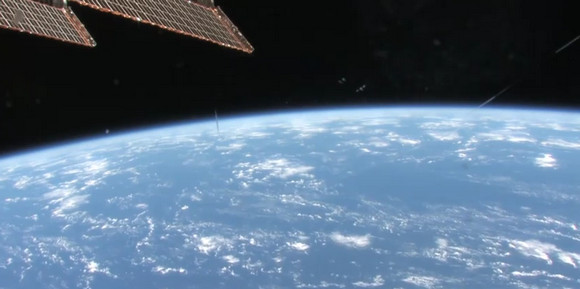 |
| First astronaut Yuri Gagarin: “The Earth is blue [...] How wonderful. It is amazing.” |
Stephen Wolfe asks, “If creation is so glorious, how ‘full of glory’ God must be?” Citing Robert Daly, he says, “If the created world was a source of beauty and delight for the Puritan poet, it was also an a fortiori argument for the beauty and generosity of its Creator and the delights He had prepared for His people….Only when compared to God and heaven do the joys of the sensible world sink to nothingness.”
Creation as an epistemic source of God’s character was an important component of early Calvinist thought. The Belgic Confession states, the “universe is before our eyes like a beautiful book in which all creatures, great and small, are as letters to make us ponder the invisible things of God: God’s eternal power and divinity.” Calvin argued that “the world was founded for this purpose, that it should be the sphere of the divine glory” and that “the very beautiful fabric of the world [is the place] in which he wishes to be seen by us.” The knowledge imparted through creation was sufficient for pre-lapsarian man to have a complete creaturely knowledge of God. But this knowledge is knowledge of God not via negativa, but through analogy. Our knowledge of God’s beauty is not univocally God’s beauty; it is his beauty as analogized ‘into’ creation. And this beauty-as-symbol communicates sufficient knowledge of God. The sufficiency of creational knowledge is an important notion to understand. We often want something more than the sufficient: we want to know God’s essence, not just mere analogy. We want to climb some chain of being and experience the divine. In our fallenness, we want to become like God (italics is the author’s; the bold face is mine).
Tuesday, December 03, 2013
Friday, August 02, 2013
Borrowed Rage
Why do the heathen rage--
With borrowed moral outrage
Standing on the top rung of a ladder in the air
The height of Babel's Tower, built without foundation
Why do the peoples plot in vain--
The vanity of ethical criticism
Of the Lord and his Anointed Word
Graded by a test key not in possession
Why does the culture sit--
On the lap of the Father to slap his face
Intolerant of his intolerance, infuriated by his wrath
Pharisaical students of a law they have stolen
Why do the kings of the earth set themselves--
Against the Creator's righteous standards
Claiming rights and freedoms
Endowed by their Creator
He who sits in heaven laughs
And holds them in derision
The derision of ironic judgments, poetic justice
Condemned by the mouth that condemns God's condemnation
With borrowed moral outrage
Standing on the top rung of a ladder in the air
The height of Babel's Tower, built without foundation
Why do the peoples plot in vain--
The vanity of ethical criticism
Of the Lord and his Anointed Word
Graded by a test key not in possession
Why does the culture sit--
On the lap of the Father to slap his face
Intolerant of his intolerance, infuriated by his wrath
Pharisaical students of a law they have stolen
Why do the kings of the earth set themselves--
Against the Creator's righteous standards
Claiming rights and freedoms
Endowed by their Creator
He who sits in heaven laughs
And holds them in derision
The derision of ironic judgments, poetic justice
Condemned by the mouth that condemns God's condemnation
Sunday, June 02, 2013
Memory
I
I nursed it in my bosom while it lived,
I hid it in my heart when it was dead;
In joy I sat alone, even so I grieved
Alone and nothing said.
I shut the door to face the naked truth,
I stood alone—I faced the truth alone,
Stripped bare of self-regard or forms or ruth
Till first and last were shown.
I took the perfect balances and weighed;
No shaking of my hand disturbed the poise;
Weighed, found it wanting: not a word I said,
But silent made my choice.
None know the choice I made; I make it still.
None know the choice I made and broke my heart,
Breaking mine idol: I have braced my will
Once, chosen for once my part.
I broke it at a blow, I laid it cold,
Crushed in my deep heart where it used to live.
My heart dies inch by inch; the time grows old,
Grows old in which I grieve.
II
I have a room whereinto no one enters
Save I myself alone:
There sits a blessed memory on a throne,
There my life centres.
While winter comes and goes—oh tedious comer! —
And while its nip-wind blows;
While bloom the bloodless lily and warm rose
Of lavish summer.
If any should force entrance he might see there
One buried yet not dead,
Before whose face I no more bow my head
Or bend my knee there;
But often in my worn life’s autumn weather
I watch there with clear eyes,
And think how it will be in Paradise
When we’re together.
Wednesday, March 06, 2013
Up-hill

Does the road wind up-hill all the way?
Yes, to the very end.
Will the day’s journey take the whole long day?
From morn to night, my friend.
But is there for the night a resting-place?
A roof for when the slow dark hours begin.
May not the darkness hide it from my face?
You cannot miss that inn.

Shall I meet other wayfarers at night?
Those who have gone before.
Then must I knock, or call when just in sight?
They will not keep you standing at that door.
Shall I find comfort, travel-sore and weak?
Of labour you shall find the sum.
Will there be beds for me and all who seek?
Yea, beds for all who come.

(Images from Michael Wimmer.)
Sunday, February 17, 2013
A second childhood

When all my days are ending
And I have no song to sing,
I think that I shall not be too old
To stare at everything;
As I stared once at a nursery door
Or a tall tree and a swing.
Wherein God’s ponderous mercy hangs
On all my sins and me,
Because he does not take away
The terror from the tree
And stones still shine along the road
That are and cannot be.
Men grow too old for love, my love,
Men grow too old for wine,
But I shall not grow too old to see
Unearthly daylight shine,
Changing my chamber’s dust to snow
Till I doubt if it be mine.
Behold, the crowning mercies melt,
The first surprises stay;
And in my dross is dropped a gift
For which I dare not pray:
That a man grow used to grief and joy
But not to night and day.
Men grow too old for love, my love,
Men grow too old for lies;
But I shall not grow too old to see
Enormous night arise,
A cloud that is larger than the world
And a monster made of eyes.
Nor am I worthy to unloose
The latchet of my shoe;
Or shake the dust from off my feet
Or the staff that bears me through
On ground that is too good to last,
Too solid to be true.
Men grow too old to woo, my love,
Men grow too old to wed;
But I shall not grow too old to see
Hung crazily overhead
Incredible rafters when I wake
And I find that I am not dead.
A thrill of thunder in my hair:
Though blackening clouds be plain,
Still I am stung and startled
By the first drop of the rain:
Romance and pride and passion pass
And these are what remain.
Strange crawling carpets of the grass,
Wide windows of the sky;
So in this perilous grace of God
With all my sins go I:
And things grow new though I grow old,
Though I grow old and die.
(G.K. Chesterton)
Wednesday, January 30, 2013
When I say I am a Christian
My 14-year-old daughter was moved strongly enough by a graphic of this little poem to post it on her Facebook status:
WHEN I SAY, "I AM A CHRISTIAN"
When I say, "I am a Christian"
I'm not shouting, "I’ve been saved!"
I'm whispering, "I get lost!
That's why I chose this way"
When I say, "I am a Christian"
I don't speak with human pride
I'm confessing that I stumble—
Needing God to be my guide
When I say, "I am a Christian"
I'm not trying to be strong
I'm professing that I'm weak
And pray for strength to carry on
When I say, "I am a Christian"
I'm not bragging of success
I'm admitting that I've failed
And cannot ever pay the debt
When I say, "I am a Christian"
I don't think I know it all
I submit to my confusion
Asking humbly to be taught
When I say, "I am a Christian"
I'm not claiming to be perfect
My flaws are all too visible
But God believes I'm worth it
When I say, "I am a Christian"
I still feel the sting of pain
I have my share of heartache,
Which is why I seek His name
When I say, "I am a Christian"
I do not wish to judge
I have no authority...
I only know I'm loved
Used by Permission
Copyright 1988 Carol Wimmer
WHEN I SAY, "I AM A CHRISTIAN"
When I say, "I am a Christian"
I'm not shouting, "I’ve been saved!"
I'm whispering, "I get lost!
That's why I chose this way"
When I say, "I am a Christian"
I don't speak with human pride
I'm confessing that I stumble—
Needing God to be my guide
When I say, "I am a Christian"
I'm not trying to be strong
I'm professing that I'm weak
And pray for strength to carry on
When I say, "I am a Christian"
I'm not bragging of success
I'm admitting that I've failed
And cannot ever pay the debt
When I say, "I am a Christian"
I don't think I know it all
I submit to my confusion
Asking humbly to be taught
When I say, "I am a Christian"
I'm not claiming to be perfect
My flaws are all too visible
But God believes I'm worth it
When I say, "I am a Christian"
I still feel the sting of pain
I have my share of heartache,
Which is why I seek His name
When I say, "I am a Christian"
I do not wish to judge
I have no authority...
I only know I'm loved
Used by Permission
Copyright 1988 Carol Wimmer
Sunday, October 02, 2011
Christina Rossetti
Christina Rossetti was one of the great Christian women in church history. Of course, church history is chock-full of great women, but most of them live and die in obscurity. They are wives, sisters, mothers, and grandmothers rather than public figures.
What sets Rossetti apart from most other great Christian women is her eloquent piety. She had a rare gift for expressing her life and faith.
Many of her books are now available online:
Wednesday, March 23, 2011
Heaven overarches
Heaven overarches earth and sea,
Earth-sadness and sea-bitterness;
Heaven overarches you and me:
A little while and we shall be
(Please God) where there is no more sea
Nor barren wilderness.
Heaven overarches you and me
And all earth's gardens and her graves:
Look up with me, until we see
The day break and the shadows flee;
What tho’ tonight wrecks you and me,
If so tomorrow saves?
-Christina Rossetti
Earth-sadness and sea-bitterness;
Heaven overarches you and me:
A little while and we shall be
(Please God) where there is no more sea
Nor barren wilderness.
Heaven overarches you and me
And all earth's gardens and her graves:
Look up with me, until we see
The day break and the shadows flee;
What tho’ tonight wrecks you and me,
If so tomorrow saves?
-Christina Rossetti
Monday, November 01, 2010
Ode to the New Atheists
New Atheists like to put on a front they pretend heroic,
To pat one on the back, and call the other a stoic
But in this world they built from visions so myopic
One sad event exposes all they made as mere sophomoric.
For you see the castles they have built are sculpted hypocrisy
Denying all eternity in pursuit of expediency.
Yet when push comes to shove you’ll find interdependency
Between their claims and the morals they identify as deviancy.
For lo!, when things are looking up, the atheist is quite sure
That morals are delusions, tricks to make you feel secure.
But in reality there is nothing at all that is impure
(If there’s one thing that is certain, on this they’re not demure!)
They fight against all claims of virtue, any standards of behavior.
“We are good for goodness sake; we need not your Savior.”
They’ll do it all their own way, saying “We’ll keep that for which we labor.
While we tend to our own needs, you go grovel for your neighbor.”
They claim morality is a lie, a deceit of evolution’s wheel.
It’s nothing but serendipity, a matter of how you feel.
There’s no standard, it’s all relative, and it’s best that you steel
Yourself rather than bend the knee and kneel.
Yet let just one of them kick the bucket and they become the greatest moralists!
Telling you what you dare not say, they’re always there to assist
And order you to “shut up, shut up!”—and how they do persist
With a zeal that makes up for all the times their morals have been missed!
Let the one who died be a champion striving for non-faith
And suddenly they all realize that nowhere for them is safe;
So lashing out like little kids, they attack and they strafe
Their own troops they’ve put forth, like some evil haunted wraith.
For suddenly they’ve discovered laws that apply to you and me.
No longer are they opinion. No! They’re dogma, can’t you see?
You must submit to their demands, it is a moral decree
That one not inform the atheists of their fate in eternity.
For that would be too insensitive—wait for the corpse to cool
And give them time to forget how they live but as a tool
To the bleakness of a future built without sanity’s rule.
Truly, the more they whine and cry, the more they play the fool.
So take these hypocrites away, be done with them at last.
They played loose and free, and it ended in a blast.
And now they’re left with a mess to clean in the filth that they’ve amassed
In a wasted life spent in their own void, so infinite and vast.
Preach not to me, you atheist, you lying hypocrite
Who now deigns to condemn all that you would so easily permit
Were it not for but just one man whose body merely quit.
Such is your “virtue”, and we all know, that it is not legit.
To pat one on the back, and call the other a stoic
But in this world they built from visions so myopic
One sad event exposes all they made as mere sophomoric.
For you see the castles they have built are sculpted hypocrisy
Denying all eternity in pursuit of expediency.
Yet when push comes to shove you’ll find interdependency
Between their claims and the morals they identify as deviancy.
For lo!, when things are looking up, the atheist is quite sure
That morals are delusions, tricks to make you feel secure.
But in reality there is nothing at all that is impure
(If there’s one thing that is certain, on this they’re not demure!)
They fight against all claims of virtue, any standards of behavior.
“We are good for goodness sake; we need not your Savior.”
They’ll do it all their own way, saying “We’ll keep that for which we labor.
While we tend to our own needs, you go grovel for your neighbor.”
They claim morality is a lie, a deceit of evolution’s wheel.
It’s nothing but serendipity, a matter of how you feel.
There’s no standard, it’s all relative, and it’s best that you steel
Yourself rather than bend the knee and kneel.
Yet let just one of them kick the bucket and they become the greatest moralists!
Telling you what you dare not say, they’re always there to assist
And order you to “shut up, shut up!”—and how they do persist
With a zeal that makes up for all the times their morals have been missed!
Let the one who died be a champion striving for non-faith
And suddenly they all realize that nowhere for them is safe;
So lashing out like little kids, they attack and they strafe
Their own troops they’ve put forth, like some evil haunted wraith.
For suddenly they’ve discovered laws that apply to you and me.
No longer are they opinion. No! They’re dogma, can’t you see?
You must submit to their demands, it is a moral decree
That one not inform the atheists of their fate in eternity.
For that would be too insensitive—wait for the corpse to cool
And give them time to forget how they live but as a tool
To the bleakness of a future built without sanity’s rule.
Truly, the more they whine and cry, the more they play the fool.
So take these hypocrites away, be done with them at last.
They played loose and free, and it ended in a blast.
And now they’re left with a mess to clean in the filth that they’ve amassed
In a wasted life spent in their own void, so infinite and vast.
Preach not to me, you atheist, you lying hypocrite
Who now deigns to condemn all that you would so easily permit
Were it not for but just one man whose body merely quit.
Such is your “virtue”, and we all know, that it is not legit.
Saturday, July 03, 2010
Psalm 8
When I consider all your work, the trim
Consumption fusion makes of hydrogen
In constellations without number, then
Reflect on orbits scattered at your whim,
Each mathematically sure and prim,
Or think of suns and moons not seen by men,
Of space in light-years raised to powers of ten,
Then what is man, that you remember him?
And not just man, but every hair upon
His head, each sitting down, each rising up,
Each turning-point and how it's lost or won,
Each tear, each boisterous laugh, each bitter cup.
That I, a speck of cosmic dust, should be
Both known and loved by you, transfixes me.
(D.A. Carson; PDF)
Consumption fusion makes of hydrogen
In constellations without number, then
Reflect on orbits scattered at your whim,
Each mathematically sure and prim,
Or think of suns and moons not seen by men,
Of space in light-years raised to powers of ten,
Then what is man, that you remember him?
And not just man, but every hair upon
His head, each sitting down, each rising up,
Each turning-point and how it's lost or won,
Each tear, each boisterous laugh, each bitter cup.
That I, a speck of cosmic dust, should be
Both known and loved by you, transfixes me.
(D.A. Carson; PDF)
Tuesday, February 03, 2009
Trusting in the dark
From B.B. Warfield:
Said Robert Leighton, holy man,From Francis Thompson:
Intent a flickering faith to fan
Into a steady blaze --
"Behold yon floweret to the sun,
As he his daily course doth run,
Turn undeclining gaze."
"E'en when the clouds obscure his face,
And only faith discerns the place
Where in the heavens he soars,
This floweret still, with constant eye,
The secret places of the sky
Untiringly explores."
"Look up, my soul! What can this be
But Nature's parable to thee?
Look up, with courage bright!
The clouds press on thee, dense and black,
Thy Sun shines ever at their back --
Look up and see His light!"
But (when so sad thou canst not sadder)From William Blake:
Cry; -- and upon thy so sore loss
Shall shine the traffic of Jacob's ladder
Pitched betwixt Heaven and Charing Cross.
Yea, in the night, my Soul, my daughter,
Cry, -- clinging to Heaven by the hems;
And lo, Christ walking on the water,
Not of Gennesareth, but Thames!
Think not thou canst sigh a sighFrom George Herbert:
And thy Maker is not by;
Think not thou canst weep a tear
and thy Maker is not near.
O! he gives to us his joy
That our grief he may destroy;
Till our grief is fled and gone
He doth sit by us and moan.
Thou that hast giv'n so much to me,From John Donne:
Give one more thing, a grateful heart.
Since I am coming to that holy room,From Christina Rossetti:
Where, with Thy choir of saints for evermore,
I shall be made Thy music; as I come
I tune the instrument here at the door,
And what I must do then, think here before;
Whilst my physicians by their love are grown
Cosmographers, and I their map, who lie
Flat on this bed, that by them may be shown
That this is my south-west discovery,
Per fretum febris, by these straits to die;
I joy, that in these straits I see my west;
For, though those currents yield return to none,
What shall my west hurt me? As west and east
In all flat maps -- and I am one -- are one,
So death doth touch the resurrection.
Is the Pacific sea my home? Or are
The eastern riches? Is Jerusalem?
Anyan, and Magellan, and Gibraltar?
All straits, and none but straits, are ways to them
Whether where Japhet dwelt, or Cham, or Shem.
We think that Paradise and Calvary,
Christ's cross and Adam's tree, stood in one place;
Look, Lord, and find both Adams met in me;
As the first Adam's sweat surrounds my face,
May the last Adam's blood my soul embrace.
So, in His purple wrapp'd, receive me, Lord;
By these His thorns, give me His other crown;
And as to others' souls I preach'd Thy word,
Be this my text, my sermon to mine own,
"Therefore that He may raise, the Lord throws down."
If I might only love my God and die!
But now he bids me love him and live on,
Now when the bloom of all my life is gone,
The pleasant half of life has quite gone by.
My tree of hope is lopped that spread so high;
And I forget how summer glowed and shone,
While autumn grips me with its fingers wan,
And frets me with its fitful windy sigh.
When autumn passes then must winter numb,
And winter may not pass a weary while,
But when it passes spring shall flower again:
And in that spring who weepeth now shall smile,
Yea, they shall wax who now are on the wane,
Yea, they shall sing for love when Christ shall come.
Subscribe to:
Posts (Atom)