Over the past several days, I've been responding to Cameron Bertuzzi's recent videos about issues related to the New Testament canon. I responded to him on Facebook and on Triablogue here and here. These issues come up frequently, not just in the context of Roman Catholicism, but also in other contexts, like Bart Ehrman's recent comments in response to Wes Huff. But few people are well prepared to address these topics. That needs to change.
A good place for starting to prepare yourself for future discussions is an article I wrote in 2009 about the evidence for the acceptance of our 27-book New Testament canon before the time of Athanasius' Festal Letter 39 in 367. Read Athanasius' letter. Read the other sources involved, especially Origen's seventh homily on Joshua. Think through the issues. Prepare yourself for future discussions, and speak up. If you don't like how these things have been handled so far, and you shouldn't like it, one thing to do is to make better use of your own responsibilities and opportunities.

Showing posts with label Research. Show all posts
Showing posts with label Research. Show all posts
Sunday, August 09, 2026


Wednesday, July 22, 2026
Graham Morris On The Reliability Of His Levitation Photographs
My last post discussed some significant comments Graham Morris made about his famous photographs of Janet Hodgson allegedly levitating in the context of the Enfield Poltergeist. I want to quote some of his relevant comments here.
Aside from the importance of his comments in the context of his levitation photos, there's the issue of the general quality of Maurice Grosse and Guy Playfair's investigation of the case. They've been criticized a lot over the years - by Anita Gregory, Tony Cornell, and others - for allegedly handling the Enfield case poorly. You can click on the links just provided for responses to their criticisms. (And I've written other responses.) Some of the criticisms have had some validity, like what I've discussed here and in other posts, but the criticisms have been largely inaccurate. Many of the best aspects of Grosse and Playfair's work have been overlooked or underestimated. See my discussion with David Robertson about the scientific documentation they gathered for Janet's paranormal abilities, for example, such as testing her ability to bend metal at the Hodgsons' house in 1977 (as described in the video clip here) and a weight gain experiment conducted at Birkbeck College (part of the University of London) in 1982. Skeptics often object to the lack of video evidence, but Grosse and Playfair arranged for a video team from Pye Business Communications to come into the house the same month the investigation of the case began. Go here to listen to Ron Denney of Pye describing how their camera equipment malfunctioned in apparently paranormal ways while they were in the house, ways he describes as "absolutely impossible" and "one chance in a million". And Stewart Lamont's video captured what seems to be the poltergeist's knocking occurring elsewhere in the house while the Hodgson girls were being filmed sitting on a couch (with the other Hodgson children also accounted for), contrary to the typical skeptical argument that they faked all of the phenomena. I've discussed other examples of the quality of the investigation here. Graham Morris' recent comments about how they handled photography issues, quoted below, are worth adding to the list.
Aside from the importance of his comments in the context of his levitation photos, there's the issue of the general quality of Maurice Grosse and Guy Playfair's investigation of the case. They've been criticized a lot over the years - by Anita Gregory, Tony Cornell, and others - for allegedly handling the Enfield case poorly. You can click on the links just provided for responses to their criticisms. (And I've written other responses.) Some of the criticisms have had some validity, like what I've discussed here and in other posts, but the criticisms have been largely inaccurate. Many of the best aspects of Grosse and Playfair's work have been overlooked or underestimated. See my discussion with David Robertson about the scientific documentation they gathered for Janet's paranormal abilities, for example, such as testing her ability to bend metal at the Hodgsons' house in 1977 (as described in the video clip here) and a weight gain experiment conducted at Birkbeck College (part of the University of London) in 1982. Skeptics often object to the lack of video evidence, but Grosse and Playfair arranged for a video team from Pye Business Communications to come into the house the same month the investigation of the case began. Go here to listen to Ron Denney of Pye describing how their camera equipment malfunctioned in apparently paranormal ways while they were in the house, ways he describes as "absolutely impossible" and "one chance in a million". And Stewart Lamont's video captured what seems to be the poltergeist's knocking occurring elsewhere in the house while the Hodgson girls were being filmed sitting on a couch (with the other Hodgson children also accounted for), contrary to the typical skeptical argument that they faked all of the phenomena. I've discussed other examples of the quality of the investigation here. Graham Morris' recent comments about how they handled photography issues, quoted below, are worth adding to the list.
Sunday, March 22, 2026
The Growth Of The Evidence For Christianity
It's sometimes suggested that the arguments for Christianity haven't developed much. There's not a lot being offered beyond the repetition of certain philosophical arguments for God's existence, historical arguments for prophecy fulfillment, historical arguments for Jesus' resurrection, and so forth.
Even if that were the case, that sort of evidence would be sufficient. And much of that older evidence often gets overlooked or underestimated (e.g., the evidence for certain Old Testament miracles, the evidence for apostolic miracles).
There's been more of an increase in the evidence for Christianity than is typically suggested. We've addressed a lot of examples in other posts: apparitions of Jesus, name statistics in the Biblical documents, the evidence for the Testimonium Flavianum in Josephus, modern healings, etc. Think of all of the developments in archeology over the years, for example. Old lines of argument often have new applications. I've written about modern examples of prophecy fulfillment, for instance. The work done in contexts like intelligent design and the paranormal isn't applicable only to Christianity, but it furthers the case for Christianity as far as it goes. And there are frequent advances in those fields.
Since our culture is so secular and trivial, issues like the ones I'm citing in this post don't get discussed much. And even among Christians, few people (as a percentage) bring these things up or attempt to persuade others about them. Those aren't problems with the state of the evidence, though. They're problems with how the state of the evidence is being handled.
Even if that were the case, that sort of evidence would be sufficient. And much of that older evidence often gets overlooked or underestimated (e.g., the evidence for certain Old Testament miracles, the evidence for apostolic miracles).
There's been more of an increase in the evidence for Christianity than is typically suggested. We've addressed a lot of examples in other posts: apparitions of Jesus, name statistics in the Biblical documents, the evidence for the Testimonium Flavianum in Josephus, modern healings, etc. Think of all of the developments in archeology over the years, for example. Old lines of argument often have new applications. I've written about modern examples of prophecy fulfillment, for instance. The work done in contexts like intelligent design and the paranormal isn't applicable only to Christianity, but it furthers the case for Christianity as far as it goes. And there are frequent advances in those fields.
Since our culture is so secular and trivial, issues like the ones I'm citing in this post don't get discussed much. And even among Christians, few people (as a percentage) bring these things up or attempt to persuade others about them. Those aren't problems with the state of the evidence, though. They're problems with how the state of the evidence is being handled.
Sunday, January 11, 2026
Updated Recommendations For Bible Study Resources
The 2026 update for Denver Seminary's Old Testament bibliography is now available here. For their 2026 New Testament bibliography, go here. And here's a link to the Best Commentaries site, which has a lot of useful information. For Steve Hays' bibliography, updated shortly before his death in 2020, go here.
Sunday, September 28, 2025
Some Significant Biblical Commentaries Due Out Soon
It looks like Craig Blomberg's new commentary on Matthew should be coming out in early November. Here's the Amazon page for it. And Craig Keener's multi-volume commentary on Mark is scheduled to begin coming out in January. It looks like the first three volumes will be out that month (here, here, and here on Amazon), and the fourth and fifth are scheduled for September of next year (here and here). You can find the first three volumes offered in an electronic format and at a lower price at the publisher's web site.
Thursday, September 25, 2025
New Projects From A Group That Funded Tom Schmidt's Book On Josephus And Jesus
I've written some posts that cite Tom Schmidt's recent book on Josephus and Jesus. He recently mentioned that an organization that funded his book is in the process of making a documentary about it, and they've referred to other projects they're working on. Here's something from a page at their web site about their projects:
"Other projects of ours span biblical times to well into the Christian era. They include new evidence regarding the extraordinary spread of ancient Christianity in East Asia, a new discovery of perhaps the earliest Christian artifact, new testimony concerning the famous darkness of the crucifixion, among others."
"Other projects of ours span biblical times to well into the Christian era. They include new evidence regarding the extraordinary spread of ancient Christianity in East Asia, a new discovery of perhaps the earliest Christian artifact, new testimony concerning the famous darkness of the crucifixion, among others."
Sunday, January 26, 2025
Updated Recommendations For Bible Study Resources
Here's the 2025 update for Denver Seminary's Old Testament bibliography. Here's the update for their bibliography for the New Testament. You can go here to access Steve Hays' bibliography, which he updated shortly before his death a few years ago. The Best Commentaries site also has a lot of useful information.
Thursday, January 11, 2024
The Edge Of Reality
I recently read a new edition of The Edge Of Reality (Newburyport, Massachusetts: MUFON, 2023). It originally came out in 1975. It's largely a record of some discussions about UFOs between two of the foremost researchers in the field, J. Allen Hynek and Jacques Vallee. I didn't read the 1975 version, and I don't know how different the update is. I think it's the same or almost the same aside from a new foreword (by Hynek's son) and a new introduction (by Vallee). The bulk of it doesn't discuss the developments of the last half century, since it was published so long ago, but it has a lot of relevance and significance anyway. I still think the best overall introduction to the topic that I've read is Leslie Kean's UFOs: Generals, Pilots, And Government Officials Go On The Record (New York: Three Rivers Press, 2010). The Edge Of Reality is a good supplement to Kean's book. It addresses a lot of issues not covered or not covered as much by Kean, like issues of interpretation and the history of research. And it's written by two giants in the field whose experience and inside knowledge are more significant than Kean's. Hynek has a lot to say about his experiences with the United States' government's incompetence and corruption in handling UFO issues, for example. The book covers a wide range of subjects related to UFOs, though their comments are often brief. Vallee (rightly) rejected the extraterrestrial explanation for UFOs, and Hynek seems to me to have leaned in that direction as well. He gives some attention to views like mine, that UFOs are produced by human paranormal activity. He even draws a comparison to poltergeists at times, as I have. Neither Hynek nor Vallee goes into as much depth as I'd like about these issues, but there's a lot that's helpful in what they do say.
Another book by Vallee, Dimensions (San Antonio, Texas: Anomalist Books, 2008), opens with a dedication to his friend:
Another book by Vallee, Dimensions (San Antonio, Texas: Anomalist Books, 2008), opens with a dedication to his friend:
This book is dedicated to the memory of Dr. J. Allen Hynek.
As a scientist, he was the first to grasp the significance of the problem. As a thinker, he understood its relationship to other deep mysteries that surround us. As a teacher, he shared freely his data and his insights.
As a man, he wondered.
Sunday, January 07, 2024
Updated Recommendations For Bible Study Resources
Denver Seminary has published the 2024 update for their Old Testament bibliography, and the updated New Testament bibliography is here. Steve Hays kept a bibliography of his own until shortly before his death in 2020. You can find it here. One of the resources he recommended was the Best Commentaries site.
I noticed that Craig Blomberg's New Testament list for Denver Seminary mentions his new commentary on Matthew as coming out this year. I haven't seen it at Amazon yet, but Blomberg's in a good position to know when it should be out.
I noticed that Craig Blomberg's New Testament list for Denver Seminary mentions his new commentary on Matthew as coming out this year. I haven't seen it at Amazon yet, but Blomberg's in a good position to know when it should be out.
Tuesday, August 01, 2023
Would you have expected UFOs and aliens to be like this?
I want to make a point about UFOs that I've made in the past about near-death experiences (NDEs). Let's say it's the 1920s. Somebody tells you that over the next century, there's going to be a lot of work done in a couple of areas, NDEs and UFOs. They tell you about all of the research, documentation, and such that will occur. What would you expect to be discovered?
Tuesday, January 17, 2023
Updated Recommendations For Bible Study Resources
Here's Denver Seminary's 2023 update for their Old Testament bibliography, and their updated New Testament bibliography can be found here. Steve Hays regularly updated a bibliography of his own until shortly before his death in 2020. You can find that bibliography here. One of the resources he recommended was the Best Commentaries site.
Tuesday, September 21, 2021
There Are Treasures In The Scripture Passages You've Neglected
Last week, I quoted a passage in John Chrysostom in which he comments on the significance of Paul's remarks in 1 Corinthians 16:9. People often neglect passages like 1 Corinthians 16, where there are references to the Biblical authors' travel plans, lists of names, farewells, etc. But there's a lot of valuable material in such passages, which we'll miss if we're not attentive enough.
In addition to the example of 1 Corinthians 16:9, think of what I wrote last Easter season about the implications of 1 Corinthians 16:20 for the objectivity and physicality of Jesus' resurrection appearances. Or the references to Mark and Luke close by each other near the close of some of Paul's letters (Colossians 4:10-14, 2 Timothy 4:11, Philemon 24), with implications for the authorship of two of the gospels, their relationship with each other, and Paul's knowledge of the issues addressed in those gospels. Or think of how many undesigned coincidences involve material in such portions of scripture. These are just some examples among many others that could be cited.
"As in gold mines one skillful in what relates to them would not endure to overlook even the smallest vein as producing much wealth, so in the holy Scriptures it is impossible without loss to pass by one jot or one tittle, we must search into all. For they all are uttered by the Holy Spirit, and nothing useless is written in them." (John Chrysostom, Homilies On John, 36:1)
In addition to the example of 1 Corinthians 16:9, think of what I wrote last Easter season about the implications of 1 Corinthians 16:20 for the objectivity and physicality of Jesus' resurrection appearances. Or the references to Mark and Luke close by each other near the close of some of Paul's letters (Colossians 4:10-14, 2 Timothy 4:11, Philemon 24), with implications for the authorship of two of the gospels, their relationship with each other, and Paul's knowledge of the issues addressed in those gospels. Or think of how many undesigned coincidences involve material in such portions of scripture. These are just some examples among many others that could be cited.
"As in gold mines one skillful in what relates to them would not endure to overlook even the smallest vein as producing much wealth, so in the holy Scriptures it is impossible without loss to pass by one jot or one tittle, we must search into all. For they all are uttered by the Holy Spirit, and nothing useless is written in them." (John Chrysostom, Homilies On John, 36:1)
Thursday, April 15, 2021
The Significance Of The Early Patristic Sources
They support a high view of the New Testament documents, such as their authorship, genre, historicity, and Divine inspiration. Because of that, skeptics often try to cast doubt on the significance of those patristic sources. Critics will often take an unusually negative view of the dating of the documents, their authorship, the quality of the sources they had access to, the quality of their information, the degree to which they disseminated the more valuable information they had, etc. So, it's important to evaluate and reevaluate those issues from time to time.
There's an element of truth to the approach skeptics often take toward these sources. As a general principle, earlier sources are better than later ones. And even the earliest patristic sources are patristic sources, meaning that they generally postdate the New Testament documents. Memory fades over time. Though some contemporaries and eyewitnesses of Jesus and the apostles would have lived into the late first century and beyond, there were fewer of them as time passed. Some apostolic documents and other relevant literature would have been preserved over time, but there would be fewer such documents available later than earlier. Some patristic sources were significantly close to the apostles relationally, chronologically, geographically, and such, but others weren't. From a Christian perspective, the New Testament documents were Divinely inspired in a way in which the patristic sources weren't. And so on.
However, much more can be said on the other side, in support of the value of the early patristic sources, than skeptics suggest. There's a danger of overestimating these sources, but also a danger of underestimating them. And even some Christians underestimate them, as a result of overreacting to Roman Catholicism or for some other reason.
For example, there are some passages in First Clement that ought to receive more attention than they normally do in this context. Section 5 refers to the martyrdom of Peter and Paul as having occurred in "our own generation". The admonition in section 44 that it would be unjust to remove church leaders who were appointed by the apostles and have served well in those offices seems to assume that some leaders appointed by the apostles were still alive. Section 63 refers to messengers being sent who "from youth to old age have lived blameless lives among us". So, we have one apostolic church (Rome) writing to another (Corinth) and mentioning the presence of witnesses who had been part of their community "from youth to old age", which would go back to the middle of the first century. Those witnesses were contemporaries of the apostles, close witnesses of the apostles' interactions with the Roman church and more (they witnessed the activities of close associates of the apostles, like Mark and Luke, related to Rome; they witnessed apostolic documents sent from Rome, not just documents written to that city; etc.).
I've written elsewhere about similar evidence pertaining to Papias, Polycarp, Quadratus, etc. You can search our archives for other examples.
There's an element of truth to the approach skeptics often take toward these sources. As a general principle, earlier sources are better than later ones. And even the earliest patristic sources are patristic sources, meaning that they generally postdate the New Testament documents. Memory fades over time. Though some contemporaries and eyewitnesses of Jesus and the apostles would have lived into the late first century and beyond, there were fewer of them as time passed. Some apostolic documents and other relevant literature would have been preserved over time, but there would be fewer such documents available later than earlier. Some patristic sources were significantly close to the apostles relationally, chronologically, geographically, and such, but others weren't. From a Christian perspective, the New Testament documents were Divinely inspired in a way in which the patristic sources weren't. And so on.
However, much more can be said on the other side, in support of the value of the early patristic sources, than skeptics suggest. There's a danger of overestimating these sources, but also a danger of underestimating them. And even some Christians underestimate them, as a result of overreacting to Roman Catholicism or for some other reason.
For example, there are some passages in First Clement that ought to receive more attention than they normally do in this context. Section 5 refers to the martyrdom of Peter and Paul as having occurred in "our own generation". The admonition in section 44 that it would be unjust to remove church leaders who were appointed by the apostles and have served well in those offices seems to assume that some leaders appointed by the apostles were still alive. Section 63 refers to messengers being sent who "from youth to old age have lived blameless lives among us". So, we have one apostolic church (Rome) writing to another (Corinth) and mentioning the presence of witnesses who had been part of their community "from youth to old age", which would go back to the middle of the first century. Those witnesses were contemporaries of the apostles, close witnesses of the apostles' interactions with the Roman church and more (they witnessed the activities of close associates of the apostles, like Mark and Luke, related to Rome; they witnessed apostolic documents sent from Rome, not just documents written to that city; etc.).
I've written elsewhere about similar evidence pertaining to Papias, Polycarp, Quadratus, etc. You can search our archives for other examples.
Tuesday, April 13, 2021
The Problem Of Ignorance Of The Church Fathers
"Far too many Evangelicals in the modern day know next to nothing about these figures [the church fathers]. I will never forget being asked to give a mini-history conference at a church in southern Ontario. I suggested three talks on three figures from Latin-speaking North Africa: Perpetua, Cyprian, and Augustine. The leadership of the church came back to me seeking a different set of names, since they had never heard of the first two figures, and while they had heard of the third name, the famous bishop of Hippo Regius, they really knew nothing about him. I gave them another list of post-Reformation figures for the mini-conference, but privately thought that not knowing anything about these figures was possibly a very good reason to have a conference on them! I suspect that such ignorance is quite widespread among those who call themselves Evangelicals" (Michael Haykin, Patrick Of Ireland [Scotland: Christian Focus, 2017], 9-10)
That ignorance causes major problems in interactions with Roman Catholics, Eastern Orthodox, atheists, Muslims, and other people whose beliefs and practices are highly relevant to the church fathers. The situation isn't as bad everywhere as Haykin's experience in Ontario, but it doesn't have to be so bad in order to be a significant problem.
I wrote an overview of how to study the church fathers several years ago. And I'll have more to say about the earliest fathers later this week.
That ignorance causes major problems in interactions with Roman Catholics, Eastern Orthodox, atheists, Muslims, and other people whose beliefs and practices are highly relevant to the church fathers. The situation isn't as bad everywhere as Haykin's experience in Ontario, but it doesn't have to be so bad in order to be a significant problem.
I wrote an overview of how to study the church fathers several years ago. And I'll have more to say about the earliest fathers later this week.
Thursday, April 01, 2021
How To Begin Studying The Enfield Poltergeist
Different people have different interests, so I'll recommend a broad range of resources. You can choose which ones are best under your circumstances (e.g., what sort of balance of written, audio, and video resources you want).
It's helpful to have some background information on poltergeists in general, so you could start with a Psi Encyclopedia article that provides an overview of the subject. A good book on the topic is Alan Gauld and A.D. Cornell, Poltergeists (United States: White Crow Books, 2017).
I wrote an article that outlines some of the evidential issues involved in evaluating the credibility of witnesses. It provides many examples from the Enfield case.
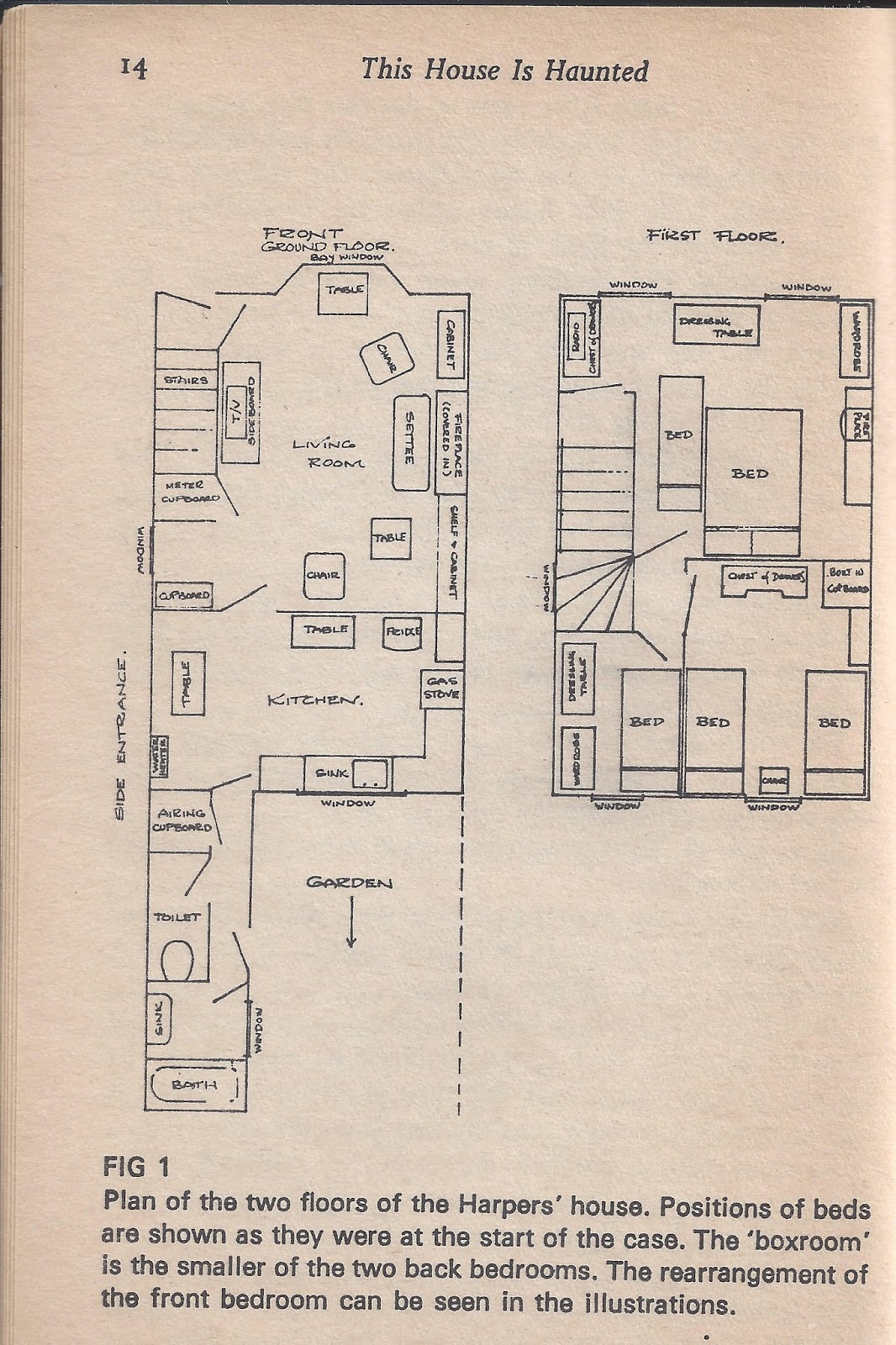
It's good to know the layout of the house where most of the activity occurred. You can find an image of a floor plan online here. Look over it before you start studying the case, and have it on hand to consult when needed. If you want a paper copy, you can print the one just linked or find it in the first edition of Guy Playfair's book mentioned below. The latest edition of the book, which I'll be recommending below, doesn't have the floor plan.
After you've consulted however much of that background material you're interested in, watch this BBC television segment from November of 1977 as an introduction to the case. It's about twelve minutes long.
The best documentary is one that aired on Apple TV+ in October of 2023. The second-best one aired on BBC Radio on December 26, 1978. The host, Rosalind Morris, was an eyewitness of some of the events, she interviews a lot of other eyewitnesses, and they're given a lot of time to speak.
If you want some other video documentaries, start with Interview With A Poltergeist, which came out in 2007. Another one aired on the Paranormal Channel the following year. It's not as good, but each has some strengths the other one doesn't have.
I've written tributes to four of the most important figures in the case. Those tributes will give you a lot of information about those individuals, their involvement in the case, and their credibility: Peggy Hodgson, Maurice Grosse, Guy Playfair, and John Burcombe. Those posts provide a lot of biographical information and references to other sources you can consult, but the posts aren't biographies. They're tributes that focus on the individuals' involvement in the Enfield case. Though the post on Peggy Hodgson is the longest, it's the one you should read if you only want to read one of them. She's the most important witness in the case, and she's often been underestimated and misrepresented.
The two books to get on Enfield (as opposed to poltergeists in general) are Guy Playfair's This House Is Haunted (United States: White Crow Books, 2011) and Melvyn Willin's The Enfield Poltergeist Tapes (United States: White Crow Books, 2019). Read them in that order.
For an introduction to skepticism about the case, you could start with Anita Gregory's review of Playfair's book mentioned above ("This House Is Haunted, An Investigation Of The Enfield Poltergeist", Journal Of The Society For Psychical Research, vol. 50, 1979-80, pp. 538-41). You can access the article at the Library of Exploratory Science site. Other skeptical overviews have been written by Joe Nickell and Deborah Hyde, among others. You can listen to a 2017 edition of the MonsterTalk podcast to hear from a few skeptics discussing Enfield.
If you want to research the case further, see my series of posts here. That material goes beyond an introductory level (e.g., discussing Maurice Grosse and Guy Playfair's audio tapes recorded during their investigation of the case; addressing Anita Gregory's doctoral thesis, which covers Enfield). I reference a lot of articles, books, videos, and other resources along the way, so you can find many more sources to consult there. The page just linked includes descriptions of some of the contents of each post, so you can use Ctrl F to search for what you're interested in, in addition to using a search engine.
It's helpful to have some background information on poltergeists in general, so you could start with a Psi Encyclopedia article that provides an overview of the subject. A good book on the topic is Alan Gauld and A.D. Cornell, Poltergeists (United States: White Crow Books, 2017).
I wrote an article that outlines some of the evidential issues involved in evaluating the credibility of witnesses. It provides many examples from the Enfield case.
It's good to know the layout of the house where most of the activity occurred. You can find an image of a floor plan online here. Look over it before you start studying the case, and have it on hand to consult when needed. If you want a paper copy, you can print the one just linked or find it in the first edition of Guy Playfair's book mentioned below. The latest edition of the book, which I'll be recommending below, doesn't have the floor plan.
After you've consulted however much of that background material you're interested in, watch this BBC television segment from November of 1977 as an introduction to the case. It's about twelve minutes long.
The best documentary is one that aired on Apple TV+ in October of 2023. The second-best one aired on BBC Radio on December 26, 1978. The host, Rosalind Morris, was an eyewitness of some of the events, she interviews a lot of other eyewitnesses, and they're given a lot of time to speak.
If you want some other video documentaries, start with Interview With A Poltergeist, which came out in 2007. Another one aired on the Paranormal Channel the following year. It's not as good, but each has some strengths the other one doesn't have.
I've written tributes to four of the most important figures in the case. Those tributes will give you a lot of information about those individuals, their involvement in the case, and their credibility: Peggy Hodgson, Maurice Grosse, Guy Playfair, and John Burcombe. Those posts provide a lot of biographical information and references to other sources you can consult, but the posts aren't biographies. They're tributes that focus on the individuals' involvement in the Enfield case. Though the post on Peggy Hodgson is the longest, it's the one you should read if you only want to read one of them. She's the most important witness in the case, and she's often been underestimated and misrepresented.
The two books to get on Enfield (as opposed to poltergeists in general) are Guy Playfair's This House Is Haunted (United States: White Crow Books, 2011) and Melvyn Willin's The Enfield Poltergeist Tapes (United States: White Crow Books, 2019). Read them in that order.
For an introduction to skepticism about the case, you could start with Anita Gregory's review of Playfair's book mentioned above ("This House Is Haunted, An Investigation Of The Enfield Poltergeist", Journal Of The Society For Psychical Research, vol. 50, 1979-80, pp. 538-41). You can access the article at the Library of Exploratory Science site. Other skeptical overviews have been written by Joe Nickell and Deborah Hyde, among others. You can listen to a 2017 edition of the MonsterTalk podcast to hear from a few skeptics discussing Enfield.
If you want to research the case further, see my series of posts here. That material goes beyond an introductory level (e.g., discussing Maurice Grosse and Guy Playfair's audio tapes recorded during their investigation of the case; addressing Anita Gregory's doctoral thesis, which covers Enfield). I reference a lot of articles, books, videos, and other resources along the way, so you can find many more sources to consult there. The page just linked includes descriptions of some of the contents of each post, so you can use Ctrl F to search for what you're interested in, in addition to using a search engine.
Wednesday, July 01, 2020
A Tribute To Maurice Grosse

(I'll be citing Maurice Grosse and Guy Playfair's Enfield tapes. "MG" will refer to tapes from Grosse's collection, and "GP" will refer to those from Playfair's. MG28A is Grosse's tape 28A, GP11A is Playfair's tape 11A, etc.)
In the mid 1990s, Maurice Grosse appeared on a BBC television program, Video Diaries, to tell his life story. You can watch the program here and here. He discusses his background as an artist, his military service in World War II, meeting his wife, his Judaism, how the premature death of his daughter led to his work on paranormal issues, and his work as an inventor and businessman. But I know him mainly from his work on the Enfield Poltergeist. I want to say more about him from that perspective.
Hugh Pincott, who was Honorary Secretary of the Society for Psychical Research (SPR) at the time when Grosse started on the Enfield case, was one of the contributors to Melvyn Willin's recent book on Enfield. Pincott recalls how Grosse became involved in the case and comments on the controversy surrounding his involvement. Grosse was a new member of the SPR and had been asking them to assign him to a case. After the Daily Mirror started going to the Hodgsons' house to report on the poltergeist that was occurring there, one of their reporters contacted the SPR to send somebody out to help the family:
Saturday, June 06, 2020
Some coronavirus news
Some coronavirus news. Good news and bad news.
Bad news first.
As many people know, two prestigious medical journals, the Lancet and the New England Journal of Medicine, both had to retract published papers recently. In fact, it's become a scandal.
The Lancet retracted a hydroxychloroquine study, while the NEJM retracted a cardiovascular disease study. The main issue is data integrity; data may have been compromised. Originally data was provided by a company named Surgisphere, but a co-author of both papers co-founded Surgisphere, i.e., Sapan S. Desai, MD, PhD, and Desai's publications history is rife with research misconduct.
Also on the hydroxychloroquine front, a separate study - likewise published in the NEJM but which did not use the Surgisphere database - found that hydroxychloroquine was not significantly different from placebo:
We enrolled 821 asymptomatic participants. Overall, 87.6% of the participants (719 of 821) reported a high-risk exposure to a confirmed Covid-19 contact. The incidence of new illness compatible with Covid-19 did not differ significantly between participants receiving hydroxychloroquine (49 of 414 [11.8%]) and those receiving placebo (58 of 407 [14.3%]); the absolute difference was −2.4 percentage points (95% confidence interval, −7.0 to 2.2; P=0.35). Side effects were more common with hydroxychloroquine than with placebo (40.1% vs. 16.8%), but no serious adverse reactions were reported.
Now for the good news.
There are still many ongoing studies and trials. Such as one on convalescent plasma which was found to be both safe as well as effective in 19 of 25 (76%) severely ill COVID-19 patients.
In addition, there are several very promising vaccines trials under way. Several in phase 1 trials, a few in phase 2, and a couple moving to phase 3 trials. This includes the much touted vaccine from Moderna which is set to begin phase 3 trials as early as next month in July. The Regulatory Affairs and Professionals Society (RAPS) looks like a good website to track vaccine candidates.
Monday, June 01, 2020
A Tribute To Peggy Hodgson

(From left to right: Janet, Billy, Peggy, Johnny, and Margaret Hodgson.)
(I'm going to be citing Maurice Grosse and Guy Playfair's Enfield tapes below. I'll use "MG" to refer to tapes from Grosse's collection and "GP" to refer to those from Playfair's. So, MG12A is Grosse's tape 12A, GP58B is Playfair's tape 58B, etc.)
The one person involved in the Enfield case who probably witnessed and suffered more than anybody else, and contributed to the good that's been done through the case more than anybody, is Peggy Hodgson. Her story ought to be told more than it has been.
In early November of 1977, apparently while at his own house one day, Maurice Grosse recorded some of his thoughts on the Enfield case:
Tuesday, March 03, 2020
The Quality Of The Initial Enfield Investigation
Maurice Grosse and Guy Playfair have often been criticized for how they went about investigating the Enfield case. You can find a lot of examples in my previous articles, like this one on Anita Gregory and this one on Joe Nickell. I've mentioned some of my own disagreements with Grosse and Playfair, though I have a generally positive view of how they handled the case. They acknowledged that they made some mistakes. Nobody would be one of the lead investigators of such a large and complicated case without getting some things wrong. The quality of their work is often underestimated, though, largely because so many of the relevant details haven't been publicized much. What I want to focus on in this post is the evidence we can gather on this subject from Grosse and Playfair's tapes. I'll use "MG" to designate Grosse's tapes and "GP" to refer to Playfair's, which means that MG99B refers to Grosse's tape 99B, and GP51B refers to Playfair's tape 51B, for example.
Think of the significance of how I just concluded the paragraph above. The fact that we have so many audio recordings related to the original investigation of the case, including recordings of so many allegedly paranormal events, is a testament to the quality of the investigators' work. And I had to distinguish between the tapes and other sources above because there's such a large amount of material outside of the tapes as well. The amount of tapes, signed witness statements, notes, transcripts, and other documentation Grosse and Playfair produced is highly impressive and, in some ways, unprecedented.
I can't be exhaustive, but here are several examples of the quality of their work from the tapes:
Think of the significance of how I just concluded the paragraph above. The fact that we have so many audio recordings related to the original investigation of the case, including recordings of so many allegedly paranormal events, is a testament to the quality of the investigators' work. And I had to distinguish between the tapes and other sources above because there's such a large amount of material outside of the tapes as well. The amount of tapes, signed witness statements, notes, transcripts, and other documentation Grosse and Playfair produced is highly impressive and, in some ways, unprecedented.
I can't be exhaustive, but here are several examples of the quality of their work from the tapes:
Tuesday, October 29, 2019
"I know nothing"
Below is an excerpt from an interview with a Harvard hospital (BIDMC) based physician named Adam Rodman. What Rodman says is useful to keep in mind when considering debates over science. Rodman also has an enjoyable podcast called Bedside Rounds on medical history. His latest episode is titled "I know nothing" in which he details in a grand rounds lecture what he says in this interview.
Studying history has changed my entire approach to practicing medicine. So first, at a concrete level, it helps me question dogma. So, like I was mentioning before, the study of medical history will quickly reveal that so much of what we're taught in medical school stands on shaky foundations.
One of the classic examples is the definition of a “fever”. We’re all taught that a fever is 100.4 or 38 degrees Celsius. It’s scientific simplicity. You’ll even see some of our colleagues confidently announce, “it’s either a fever or it’s not!” and make fun of patients who say, “I run low, so 99.7 is a fever for me.” But even a cursory examination of history will show that this was based on mid-19th century data from Wunderlich, using an esoteric thermometer, axillary temperatures, unclear data analysis, and a, let’s just say...an imprecise method of measuring data. Moreover, numerous studies have shown that body temperatures are not only lower, but vary throughout the day — and in fact, the most important thing appears to be variation from the patient’s own baseline. It turns out, in this case, that taking an historical approach is, in fact, taking the scientific approach, critically appraising data that has real clinical impact. And while we’re at that, taking an historical approach also shows that our patients’ own experiences are probably accurate — they probably do “run low” because 98.6 F is high!
And once you start to realize this with one subject, you realize that a whole spate of medical knowledge is equally shaky or contingent. You’ll discover arbitrary drug dosing and durations, very real epistemological concerns about our ability to know what causes disease, and even reason to doubt some randomized controlled trials — I don’t want to turn this interview into a lecture about skepticism, but I’ll add that the more you read about the fragility index, the more you’ll see that the basis of our knowledge is often far shakier than we’d like to admit.
I don’t want to say that a study of history has made me cynical — it hasn’t; if anything, I’m far more aware of how much good we can do now compared to past eras. But it’s made me very humble about the limits of our knowledge. And it’s made me focus on many of the older qualities of being a physician — compassion, good communication skills, and being at the bedside.
Subscribe to:
Posts (Atom)