I've argued that Jesus set his public ministry in the framework of Isaiah 9:1-2. It's unlikely to be a coincidence that the two places where he chose to live as an adult lined up with the references to Zebulun and Naphtali in Isaiah 9:1 (Nazareth in the region of Zebulun, then Capernaum in the region of Naphtali).
The notion that Jesus set out to align himself with Isaiah 9 is corroborated by how he framed his resurrection appearances. Though he appeared to people outside of Galilee, he singled out Galilee and went out of his way to travel there to appear to his disciples in that location (Matthew 26:32, 28:7, 28:10, 28:16, Mark 14:28, 16:7). Think of a couple of the questions raised by his choice to appear in Galilee and his choice to emphasize the appearance there so much. Why Galilee? And why emphasize it so much, going out of his way to do so, even when he appeared outside of Galilee as well and appeared elsewhere before appearing in Galilee? The best explanation is his interest in fulfilling Isaiah 9. Saying that he made those choices because the beginning of his public ministry was so tied up with Galilee just pushes the question back a step. Why was the beginning of his ministry so tied up with Galilee? And why did he want to emphasize the Galilean relationship so much? I don't know of any explanation that's comparable to or better than his concern for fulfilling Isaiah 9.

Friday, December 11, 2020


Tuesday, December 08, 2020
Christians Should Believe In Ghosts
Earlier this year, Billy Hallowell published a book on demons, ghosts, and other paranormal topics. He was recently interviewed by Sean McDowell. Here's something I just posted in the comments section below the video. It's several paragraphs long, so I doubt many people will read it. But, for those who are interested, I explain why Christians should believe in ghosts, how we're often overly dependent on the demonic hypothesis, what harm that does, and what other explanatory options are available to a Christian.
Factors Involved In Evaluating Star Of Bethlehem Theories
We get media stories on the star of Bethlehem at this time of year, especially about the claims of people who advocate astronomical views of the star. Here's a post I put up on Facebook last year that briefly outlines four of the factors we should take into account when evaluating theories about the star.
Sunday, December 06, 2020
California dreamin' no more
I'm a native Californian from the Los Angeles area. Quite arguably much of California has become a dystopia (e.g. many parts of LA and SF). Many parts of the state are more like a developing nation than a developed nation. A third world nation. Tremendous poverty, tent cities, drug addicts, mental issues, etc.
The dystopia that California has become is also known as the progressive dream. California is considered a role model for progressives. It's a foretaste of what the US could be if the US was like California according to progressives. As such, I think this post can serve as a warning about progressivism.
In any case, here are my pros and cons about my (once) beloved state. In no particular order:
The Significance Of Jesus' Being Raised In Nazareth
I've written elsewhere about the importance of Jesus' choice as an adult to live in Nazareth for a while, then live in Capernaum, which aligns with Isaiah 9:1. Critics could object that Jesus was trying to make himself look like the fulfillment of Isaiah's prophecy, so that his alignment with the passage doesn't involve anything supernatural. That approach wouldn't resolve all of the problems Jesus' fulfillment of the passage poses for skeptics, though.
For example, they often object that the early accounts of Jesus' childhood are discontinuous with the early accounts of his adulthood. Supposedly, the accounts of his adulthood don't reflect the alleged events of his childhood the way we'd expect them to if those childhood events actually occurred. But even if Jesus set out to fulfill Isaiah 9 by normal means, without anything paranormal involved, his identifying himself as the figure of Isaiah 9 would be an example of substantial continuity between the accounts of his childhood and the accounts of his adulthood. So, objecting that Jesus lived in Nazareth and Capernaum as an adult to make himself look like the fulfillment of Isaiah 9 helps the critic avoid some conclusions that are favorable to Christianity, but still leaves him with other problems.
And notice the significance of the fact that Jesus didn't just choose to live in Nazareth for a while as an adult. He also grew up there, and he did so from an early age, from about the age of two. At that stage, he was far too young, by normal means, to have reasoned with his parents to persuade them to live in Nazareth in order to accommodate a claim of Messiahship he'd make later in life. So, Jesus was in the right place at the right time (in Nazareth, which is in the region of Zebulun, the first region mentioned in Isaiah 9:1) well before he was in a position to arrange being there by normal means. Jesus was in Nazareth, and was there both as an adult and as a child, even a child as young as about two years old, before moving to the region of Naphtali (Capernaum).
Isaiah and other Old Testament authors often refer to a Messianic branch or shoot who was to come. We could say that Jesus was planted in Nazareth by God's providence before he chose to live there for a while as an adult, followed by a move to Capernaum, in alignment with Isaiah 9.
But we should look even further back. Why are Zebulun and Naphtali mentioned in Isaiah 9 to begin with? The backdrop seems to be the Assyrian takeover of northern Israel in the eighth century B.C. However, Isaiah never refers to the northern kingdom as Zebulun and Naphtali anywhere else. He uses multiple other names (e.g., Ephraim in 7:5, Jacob and Israel in 9:8), but Zebulun and Naphtali aren't used elsewhere. Furthermore, there were other tribal territories in the north, not just Zebulun and Naphtali, that were affected by the Assyrian invasion. As H.G.M. Williamson explains:
"The detail is not important for the present verse, however, as these two tribes are probably mentioned only representatively of the northern part of the country; Asher and Dan, at least, must have been affected in a similar way to Zebulun and Naphtali. The same style of representative reporting affects the brief description of this self-same event in 2 Kgs 15.29, as there, alongside a list of towns, only Naphtali is mentioned of the tribal territories." (Isaiah 6-12 [New York, New York: Bloomsbury, 2018], 382)
As 2 Kings 15 illustrates, Zebulun and Naphtali wouldn't have to be singled out, much less mentioned in that order, if an author wanted to cite one or more tribal regions of northern Israel to represent the whole. So, the selection of Zebulun and Naphtali, in that order, in Isaiah 9 is significant accordingly.
There are many other aspects of Isaiah 9 that also line up well with Jesus' life. See here and here, for example.
For example, they often object that the early accounts of Jesus' childhood are discontinuous with the early accounts of his adulthood. Supposedly, the accounts of his adulthood don't reflect the alleged events of his childhood the way we'd expect them to if those childhood events actually occurred. But even if Jesus set out to fulfill Isaiah 9 by normal means, without anything paranormal involved, his identifying himself as the figure of Isaiah 9 would be an example of substantial continuity between the accounts of his childhood and the accounts of his adulthood. So, objecting that Jesus lived in Nazareth and Capernaum as an adult to make himself look like the fulfillment of Isaiah 9 helps the critic avoid some conclusions that are favorable to Christianity, but still leaves him with other problems.
And notice the significance of the fact that Jesus didn't just choose to live in Nazareth for a while as an adult. He also grew up there, and he did so from an early age, from about the age of two. At that stage, he was far too young, by normal means, to have reasoned with his parents to persuade them to live in Nazareth in order to accommodate a claim of Messiahship he'd make later in life. So, Jesus was in the right place at the right time (in Nazareth, which is in the region of Zebulun, the first region mentioned in Isaiah 9:1) well before he was in a position to arrange being there by normal means. Jesus was in Nazareth, and was there both as an adult and as a child, even a child as young as about two years old, before moving to the region of Naphtali (Capernaum).
Isaiah and other Old Testament authors often refer to a Messianic branch or shoot who was to come. We could say that Jesus was planted in Nazareth by God's providence before he chose to live there for a while as an adult, followed by a move to Capernaum, in alignment with Isaiah 9.
But we should look even further back. Why are Zebulun and Naphtali mentioned in Isaiah 9 to begin with? The backdrop seems to be the Assyrian takeover of northern Israel in the eighth century B.C. However, Isaiah never refers to the northern kingdom as Zebulun and Naphtali anywhere else. He uses multiple other names (e.g., Ephraim in 7:5, Jacob and Israel in 9:8), but Zebulun and Naphtali aren't used elsewhere. Furthermore, there were other tribal territories in the north, not just Zebulun and Naphtali, that were affected by the Assyrian invasion. As H.G.M. Williamson explains:
"The detail is not important for the present verse, however, as these two tribes are probably mentioned only representatively of the northern part of the country; Asher and Dan, at least, must have been affected in a similar way to Zebulun and Naphtali. The same style of representative reporting affects the brief description of this self-same event in 2 Kgs 15.29, as there, alongside a list of towns, only Naphtali is mentioned of the tribal territories." (Isaiah 6-12 [New York, New York: Bloomsbury, 2018], 382)
As 2 Kings 15 illustrates, Zebulun and Naphtali wouldn't have to be singled out, much less mentioned in that order, if an author wanted to cite one or more tribal regions of northern Israel to represent the whole. So, the selection of Zebulun and Naphtali, in that order, in Isaiah 9 is significant accordingly.
There are many other aspects of Isaiah 9 that also line up well with Jesus' life. See here and here, for example.
Saturday, December 05, 2020
Evidence For The Miracles In The Gospels
Lydia McGrew has been adding a lot of videos to her YouTube channel lately, such as a series on the feeding of the five thousand and one that just began on the virgin birth. There's a lot of good material there.
Thursday, December 03, 2020
Steve Hays' Contribution To Christmas
I considered discussing the subject in my Christmas Resources post this year, but decided to address it separately instead. I conclude my Christmas Resources post each year with links to the Triablogue material written on Christmas issues over the past year. This was the last year in which that collection of links would include posts from Steve.
During the Christmas season of 2004, Time and Newsweek published articles against the historicity of the infancy narratives, and those articles got a poor response from Christians. Seeing what happened that year convinced me to become much more involved in doing apologetic work on Christmas issues. I've been building on what I started in 2004 every year since then. I joined the Triablogue staff in February of 2006 at Steve's invitation, which gave me a prominent platform for doing that Christmas work. He not only gave me that platform, but also frequently encouraged me in doing the work, both publicly and privately, including shortly before his death.
And he did a lot of Christmas apologetic work himself. I've linked many examples over the years in my Christmas Resources posts and elsewhere. It needs to be remembered that producing material like that cost him a lot of time, effort, reputation, and other resources. Something that only takes, say, two, five, or eleven minutes to read and is so easy to understand after he's set everything out was much harder for him to put together and maintain (answering questions, responding to objections, updating whatever needed updated, etc.). Given how few people go as deep into Christmas issues as Steve did and how few think outside the box as much as he did, it was a rare privilege and joy to work with him in that context. As I mentioned in a tribute to Steve that I wrote shortly after his death, I miss his knowledge, his wisdom, and his constant presence and persistence. As he did in other contexts, he expanded my thoughts about Christmas not only by increasing the information I had within the parameters of my thinking, but also by expanding those parameters.
He wrote a lot of good material on Christmas issues outside the context of apologetics as well. He would often write about music, including Christmas music, to which he often posted links during the Christmas season. As he mentions in his autobiography, he and his family have a history of involvement in music. For example:
Last year, he wrote a post about singing in heaven. He'd written on the subject in a 2017 post as well. What he wrote about his Christian relatives at the conclusion of his autobiography now includes him:
During the Christmas season of 2004, Time and Newsweek published articles against the historicity of the infancy narratives, and those articles got a poor response from Christians. Seeing what happened that year convinced me to become much more involved in doing apologetic work on Christmas issues. I've been building on what I started in 2004 every year since then. I joined the Triablogue staff in February of 2006 at Steve's invitation, which gave me a prominent platform for doing that Christmas work. He not only gave me that platform, but also frequently encouraged me in doing the work, both publicly and privately, including shortly before his death.
And he did a lot of Christmas apologetic work himself. I've linked many examples over the years in my Christmas Resources posts and elsewhere. It needs to be remembered that producing material like that cost him a lot of time, effort, reputation, and other resources. Something that only takes, say, two, five, or eleven minutes to read and is so easy to understand after he's set everything out was much harder for him to put together and maintain (answering questions, responding to objections, updating whatever needed updated, etc.). Given how few people go as deep into Christmas issues as Steve did and how few think outside the box as much as he did, it was a rare privilege and joy to work with him in that context. As I mentioned in a tribute to Steve that I wrote shortly after his death, I miss his knowledge, his wisdom, and his constant presence and persistence. As he did in other contexts, he expanded my thoughts about Christmas not only by increasing the information I had within the parameters of my thinking, but also by expanding those parameters.
He wrote a lot of good material on Christmas issues outside the context of apologetics as well. He would often write about music, including Christmas music, to which he often posted links during the Christmas season. As he mentions in his autobiography, he and his family have a history of involvement in music. For example:
The Christmas Eve [church] service left an impression of sorts. This was partly because it was the only day of the year when I was allowed to stay up so late—well past midnight. We had a family tradition of playing the Festival of Lessons and Carols, by King's College Chapel choir, before heading off to church. The Alpine clarity of the high treble descant, echoing in the ambient chapel, was mesmerizing to me. And the candlelight service at church augmented the magical mood.
That planted a lifelong fondness for King's College Chapel choir, and its repertoire. Nowadays I can watch services on my laptop. The hymns I've been hearing and singing since childhood take on greater resonance as we ourselves pass through the pilgrimage of life and faith–watching our godly relatives go ahead of us, and following in their footsteps. (25-26)
Last year, he wrote a post about singing in heaven. He'd written on the subject in a 2017 post as well. What he wrote about his Christian relatives at the conclusion of his autobiography now includes him:
For my sainted loved ones, the pain is past, the longing gone, the sorrow over, the patience requited, and the waiting rewarded. Far above the stars, where angels chime the watches of the night, they join the everlasting choir–in the tintinnabulations of a thousand-thousand bells. (85)
Tuesday, December 01, 2020
New Enfield Material From The Warrens
Two videos that are highly relevant to the Enfield Poltergeist were published recently on the Official Ed and Lorraine Warren Channel on YouTube. You can watch them here and here.
The first video has an introduction from Tony Spera, the Warrens' son-in-law, followed by a slide show Ed Warren presented on paranormal issues. There's a discussion of Enfield at the end of it. Start watching here. The Warrens visited the house in 1978, 1979, and 1981 at least, perhaps on one or more other occasions as well. Warren refers to the children's ages at the time of the first photo as 16 (Janet), 17 (Margaret), 9 (Billy), and 12 (Johnny). That's incorrect. He seems to be taking the ages of the girls around the time of the 1981 visit and combining those with the ages of the boys during the 1979 visit. The children look significantly older than they do in the photos and videos from 1977-78 that have been widely circulated, and the house looks significantly different. The Warrens' 1978 visit was in June, and their 1979 visit was in August. The clothing worn by the people in the photo makes less sense in either of those months than at other times of the year. Maurice Grosse apparently attended Johnny Hodgson's funeral on March 30, 1981 (Melvyn Willin, The Enfield Poltergeist Tapes [United States: White Crow Books, 2019], 98). That doesn't leave much time for Warren's photo to have been taken that year, but the clothing makes more sense then, and so do the differences between how the children and the house look in Warren's photo and how they looked in 1977-78. Janet would have been 15 at the time of an early 1981 visit, and Margaret would have been 16. The best explanation of the photo and Warren's comments on it seems to be that the Warrens visited and had the photo taken in early 1981, just before Johnny died, and that Warren was mistaken about the children's ages at the time. (Janet and Margaret would turn 16 and 17, respectively, later in 1981, after Warren's visit. Billy and Johnny had been 9 and 12 when Warren visited in 1979.) Though some of the photos in the slide show are Warren's, and I don't recall having seen them before, most of them are from Guy Playfair's book on Enfield. Warren refers to how Janet passed through a wall "in full view of investigators". I suspect he's referring to the December 15, 1977 event in which Janet went through the main bedroom wall into the Nottinghams' house. There's good evidence for that event, but it didn't happen "in full view of investigators". He refers to about six occasions when Janet was thrown onto the radio in the corner of the room. I only know of three occasions, but Warren may have heard of others I'm not aware of. There's a brief audio clip of the poltergeist voice at the end of the slide show, taken from the audio tapes released to the public when The Conjuring 2 came out in 2016.
The second video is much more significant. It includes a discussion of the Enfield case involving Lorraine Warren and John Kenyhercz, a member of the Warrens' team who investigated the case in 1979. The video was recorded on August 1, 2013. Much of what Kenyhercz says is corroborated to some extent by other witnesses (the timing of his team's visit, events that occurred during that visit, the nature of some of the phenomena the poltergeist would produce, etc.). There are apparent discrepancies between what's on this video and what John and Sylvie Burcombe reported about the Warrens' 1979 visit on tape 95B in Maurice Grosse's collection of Enfield tapes, but those apparent discrepancies are relatively minor. For the most part, there's agreement about what happened. There's some discussion on the video about Billy Hodgson dying of cancer, but Johnny is the one they had in mind.
To get a more balanced view of the Warrens' involvement in the case, see my previous posts on the subject here and here. I suspect the Warrens and their team did experience some paranormal events at the Hodgsons' house, but not everything they reported was genuine. The Warrens, Kenyhercz, and Spera should be given credit for releasing so much of their Enfield material to the public and making it so accessible. I hope they'll do more of that.
The first video has an introduction from Tony Spera, the Warrens' son-in-law, followed by a slide show Ed Warren presented on paranormal issues. There's a discussion of Enfield at the end of it. Start watching here. The Warrens visited the house in 1978, 1979, and 1981 at least, perhaps on one or more other occasions as well. Warren refers to the children's ages at the time of the first photo as 16 (Janet), 17 (Margaret), 9 (Billy), and 12 (Johnny). That's incorrect. He seems to be taking the ages of the girls around the time of the 1981 visit and combining those with the ages of the boys during the 1979 visit. The children look significantly older than they do in the photos and videos from 1977-78 that have been widely circulated, and the house looks significantly different. The Warrens' 1978 visit was in June, and their 1979 visit was in August. The clothing worn by the people in the photo makes less sense in either of those months than at other times of the year. Maurice Grosse apparently attended Johnny Hodgson's funeral on March 30, 1981 (Melvyn Willin, The Enfield Poltergeist Tapes [United States: White Crow Books, 2019], 98). That doesn't leave much time for Warren's photo to have been taken that year, but the clothing makes more sense then, and so do the differences between how the children and the house look in Warren's photo and how they looked in 1977-78. Janet would have been 15 at the time of an early 1981 visit, and Margaret would have been 16. The best explanation of the photo and Warren's comments on it seems to be that the Warrens visited and had the photo taken in early 1981, just before Johnny died, and that Warren was mistaken about the children's ages at the time. (Janet and Margaret would turn 16 and 17, respectively, later in 1981, after Warren's visit. Billy and Johnny had been 9 and 12 when Warren visited in 1979.) Though some of the photos in the slide show are Warren's, and I don't recall having seen them before, most of them are from Guy Playfair's book on Enfield. Warren refers to how Janet passed through a wall "in full view of investigators". I suspect he's referring to the December 15, 1977 event in which Janet went through the main bedroom wall into the Nottinghams' house. There's good evidence for that event, but it didn't happen "in full view of investigators". He refers to about six occasions when Janet was thrown onto the radio in the corner of the room. I only know of three occasions, but Warren may have heard of others I'm not aware of. There's a brief audio clip of the poltergeist voice at the end of the slide show, taken from the audio tapes released to the public when The Conjuring 2 came out in 2016.
The second video is much more significant. It includes a discussion of the Enfield case involving Lorraine Warren and John Kenyhercz, a member of the Warrens' team who investigated the case in 1979. The video was recorded on August 1, 2013. Much of what Kenyhercz says is corroborated to some extent by other witnesses (the timing of his team's visit, events that occurred during that visit, the nature of some of the phenomena the poltergeist would produce, etc.). There are apparent discrepancies between what's on this video and what John and Sylvie Burcombe reported about the Warrens' 1979 visit on tape 95B in Maurice Grosse's collection of Enfield tapes, but those apparent discrepancies are relatively minor. For the most part, there's agreement about what happened. There's some discussion on the video about Billy Hodgson dying of cancer, but Johnny is the one they had in mind.
To get a more balanced view of the Warrens' involvement in the case, see my previous posts on the subject here and here. I suspect the Warrens and their team did experience some paranormal events at the Hodgsons' house, but not everything they reported was genuine. The Warrens, Kenyhercz, and Spera should be given credit for releasing so much of their Enfield material to the public and making it so accessible. I hope they'll do more of that.
Monday, November 30, 2020
A Response To Tovia Singer On Isaiah 9
He recently posted a video on the subject that's already gotten more than five thousand views and a lot of comments. I've posted a response in the comments thread, in which I address the claim that the verses should be translated with a past tense that undermines Jesus' fulfillment of the passage, the idea that Hezekiah fulfilled it, and some other issues. The replies I've gotten so far aren't of much significance. My web browsers aren't showing my comments after my original post unless I'm logged into my Google account. I don't know why or whether that's normal. But I didn't say a lot in those other comments, since there isn't much to respond to. If you want to read what I wrote in my later comments, you may have to be logged into a Google account.
Sunday, November 29, 2020
Capernaum And Christmas
Last year, I wrote an article about how Jesus seems to have structured much of his public ministry around his identity as the light of Isaiah 9:2. His move to Capernaum was part of that process (Matthew 4:12-16), and that move has significant implications for the origins of the infancy narratives, their historicity, the authorship of the gospels, and other important issues. I want to discuss some of those implications in this post.
As I mentioned in my article last year, Matthew apparently worked, and likely lived, in Capernaum or nearby. The same is true of John and some of the other apostles. That put them in a position to have known more about Jesus and to have been in more contact with him accordingly. And that makes men like Matthew and John more plausible candidates for writing biographies of Jesus, which heightens the credibility of the traditional authorship attributions of the gospels. Furthermore, the significant attention given to Capernaum in the gospels of Matthew and John, as discussed in my article linked above, makes more sense under the traditional authorship attributions.
Similar observations can be made about the early Christian accounts of Jesus' childhood in particular. If Matthew and John had so much access to Jesus (and, by implication, his relatives, neighbors, etc.), then they had access to more information about his childhood. (See here concerning the material on Jesus' childhood in the writings of John, which is often underestimated.) It would be natural for people living in or near Capernaum to want to know why Jesus moved there. It's the kind of subject that would easily have come up in conversations. If he had the motive for moving there described in Matthew 4:12-16, as the evidence suggests, then issues related to his ancestry, birth, childhood, and Messiahship (all mentioned in Isaiah 9) would have come to mind and probably would have been discussed. Just as Isaiah 9 is associated with Christmas issues in our day, it was in ancient Israel as well (e.g., John 7:40-8:12). Jesus' move to Capernaum would have been of interest to individuals like Matthew and John, and the reasoning behind the move would have brought up thoughts and discussions related to Jesus' childhood.
People often ask and theorize about the origins of the infancy narratives and other early material on the childhood of Jesus. Bethlehem and Nazareth are important in that context, but Capernaum probably had a large role as well, a role that's been highly neglected.
As I mentioned in my article last year, Matthew apparently worked, and likely lived, in Capernaum or nearby. The same is true of John and some of the other apostles. That put them in a position to have known more about Jesus and to have been in more contact with him accordingly. And that makes men like Matthew and John more plausible candidates for writing biographies of Jesus, which heightens the credibility of the traditional authorship attributions of the gospels. Furthermore, the significant attention given to Capernaum in the gospels of Matthew and John, as discussed in my article linked above, makes more sense under the traditional authorship attributions.
Similar observations can be made about the early Christian accounts of Jesus' childhood in particular. If Matthew and John had so much access to Jesus (and, by implication, his relatives, neighbors, etc.), then they had access to more information about his childhood. (See here concerning the material on Jesus' childhood in the writings of John, which is often underestimated.) It would be natural for people living in or near Capernaum to want to know why Jesus moved there. It's the kind of subject that would easily have come up in conversations. If he had the motive for moving there described in Matthew 4:12-16, as the evidence suggests, then issues related to his ancestry, birth, childhood, and Messiahship (all mentioned in Isaiah 9) would have come to mind and probably would have been discussed. Just as Isaiah 9 is associated with Christmas issues in our day, it was in ancient Israel as well (e.g., John 7:40-8:12). Jesus' move to Capernaum would have been of interest to individuals like Matthew and John, and the reasoning behind the move would have brought up thoughts and discussions related to Jesus' childhood.
People often ask and theorize about the origins of the infancy narratives and other early material on the childhood of Jesus. Bethlehem and Nazareth are important in that context, but Capernaum probably had a large role as well, a role that's been highly neglected.
Friday, November 27, 2020
Christmas Resources 2020
Last year, I wrote two articles that can be used as a starting point for researching Christmas issues. One of those articles was about how to concisely argue for a traditional Christian view of Jesus' childhood. The other was about how Jesus framed his public ministry around his identity as the figure of Isaiah 9:1-7.
Here are some examples of other Christmas issues we've addressed over the years:
Here are some examples of other Christmas issues we've addressed over the years:
Wednesday, November 25, 2020
Chariots And Horses Of Fire
"Jesus Christ, our most true God, veiled in human form, bows his knee and prays [in John 17], and throws his divine energy into the prayer for the bringing home of his redeemed. This one irresistible, everlastingly almighty prayer carries everything before it. 'Father, I will that they also, whom thou hast given me, be with me where I am,' is the centripetal energy which is drawing all the family of God towards its one home. How shall the chosen get home to the Father? Chariots are provided. Here are the chariots of fire and horses of fire in this prayer. 'I will,' saith Jesus, 'that they be with me;' and with him they must be. There are difficulties in the way — long nights and darkness lie between, and hills of guilt, and forests of trouble, and bands of fierce temptations; yet the pilgrims shall surely reach their journey's end, for the Lord's 'I will' shall be a wall of fire round about them. In this petition I see both sword and shield for the church militant. Here I see the eagles' wings on which they shall be upborne till they enter within the golden gates. Jesus saith, 'I will;' and who is he that shall hinder the home-coming of the chosen? As well hope to arrest the marches of the stars of heaven." (Charles Spurgeon, The C.H. Spurgeon Collection [Albany, Oregon: AGES Software, 1998], Metropolitan Tabernacle Pulpit, Vol. 32, pp. 223-24)
Monday, November 23, 2020
What About Evil? by Scott Christensen
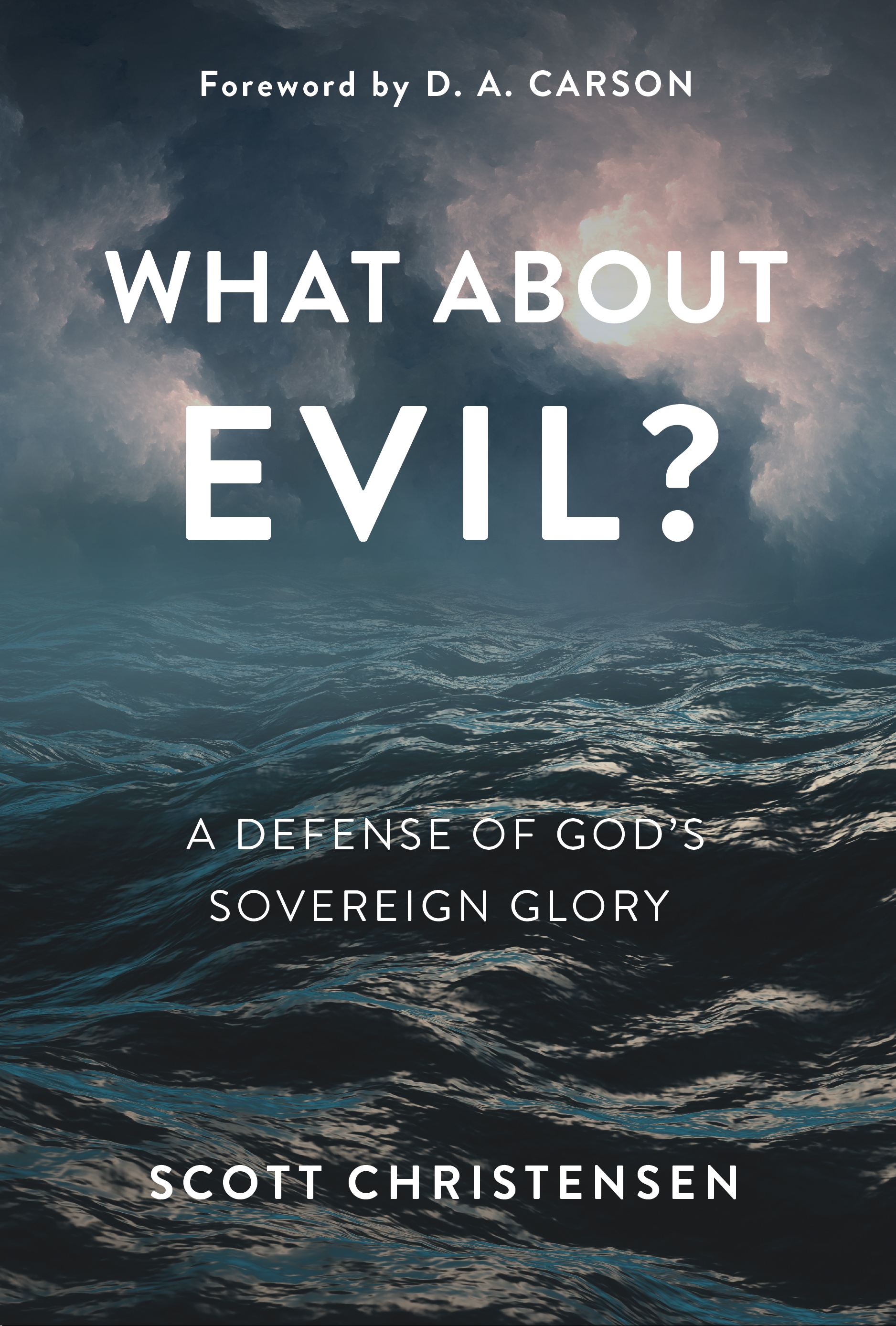
Full disclosure: The following is a review of What About Evil? by Scott Christensen. I am friends with Christensen on Facebook, although I cannot remember precisely the details of how we became Facebook friends. I suspect it’s either because of Triablogue or because of Steve Hays directly. I also received a review copy for free. However, the following views are my own and are an honest assessment of Christensen’s book.
- - -
Christensen’s writing style is one that definitely connected with me. When reading some authors, you can get the sense of overwhelming intellect. They use large words and technical phrases with skill, and you learn a lot from them but it also takes a lot of extra thinking to parse out those sentences. Christensen’s style is the opposite. It’s not that his writing is simplistic—far from it—but rather that he writes in such a manner that it is effortless to take in what he is writing about. In other words, his meaning is plain, not convoluted. His metaphors are obvious, not strained. And the end result is that reading a paragraph from his book is effortless. Unlike reading a massive tome where it is a chore to grind out every sentence, Christensen’s style lends to quick, and enjoyable, reading.
Where this becomes a bit unusual is in instances where Christensen lists examples of what he is referring to. For instance, when giving a list of natural disasters in his introduction (page 2), he includes “...the European Black Death (1347–51), Chilean earthquakes (1647), Krakatoan volcanoes (1883), Spanish flu pandemics (1918), Indonesian tsunamis (2004), Chinese coronavirus pandemics (2020), and endless twisters in Tornado Alley.” Because I am used to reading many technical treatises, my mind immediately asked “why do tornadoes not have any dates listed? And why did he suddenly move from specific examples to the general example of tornados? And why only tornadoes and not, say, hurricanes?”
But of course, Christensen wasn’t trying to make any extra point by including tornadoes there. He’s simply listing some common examples of natural evils, and the “oddity” of having tornados at the end, not fitting the format of the other items in the list, fits into Christensen’s folksy style. This is the sort of list someone would make if they were talking extemporaneously in a conversation.
I hope none of that is taken as a criticism. In fact, I think the style of the book helps make it easier for a lay person to read. And by pointing out the style is “folksy” that in no way means that the arguments Christensen puts forth have no weight. Instead, it means that (in my opinion) more people will be able to benefit from this writing than if Christensen had used a more academic style.
Christensen quickly gets to the point in the book. He is looking into the various theodicies presented to oppose those who question the existence of God based on the existence of evil. He looks at some of the more common theodicies, such as the “Free-Will Defense”, “The Natural-Law Defense”, and the “Greater-Good Theodicy” (among many others), concluding that while there are some good things in most defenses, for a Biblically-minded Christian, the view that is most faithful to Scripture is a version of the “greater-good theodicy” with “the best-of-all-possible-worlds defense.” He dubs his own view the “Greater-glory theodicy”, in his words, “because it seeks to resolve the problem by examining what brings God the greatest glory” (p. 7).
The reason I like Christensen’s method is because he is geared so closely to holding to what the Bible teaches, and using that as the foundation for all else. It places Christ, and His work in defeating evil, at the center of the entire context of evil in the first place. As he writes, “[…]Christ is no conventional hero, and the cross is no conventional weapon. We do not naturally associate a hero’s victory with his death. … Yet surprisingly, in the cross, Jesus defeats evil. Jesus defeats death by dying…. He becomes our hero by being treated as a villain” (pp. 8-9).
If you feel I’m giving away too much of the book, perhaps the low value of those page numbers will assuage you. Christensen fully tells us all of this within the very introduction of his book! This isn’t something he’s trying to hold off for later, to bait you in before revealing where he’s going. As is keeping with Christensen’s “folksy” language, he has no reason to obscure anything with rhetoric and seems almost excited to get through the background information to get to the main point: the glorification of Christ.
Honestly, as someone who’s read a lot of philosophy on theodicies—and many of them quite well reasoned and argued—it’s nice to have one where the focus is so clearly on the majesty of Christ.
This is why I especially enjoyed that while Christensen took several chapters to discuss evil from a historical and philosophical standpoint, including discussing how the term can even be defined, he so quickly delves into what would even constitute a theodicy that honors God, especially in light of how secular the world is in modern days. He examines the strengths and weaknesses of the common arguments in Chapters 5 and 6, (the weaknesses being where they lack Biblical support, and the strengths being where they have sufficient Biblical support), and then spends chapters 7 and 8 discussing the nature of God Himself and how the Bible discusses evil. It is that Biblically-centered focus that I very much appreciated, and that’s not even getting into the section that Christensen himself identifies as the “heart” of his book: Chapters 10 – 13, where the redemptive theme of Scripture is seen as a monomyth—“one universal storyline that evokes a human longing for redemption.” And if you’re looking for shortcuts, first of all I suggest not doing so. But if you really want to get to the main argument, Chapter 12 of the book (specifically, beginning on page 281) presents the “greater-good theodicy” in detail.
Much more could, and should, be said about this work by Christensen. There is a treasure of introductory-level Reformed theology throughout all its pages, and his defense being grounded in Scripture is definitely a breath of fresh air. The Bible is the strength of the Reformed position, and Christensen does a wonderful job pulling together the various threads to support his view: philosophical, historical, and most of all theological. While I am more intellectually driven and love the logic of the Reformed view, Chapters 10 and 11 (where Christensen spends time talking about the entire story of the Bible) was a nice change of pace. As a dabbler in fiction, the purpose and intent of stories also speaks to me, and it’s nice for someone to remind me that God is an Author, just as much as He is an Architect or Mathematician.
My only regret is that when I read the majority of this book, it was during an unexpected foot surgery I had, and as a result the experience was not as physically pleasant as I wish it could have been. I hope in another couple of months to re-read the book, from a new (unmedicated and pain-free) point of view to get another take on it. It will be well worth reading again, and I highly recommend this to anyone who wants to increase their theodicy arsenal. I rate this a solid A+, or 5 stars if we go by the Amazon scale, because it is well written, well researched, well informed, and, most of all, Biblically grounded.
Sunday, November 22, 2020
Buying Christ's Honor With Your Losses
"Blessed are they who would hold the crown on His head, and buy Christ's honour with their own losses." (Samuel Rutherford, Letters Of Samuel Rutherford [Carlisle, Pennsylvania: The Banner of Truth Trust, 2012], 258)
Friday, November 20, 2020
Thursday, November 19, 2020
The High Cost Of Low Living
My post yesterday quoted some comments from J.G. Pilkington on the significance of what are often regarded as little things, including sins that we often underestimate. Adrian Rogers preached a great sermon on Samson, probably the best sermon I've ever heard from him, and it addresses this issue. You can listen to it here. The last several minutes are especially good, starting here, but I recommend listening to the whole thing.
Wednesday, November 18, 2020
The Subtle Power Of Little Things
"Augustin frequently alludes to the subtle power of little things. As when he says,—illustrating (Serm. cclxxviii.) by the plagues of Egypt,—tiny insects, if they be numerous enough, will be as harmful as the bite of great beasts; and (Serm. lvi.) a hill of sand, though composed of tiny grains, will crush a man as surely as the same weight of lead. Little drops (Serm. lviii.) make the river, and little leaks sink the ship; wherefore, he urges, little things must not be despised. 'Men have usually,' says Sedgwick in his Anatomy of Secret Sins, 'been first wading in lesser sins who are now swimming in great transgressions.' It is in the little things of evil that temptation has its greatest strength. The snowflake is little and not to be accounted of, but from its multitudinous accumulation results the dread power of the avalanche. Satan often seems to act as it is said Pompey did, when he could not gain entrance to a city. He persuaded the citizens to admit a few of his weak and wounded soldiers, who, when they had become strong, opened the gates to his whole army. But if little things have such subtlety in temptation, they have likewise higher ministries. The Jews, in their Talmudical writings, have many parables illustrating how God by little things tries and proves men to see if they are fitted for greater things. They say, for example, that He tried David when keeping sheep in the wilderness, to see whether he would be worthy to rule over Israel, the sheep of his inheritance." (J.G. Pilkington, in n. 766 to Augustine's Confessions, 9:8)
Monday, November 16, 2020
The Cause Is The Lord's
"But it is a great part of your glory that the cause is not yours, but your Lord's whom you serve. And I doubt not but Christ will count it His honour to back His weak servant; and it were a shame for Him (with reverence to His holy name) that He should suffer Himself to be in the common of such a poor man as ye are, and that ye should give out for Him and not get in again. Write up your depursments for your Master Christ, and keep the account of what ye give out, whether name, credit, goods, or life, and suspend your reckoning till nigh the evening; and remember that a poor weak servant of Christ wrote it to you, that ye shall have Christ, a King, caution for your incomes and all your losses. Reckon not from the forenoon. Take the Word of God for your warrant; and for Christ's act of cautionary, howbeit body, life, and goods go for Christ your Lord, and though ye should lose the head for Him, yet 'there shall not one hair of your head perish; in patience, therefore, possess your soul.' [Luke 21:18-19]…He who was dead and is alive will plead your cause, and will look attentively upon the process from the beginning to the end, and the Spirit of glory shall rest upon you." (Samuel Rutherford, Letters Of Samuel Rutherford [Carlisle, Pennsylvania: The Banner of Truth Trust, 2012], 133-34)
Friday, November 13, 2020
Shallow Confession Of Sin
"If you forget the costliness of sin, your prayers of confession and repentance will be shallow and trivial. They will neither honor God nor change your life….Stott argued that confessing our sins implies the forsaking of our sins. Confessing and forsaking must not be decoupled, yet most people confess - admit that what they did was wrong - without at the same time disowning the sin and turning their hearts against it in such a way that would weaken their ability to do it again. We must be inwardly grieved and appalled enough by sin - even as we frame the whole process with the knowledge of our acceptance in Christ - that it loses its hold over us." (Tim Keller, Prayer [New York, New York: Dutton, 2014], 212)
Wednesday, November 11, 2020
Prayer Accompanied By Further Action
A good passage to memorize on the subject is Nehemiah 4:9. They prayed, then took up arms.
Subscribe to:
Posts (Atom)