Tuesday, November 22, 2011

Fatalism in popular usage

Here's a popular definition of fatalism. (The popular definition also has a philosophical counterpart.)  Notice how the authors carefully distinguish between fatalism and causal determinism. 

On this definition, Calvinism is not fatalistic.


Others hold to fatalism, the ancient (but still popular) idea that future events happen regardless of what we do. Fiction is full of eerie, fatalistic tales, usually about people who try hard to prevent a dire prophecy about them from coming true–but end up right where the prophecy says they will. Oedipus was fated to kill his father and marry his mother–which he did, even though he went to great lengths to try to prevent such a tragedy.
 
Are you fated to read this entire book? If so, then you will read it no matter what you do to avoid reading it, such as throwing the book in the trash. It is the view that all future events will happen no matter what anyone does. The future is fixed and will be a certain way regardless of our deliberations and actions. In modern times, fatalism seems to be an enormously popular idea. Soldiers have been known to say something like “If there’s a bullet with my name on it, I’ll get it. If there’s no bullet with my name on it, I won’t get it. Either way, I can’t change it, so worrying is a waste of time.”  Some people express fatalistic sentiments with the old cliché, “Que sera, sera–whatever will be will be.”
 
Fatalism, however, is not the same thing as causal determinism. Causal determinism says that future events happen as a result of preceding events. That preceding events include things that we do, so many future events happen because of what we do. Fatalism says tht future events happen regardless of what we do. Causal determinists reject fatalism because they believe that people’s actions play a role in events that are determined.
 
Lewis Vaughn & Austin Dacey, The Case for Humanism: An Introduction (Rowman & Littlefield Publishers, 2003), 68, 78-79. [Foreword by Evan Fales.]

[Lewis Vaughn is the coauthor of two philosophy textbooks: Doing Philosophy: An Introduction through Thought Experiments (1999) and How to Think About Weird Things: Critical Thinking for a New Age (1995). Austin Dacey is visiting research professor of philosophy at SUNY-Buffalo and executive editor of PHILO.]

Society of Anything-Goes Arminians

I notice on the sidebar of the Society of Evangelical Arminians a number of articles by Randal Rauser. What does it tell you about SEA priorities that it's plugging a guy as far left on the theological spectrum as Rauser? Do Arminians hate Calvinism more than they love Scripture?

Terra Nova


Steven Spielberg is a gifted filmmaker. He has a rather insipid worldview, which limits his capacity for greatness, but what he does well, he does very well.

As such, I was expecting Terra Nova to be better. The basic problem with Terra Nova is painfully obvious: why set a drama 85 million years in the past if you take so little interest in what the world was (allegedly) like back then?

What should logically be driving the overall storyline is exploration of this vast lost world from the primordial past. Discovering the weird, fascinating, long-extinct wildlife. Discovering the strange, awesome primeval landscapes.

But, apparently, Spielberg has no genuine scientific curiosity. In a way, that makes sense. Science fiction is fictitious. His interest lies in fantasy, not reality.

So there’s no real sense of adventure. We don’t get to see much of this ancient sprawling world. Just the opposite. It’s basically cowboys and Indians set in the jungle. The action centers on the fort. So it’s a very small provincial world. A few miles in radius.

You could put the stock characters and hackneyed subplots in just about any time and place. Why then? Why there?

And the failure of artistic imagination makes the viewer focus on other inanities. Why is it so hard to kill a dinosaur? Shouldn’t 2149 technology be more efficient?

What about exposure to a multitude of tropical diseases for which humans have no resistance? What about the little gimmick that tries to skirt time-travel paradoxes? Why the pairing off of smart women with dumb men? 

What does "fatalism" mean?


Here is how fatalism is defined by three different philosophers. Notice that according to their definition(s), Calvinism is not fatalistic.

This is one of the most common confusions in free will debates. Fatalism is the view that whatever is going to happen, is going to happen, no matter what we do. Determinism alone does not imply such a consequence. What we decide and what we do would make a difference in how things turn out–often an enormous difference–even if determinism should be true.

Robert Kane, A Contemporary Introduction to Free Will (Oxford 2005), 19.

An event is naturalistically fated just in case it occurs in every physically possible world. If there are such fated events, then in one clear sense somethings are going to happen no matter what–vary the initial conditions as much as you like (within the bounds of physical possibility) and the fated event will nonetheless eventuate. Naturalistic fatalism in this sense neither entails nor is entailed by determinism [p18].


Oedipus was fated to kill his father and marry his mother. What do we mean when we say that?  Certainly it must have been true that Oedipus would kill his father and marry his mother. But at least on one understanding, the claim seems to involve more than that: it involves the thought that nothing that Oedipus could have done would have stopped him from killing his father and marrying his mother. Somehow, no matter what he chose to do, no matter what actions he performed, circumstances would conspire to guarantee those outcomes. Fatalism, understood this way, thus amounts to powerlessness to avoid a given outcome.
 
We can put the point in terms of a counterfactual: There are some outcomes such that whatever action Oedipus were to perform, they would come about.
 
This is a very specific fatalism: two specific outcomes are fated. There is no implication that Oedipus could not effectively choose to do other things: he was free to choose where he went, what he said, what immediate bodily actions he performed.

A star is born

http://www.lakeviewchristiancenter.com/messages/2011/11/20/ot-era-5-judges/

Defining fatalism

Since this has become an issue in a thread at Justin Taylor's blog, I'm posting my correspondence. BTW, I shared this correspondence with some friends at the time, so they can verify the original transaction, if need be:

---------------------------------------


-----Original Message-----
From: Hugh Rice <hugh.rice@chch.ox.ac.uk>
To: hays
Sent: Tue, Dec 8, 2009 10:48 am
Subject: RE: Fatalism

Dear Steve,
 
Of course, you are right.
 
Perhaps, when I come to do my next revision I'll amend the introduction so as to make it less irritatingly parochial!
 
(In fact, if one does a Google search, one finds that the overwhemling majority of hits have to do with causal determinism, which, of course, I don't discuss. Ah well!)
 
Yrs
 
Hugh


-----Original Message-----
From: hays1999
Sent: 08 December 2009 15:38
To: hugh.rice@philosophy.ox.ac.uk
Subject: Fatalism
Dear Dr. Rice,

I'm a bit puzzled by the way you define the term "fatalism" in your Stanford article. You say at the outset, that "Fatalism is the view that we are powerless to do anything other than what we actually do."

http://plato.stanford.edu/entries/fatalism/

You also say "A problem which has been much discussed by philosophers, at least since the time of Augustine (354-430), is whether divine omniscience is compatible with free will, and in particular with our having the power to do other than we do"–which you place under the heading of "theological fatalism."

http://plato.stanford.edu/entries/fatalism/#5

Seems to me that this definition is misleading. It blurs a key distinction between two very different positions. Words have connotations as well as denotations. At least in Classical as well as popular usage, fatalism often denotes (or at least connotes) the idea that no matter what we do, the outcome is inevitable. Resistance is futile. In good Stoic fashion, we might as well resign ourselves to our fate.

The film 
Final Destination 1 is a good illustration of this concept. The characters are marked for death. Yet this doesn't prevent them from pursuing alternate courses of action. They take various precautions to cheat fate. The problem is not that our doomed teenagers can't do otherwise. The problem is that, no matter what they do, all forking paths converge on the same outcome. Their doom is unavoidable despite the various ways in which they struggle to escape their doom.

Likewise, the story of Oedipus supplies a Classical paradigm-case of fatalism. His parents try to nix the oracle of doom. Yet their evasive maneuvers unwittingly set into motion of chain of events which unexpectedly fulfills the oracle of doom.

Now, I realize that "fatalism" is a term of art. The philosophical community is at liberty (pardon the pun) to define or redefine terms however it sees fit. If, however, it uses "fate" as a synonym for the inability to do otherwise, then it no longer has any word to distinguish that concept from a very different concept which is also designated by the same term.

Perhaps philosophers think the Classical/popular concept is too absurd to merit a specific term. But I think philosophical usage should aim to be descriptive rather than prescriptive. It also ought to foster clarity rather than confusion. Just a suggestion.

Steve

FBI out to lunch in counterterrorism

http://www.nydailynews.com/opinion/fbi-awol-tracking-accused-terror-bomber-jose-pimentel-article-1.980970

Gingrich’s Stem-Cell History

http://www.nationalreview.com/corner/283696/gingrichs-stem-cell-history-ramesh-ponnuru

"The crisis is upon us"

Although the entire interview with Paul Rahe is perhaps worth watching, I found the fifth (and last) segment on the 2012 election particularly provocative.

Monday, November 21, 2011

Rough justice and strict justice

The retributive theory of punishment requires that we deprive the criminal of happiness to a degree commensurate to the wrongness of their acts. In order to fit the crime, the punishment does not need to resemble the crime. We wouldn't use that principle in the case of rape and torture, so why use it for murder? In order for the argument to go through that the death penalty uniquely meets the requirement of giving a criminal his just deserts, you need an argument other than the argument from resemblance, and I don't know what that would be. Executions are quick and physically painless, which was probably not true of the death of the victim of murder. The person executed knows for a long time that this is coming, which again would not be true of the victim. So, once we are deprived of the argument that a punishment that resembles the crime best fits the crime, how do we show that the death penalty is the best way of exacting retribution?


The human administration of justice is always rough justice to some degree. Even if you have an inspired law code, the application of the law code will be subject to judges who are fallible or biased at best, and corrupt at worst–as well as witnesses who are fallible and biased at best, and perjurious at worst.  

That’s why Scripture has a doctrine of eschatological rewards and punishments. To right the scales. To compensate for the inevitable inadequacies of humanly administered justice.

If a murderer takes a life, we take his life. There’s a certain rough justice in that symmetry. But it’s not strict justice. It’s just the best we can do in this fallen world.

Many criminals do worse than we can adequately punish. In many cases, any punishment we dole out will be too good for them.

Ted Bundy killed many, but we can only kill him once. And even that oversimplifies the loss. Execution doesn’t turn back the clock.

What execution does accomplish is to extradite him to a higher court where he will receive his just deserts. 

Object lessons

Why would Calvinists believe that God needs to reprobate some people for the benefit of his own glory? How could this be? Let’s start by putting the problem in perspective. Consider this passage from Revelation 5:
11 Then I looked and heard the voice of many angels, numbering thousands upon thousands, and ten thousand times ten thousand. They encircled the throne and the living creatures and the elders. 12In a loud voice they were saying:
   “Worthy is the Lamb, who was slain,
to receive power and wealth and wisdom and strength
and honor and glory and praise!”
13Then I heard every creature in heaven and on earth and under the earth and on the sea, and all that is in them, saying:
   “To him who sits on the throne and to the Lamb
be praise and honor and glory and power,
for ever and ever!”
14 The four living creatures said, “Amen,” and the elders fell down and worshiped.
At first blush one would have thought this is a maximally glorifying state of affairs for the creator. But apparently many Calvinists demur, believing that the maximally glorifying state of affairs for the creator requires that some creatures reject his Lordship. On this assumption, the following revised scenario is more glorifying:
13Then I heard many creature in heaven and on earth and under the earth and on the sea, and all that is in them, saying:
   “To him who sits on the throne and to the Lamb
be praise and honor and glory and power,
for ever and ever!”
But other creatures were screaming:
To him who sits on the throne and to the Lamb
be curses and hatred and shame and destruction,
for ever and ever!”
14 The four living creatures said, “Amen,” in response to the first group while appreciating God’s glory more fully because of the second group and the elders fell down and worshiped.
Now let’s not pretend that this is a plausible assertion on the face of it. It is, to say the least, counterinuitive.


Unfortunately for Rauser, his appeal to Revelation overlooks evidence detrimental to this thesis. For instance:

At that very hour there was a severe earthquake and a tenth of the city collapsed. Seven thousand people were killed in the earthquake, and the survivors were terrified and gave glory to the God of heaven (11:13).

As Caird remarks:

Modern readers are apt to be shocked at the idea that God should be prepared to kill off large numbers of men in order to prove an object lesson for those who survive.
G. B. Caird, The Revelation of Saint John, 113.

This despite the fact that Caird was no Calvinist.

Continuing with Rauser:

And he doesn’t require reprobate objects to perceive his own glory…

Notice Rauser’s non sequitur. The contrast effect doesn’t require the reprobate to perceive God’s glory. Rather, it would be sufficient for elect men and angels to perceive God’s glory in his just punishment of the reprobate–over against his gratuitous mercy towards the elect. 

Disgraced Cardinal Bernard Law resigns Vatican post

http://www.bostonherald.com/news/regional/view.bg?articleid=1382676&pos=breaking
VATICAN CITY — Cardinal Bernard Law, who resigned in disgrace as Boston’s archbishop in 2002 after the priest sex abuse scandal exploded in the United States, has left his subsequent job as head of a major Roman basilica.

The Vatican said Monday that Pope Benedict XVI had accepted Law’s resignation as archpriest of St. Mary Major basilica and had named as as Law’s replacement Spanish Monsignor Santos Abril y Castello.

Law’s 2004 appointment as the archpriest of one of Rome’s most important basilicas had been harshly criticized by advocates for clerical sex abuse victims, who charged that bishops who covered up for pedophile priests should be punished, not rewarded.

Friday, November 18, 2011

Ought Implies Can

https://analytictheologye4c5.wordpress.com/2011/11/18/total-depravity-ought-implies-can-and-prevenient-grace/

Stop the violence!


That’s what happens when gun-nut types are given free rein. This tragedy could have been easily averted through Federal regulation of porcine weaponry. How much longer will we stand by and do nothing while the lobbyists for the National Oinker Association threaten public safety? How many more tragedies like this will we tolerate before empowering to AFT crack down on the sale and distribution of ham butts? When is the White House going to get serious about porco traffickers?

http://www.thesmokinggun.com/buster/tennessee/man-assaults-mother-with-ham-867492 

This has been in the news today...

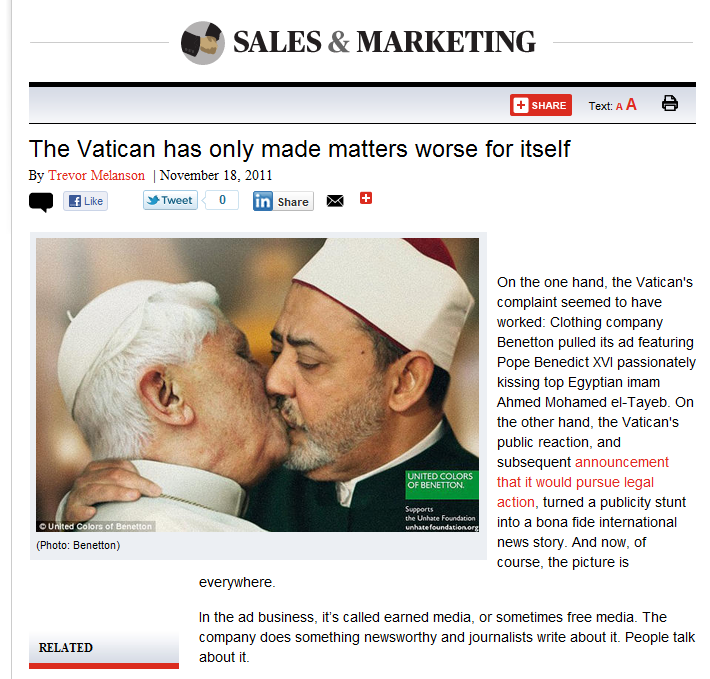
http://www.canadianbusiness.com/blog/business_briefings/57928--the-vatican-has-only-made-matters-worse-for-itself


Any suggestions on a photo caption?


Saudi moral committee

http://bikyamasr.com/48621/saudi-moral-committee-threatens-to-cover-tempting-women-eyes/

Convicted in the court of public opinion


I recently saw Herman Cain complain that he’d been “convicted in the court of public opinion.” Of course, that’s a popular cliché. I’ll just make a few observations:

i) Oftentimes there’s more than one court of public opinion. There’s a court that convicts the accused, but another court that acquits the accused.

ii) Apropos (i), Cain has no doubt been damaged by public allegations of sexual misconduct. However, that cuts both ways. He has public detractors, but he also has public supporters. One tries to pull him down while the other tries to prop him up. So his complaint is rather one-sided.

iii) The court of public opinion is unregulated and often unfair. It has no consistent standards.

However, the court of public opinion can sometimes be superior to the court of law. Judges routinely treat certain types of probative evidence as inadmissible based on legal technicalities. A voluntary confession will be tossed because the suspect wasn’t Mirandized. Background evidence will be peremptorily excluded because it’s “prejudicial.” Incriminating evidence will be excluded because the police didn’t have a search warrant.

Put another way, judges often apply the genetic fallacy. It doesn’t matter if the evidence is probative, but how it was obtained.

As a result, juries often have a very blinkered, very skewed impression of the accused. They only see and hear what the judge allows them to see and hear, which is artificially truncated. By contrast, those who bother to follow the story in the news media may have a much broader database from which to evaluate the allegations.

As a result, there’s nothing inherently or antecedently suspect about conviction in the court of public opinion. Sometimes that verdict is more accurate than a court of law.