
Showing posts with label Steven Wedgeworth. Show all posts
Showing posts with label Steven Wedgeworth. Show all posts
Wednesday, September 19, 2018


Friday, September 07, 2018
Wednesday, September 05, 2018
Monday, September 11, 2017
C.S. Lewis: “Newman makes my blood run cold ...”
In his introduction to the work, “Roman but Not Catholic”, co-author Jerry Walls writes, “We have heard from lots of people who have read John Henry Newman’s famous essay on doctrinal development and found his arguments compelling. I thought it might be helpful to hear from persons who have read Newman but found his arguments deeply confused and his conclusions badly overstated.”
Apparently, C.S. Lewis was one of those people.
C.S. Lewis, Letters to Malcolm chpt. 6
HT: Steven Wedgeworth on Facebook.
Apparently, C.S. Lewis was one of those people.
 |
| C.S. Lewis: “Newman makes my blood run cold ...” |
C.S. Lewis, Letters to Malcolm chpt. 6
HT: Steven Wedgeworth on Facebook.
Wednesday, December 17, 2014
Writing a blank check
Unfortunately, but perhaps predictably, Steven Wedgeworth has done yet another confused post on "torture":
He consistently fails to frame the issue correctly. His latest post is basically worthless.
What is his objective? What does he think he's trying to prove? Is his goal to show that "torture" is intrinsically evil? Is his goal to show that "torture" is wrong in principle?
If so, then attacking the arguments of Dick Cheney or John Yoo is beside the point. I shouldn't have to explain to Wedgeworth that if your objective is to disprove a position, you need to attack the strongest version of the position. Your foil needs to be the most astute representatives of that position.
In fact, there are philosophers who, before attacking the opposing position, will even improve on the arguments of the opposing position. They will make the strongest case they can for the opposing position before they proceed to dismantle it.
As I pointed out before, John Yoo was giving legal advice. That's not even relevant to the moral status of coercive interrogation.
Cheney is a bright guy, but he's not a philosopher or ethicist. And, from what I can tell, he's a nominal Christian at best.
Even if his case for coercive interrogation is ethically flawed, what does that prove? It does't begin to prove that coercive interrogation is wrong in principle. If that is Wedgeworth's objective, he chose the wrong foil.
Here's an example of a more sophisticated argument:
What is Wedgeworth's goal? Is it to assess the interrogation program of the Bush administration? Or is it to assess coercive interrogation as a matter of principle?
For instance, two people can support the same thing for different reasons. My reasons for supporting coercive interrogation can be entirely independent of Cheney's.
The moral question which underlies everything is always answered by a sort of “two wrongs make a right” red herring. The evil of our enemies is all the justification we need.
Speaking for myself, I haven't used that argument.
But the reality of using that sort of argument is that it creates a blank check for any and all actions taken in response to 9/11.
Except that that's exactly what Wedgeworth is doing, albeit unwittingly. There are two different ways of approaching this issue:
On the one hand, you can begin by formulating general criteria, or necessary and sufficient conditions, for licit and illicit interrogation techniques. You then use that to rule in or rule out specific methods.
On the other hand, you can begin with paradigm-cases of licit or illicit interrogation, then analogize to comparable candidates or methods.
Wedgeworth doesn't do either. He vents. He emotes.
He offers no constructive guidance to officials sworn to protect Americans from foreign terrorists. By his intellectual dereliction, he hands them a blank check.
Saturday, December 13, 2014
What are you prepared to do?
Before commenting on Steven Wedgeworth's latest post, I'll revisit something he said in his prior post:
Legal “vengeance” and retribution must still be just. It also does not follow that if a government has the right to capital punishment then it also has the right to all other physical punishments short of death.
But that's a category mistake. Interrogation isn't punitive to begin with.
Now for his sequel:
The so-called “conservative” responses to the Senate torture report are now making their rounds, and they tell us quite a bit about what really matters to certain people. Thus far no one has denied that the most morally repugnant alleged practices actually took place. No one has said, “That’s crazy! We would never use rape as a weapon! We could never forcibly insert food into someone’s rectum! No way!” No. They have not said that. They have attempted to justify the practices by arguing that the practices produced important information, that the proper authorities knew about them, and that our enemies do much worse. But they are not denying those practices.
i) Speaking for myself, I haven't justified that practice.
ii) On the face of it, Wedgeworth's objection is confused. From what I've read, proctoclysis isn't used to obtain intel. Rather, that was used to counteract a hunger strike.
So the question at issue isn't the ethics of coercive interrogation, but the ethics of force-feeding. The fact that Wedgeworth doesn't even register that simple distinction betrays a lack of intellectual seriousness.
Are you prepared to make that threat within a context where it is credible? Are you prepared to carry through with that threat?
Valid question. Is an empty threat a credible threat? Like a poker game, can you tell when your opponent is bluffing?
Let’s be clear about this. The “partisan” nature of the Senate report has nothing at all to do with the identification of the “techniques.” The partisan nature has to do with where the blame should be put and the level of functionality and efficiency claimed for the program. But thus far no one disputes the depraved actions used to obtain information. You cannot skip that point. Anyone who does is irresponsibly avoiding the primary moral issue.
Actually, the partisan nature of the Senate report bears on the interpretation of the techniques. Take Wedgeworth's failure to distinguish between interrogation and fluid resuscitation in case of hunger strikes. We can still debate the morality of the practice, but it's a different issue.
This also isn’t the first time defenders of torture have reserved the right to employ the most barbarous methods if necessary.
What "barbarous" methods is he alluding to? This comes right on the heels of a reference to "weeklong sleep deprivation."Does Wedgeworth deem that to be one of the "most barbarous" methods?
If John Yoo will publicly claim for the US the right to crush the testicles of an innocent child, then it is not at all difficult to believe that the US would threaten to rape someone’s mother. In fact, Yoo’s fiendish imagination almost makes what really happened seem a relief.
i) Once again, this reflects a persistent inability on Wedgeworth's part to draw elementary distinctions. Yoo was addressing a question of legality, not morality.
Something might be grossly immoral, but legal–for the simple reason that that's no law against it. A legal opinion is not the same thing as a moral evaluation. Why does Wedgeworth find it so difficult to think clearly about the issues at hand?
Here's the logical response: "It would be immoral for interrogators to do that, so if it's not against the law, then we ought to pass a law to ban it."
ii) Moreover, that doesn't reflect Yoo's "fiendish imagination." To my knowledge, Yoo didn't originate that hypothetical. Rather, he was responding to a question by Doug Cassel in a public debate. If anything, it originated in the "fiendish imagination" of Cassel, not Yoo.
iii) From what I can tell, it wasn't a prepared answer, but an off-the-cuff answer to a question which Cassel sprang on him.
ii) Moreover, that doesn't reflect Yoo's "fiendish imagination." To my knowledge, Yoo didn't originate that hypothetical. Rather, he was responding to a question by Doug Cassel in a public debate. If anything, it originated in the "fiendish imagination" of Cassel, not Yoo.
iii) From what I can tell, it wasn't a prepared answer, but an off-the-cuff answer to a question which Cassel sprang on him.
Remember Eric Fair. Or how about those lower-ranking soldiers who were arrested? Remember Lynndie England, Megan Ambuhl, Charles Graner, and others. I have no problem saying that they were, at least for a time, moral monsters.
This betrays yet another basic confusion on Wedgeworth's part. He's alluding to the Abu Ghraib scandal. But that fails to distinguish between interrogation and prisoner abuse. He acts as though prisoner abuse is a form of interrogation to extract intel.
I have no problem saying that they were, at least for a time, moral monsters. But now we have to wonder how it was that they became moral monsters.
Why would a Reformed pastor make such a theologically defective claim? He needs to brush up on total depravity.
Are you willing for your daughter to sexually degrade herself in an attempt to obtain information that a detainee may or may not possess? What are you willing to do?
He acts as if they were acting under orders. Even if they were, those would be unlawful orders. Moreover, what does that have to do with interrogation?
There are some things that are off limits. These things are always evil. They are malum in se.
True.
But what of sexual assault? That’s what I keep coming back to.
Yes, that's what he keeps coming back to. Problem is, he only tells us what he thinks is impermissible rather than permissible. So he skirts the issue.
Does he think coercive interrogation is ever justifiable? If so, what methods does he think are morally licit?
Conservatives right now who avoid the gravity of such immoral actions are currently pounding the table.
Except that Wedgeworth is the one who's been pounding the table.
A basic problem is that reactionary critics like Wedgewood foster the very thing they deplore. If a Christian pastor or ethicist tells soldiers or policymakers that they are not allowed to do what's necessary to win a just war, they will simply throw up their hands and exclaim, "Screw morality!" They will still do whatever is necessary. But the Christian critic who takes that approach has emancipated them from having to be morally thoughtful. That invites a Curtis LaMay mentality. If doing what's necessary is evil, then anything goes. That doesn't inhibit them from doing what's necessary. To the contrary, that removes any moral inhibitions whatsoever. The Christian critic has given them no other recourse.
Wednesday, December 10, 2014
Is sleep deprivation immoral?
I'm going to comment on a post by Steven Wedgeworth:
Unfortunately, his post represents the kind of half-baked reasoning that's used to shame Christians into accepting that position.
However, in the wake of the recent Senate Intelligence Committee’s report, there are no longer relevant reasons to prevent us from concluding that the United States did participate in torture and that many of the specific forms were unjust and abhorrent. They were evil.
i) To begin with, the Senate report was a partisan hatchet-job. And it isn't just right-wingers like me who think that:
ii) I, for one, don't deny that some methods like sleep deprivation might be classified as "torture." But that just goes to show how morally elastic the definition is.
As John McCain has ably argued, America has compromised its integrity with the use of enhanced interrogation and thereby weakened the health of the people.
That's an illicit argument from authority. Who made John McCain to be a moral authority on "torture."
This issue also highlights a more basic one. If you have ever defended an evil action because it satisfied personal revenge or gave you a limited opportunity to indulge violent and bloodthirsty passions, then you must repent. This is not a trifling matter. The torture revelations are but a macro-level version of what goes on in every human heart. Only, in this case, the hateful desires were not suppressed or denied but rather fed. Murder begins with unchecked anger in the heart. Torture comes from elevating hatred, or a false sense of moral entitlement, over the inherent dignity of the image of God.
That's a scurrilous hasty generalization. Wedgeworth presumes to impute base motives to everyone who defends "torture" of any kind under any circumstance. That's not an appeal to reason. That's not persuasion. It's browbeating people into submission.
Ask yourselves if you really can and should be defending “rectal hydration.” Why are you not morally shaken by such a practice, or, if you are, why are you still able to overcome that moral compunction?
Why does defending "torture" require me to defend everything that might be classified as torture? Why does defending, say, sleep deprivation require me to defend "rectal hydration"?
Wedgeworth doesn't bother to explain how one entails the other. He doesn't bother to explain why you can't condemn any form of "torture" unless you condemn every form of "torture." What's the logical or moral basis for lumping all these disparate methods into one package–take it or leave it? It's like saying that unless you're a pacifist, anything goes in warfare. Does Wedgeworth have anything to offer besides disapproving rhetoric?
In an ethics class with Dr. Derek Thomas, a few students defended the use of torture as a necessary means to an end, and Dr. Thomas rebuked them sternly, stating that he held torture to be an offense against the image of God.
i) How is sleep deprivation an offense against the image of God?
ii) As I've said on other occasions, one problem I have with this ultimatum is that it's counterproductive. If a Christian ethicist tells people that sleep deprivation is never morally permissible, regardless of how many innocent lives that will save, then many people will reacting by saying so much the worse for Christian ethics. That's a reason not to take Christianity seriously.
Far from acting as a moral restraint, if you tell people that under no circumstances is sleep deprivation ever permissible, they just give up trying to be conscientious. At that point there are no brakes on what they are prepared to do. They become morally thoughtless because you give them no better option.
…there is a definitive moral line along the spectrum (even if we argue where it precisely is), and utilitarian defenses can never justify crossing that line. It does not matter if an action or policy “works” if it is truly evil. It does not matter if an action or policy “promotes American interests” if it is truly evil. It does not matter if an action or policy is associated with a particular political party or patriotic sentiment if it is truly evil. It is never right to do wrong.
I agree with him that some lines cannot be crossed. However, to say that consequences are only morally relevant in utilitarianism is philosophically uniformed.
Moreover, Wedgeworth doesn't bother to explain why consequences should never be a factor in moral deliberations.
The use of sexual assault and threats of sexual assault (and murder!) against family members are the kind of enormities which make rational men go mute in shock and moral disbelief...Surely sexual assault and threats against a suspect’s family cross the moral line and are wholly out of the question for reasonable people to consider.
i) Critics like Wedgeworth lack the patience to draw important ethical distinctions. But their intellectual impatience betrays a lack of moral seriousness. If you take right and wrong seriously, if you take moral deliberation seriously, then you can't allow yourself these intellectual shortcuts. I'm struck by how often those who invoke moral rigorism skimp on analytical rigor.
ii) Notice how he lumps two distinct cases into one, as if physical harm and threatening harm are morally equivalent. Is there no moral difference between actually harming someone and threatening to harm someone? Why should anyone accept Wedgeworth's glib equivalence?
iii) Moreover, who is being verbally threatened? Is this directed at the terrorist, or a family member? Are they telling the terrorist that unless he cooperates, they will harm a family member? Or are they holding a family member hostage, whom they threaten to harm unless the terrorist cooperates? Are those morally equivalent situations?
iv) Is there a moral difference between a threat which the interrogator intends to carry in case the terrorist refuses to comply, and an empty threat which is credible to the terrorist, even though–unbeknownst to him–the interrogator has no intention of making good on? Seems very different to me.
v) As a rule, I think family members are off-limits, but it's easy to think of exceptions. What if terrorism is the family business. What if his father or twenty-something brother is a terrorist, too? Would it be wrong to "torture" them to make him break?
Or, to take a tougher case, is it intrinsically wrong to scare the child of a terrorist to make him break, if that will save the thousands of innocent lives?
Sometimes parents deliberately scare their children as a deterrent. They warn them about how dangerous or painful a particular activity is. Suppose you live in Darwin, Australia. That's infested with saltwater crocodiles. Surely it would be prudent to tell your kids scary stories about saltwater crocodiles to make them cautious.
Monday, February 24, 2014
The liturgy of “the early church” actually begins in the fourth century.
http://calvinistinternational.com/2014/02/24/quest-historic-liturgy/
...what many people typically mean when they speak of the liturgy of “the early church” is actually a historically-contingent sample from a span of about four or five hundred years, beginning with, rather than climaxing in, the fourth century. This sort of observation does not tell us whether a certain liturgical form is good or bad, nor even better or worse, but what it does do is place the entire discussion firmly in the realm of human law, tentative investigation, and, thus eventually, prudential application.
What this means for Protestants seeking to appropriate the findings of the liturgical renewal movement is that they must always receive such proposals in a somewhat critical manner. They can be appreciative of good order, appealing aesthetics, and even a sort of historical pedigree, but they can never confuse these things with divine right, nor even “the catholic tradition.” All “historic” liturgies should be brought into conversation with biblical and Reformational principles. Perhaps, most of all, we should keep in mind the great freedom we have in these manners. A certain amount of diversity is granted to us by the freedom of the gospel, and this diversity has been with the Christian church since the earliest days.
Monday, November 18, 2013
“Happy Birthday, Unam Sanctam”
 |
| “I’m the boss of you!” |
“Unam Sanctam is a dogmatic declaration if ever any existed”…
Today marks the 711th anniversary of Boniface VIII’s infamous bull. … Let us make just a few observations to demonstrate that Boniface’s bull was not merely a historical or “political” document, but rather that it was founded on exegesis, traditional Roman Catholic philosophy, and its understanding of both the nature of both spiritual and temporal power. The bull even concludes with a moral and soteriological imperative, thus giving it the character of a de fide proclamation…
There is no need to defend the quality of this exegesis. We frankly believe it to be ridiculous, severed entirely from both the literary and historical-grammatical context of the gospels. …
Three claims are made here. 1) Both swords, the spiritual and material, belong to the power of the Church, 2) The material sword is administered by the kings and soldiers as they are guided and instructed by the will of the clergy, 3) Temporal authority must be subordinated to spiritual. This is the clear meaning of the text and certainly the sense which the pope intended. All three claims are grounded in the Holy Scriptures….
CONCLUSION
Unam Sanctam concludes with a clear and definitive statement about the necessity to submit to the pope in order to be saved:
Furthermore, we declare, we proclaim, we define that it is absolutely necessary for salvation that every human creature be subject to the Roman Pontiff.
Notice the key terms: “declare,” “proclaim,” “define,” and “absolutely necessary for salvation.” This was not merely earthly politics, nor was it meant to be the opinion of only one administration. Unam Sanctam is a dogmatic declaration if ever any existed, meant to claim universal jurisdiction over the church with an absolute and perpetually binding authority. Failure to comply with this declaration is, according to its claims, a damning offense.
Practically speaking, Unam Sanctam is simply ignored [by Roman Catholics who seem to be embarrassed by it]. It was this way from the beginning, as Philip IV’s response was to sack the Lateran palace and create a new papacy for himself. Still, the claims have never been renounced by the Roman church, and after the definition of papal infallibility at Vatican I, it does not seem that they can be.
Saturday, September 07, 2013
“Behold, I make all things …”
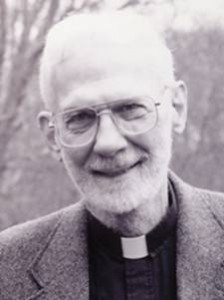 |
| Robert Farrar Capon, 1925-2013 |
Though he described himself as a “high churchman” and a “Thomist,” he was more simply a Protestant Episcopalian of the rather classic variety. His summation of the Reformation certainly showed it:
The Reformation was a time when men went blind, staggering drunk because they had discovered, in the dusty basement of late medievalism, a whole cellar full of fifteen-hundred-year-old, two-hundred proof Grace–bottle after bottle of pure distilate of Scripture, one sip of which would convince anyone that God saves us single-handedly. The word of the Gospel–after all those centuries of trying to lift yourself into heaven by worrying about the perfection of your bootstraps–suddenly turned out to be a flat announcement that the saved were home before they started…Grace has to be drunk straight: no water, no ice, and certainly no ginger ale; neither goodness, nor badness, not the flowers that bloom in the spring of super spirituality could be allowed to enter into the case.
This made me laugh and cry at the same time.
Friday, August 02, 2013
Steven Wedgeworth on values: “What is valuable?”
http://calvinistinternational.com/2013/08/02/the-government-reinforcing-values/
“What is valuable?” – good question.
“What is valuable?” – good question.
Tuesday, April 30, 2013
The myth of “church unity” in the early church
Steven Wedgeworth is just simply awesome.
http://calvinistinternational.com/2013/04/29/the-myth-of-the-ecumenical-early-church/
http://calvinistinternational.com/2013/04/29/the-myth-of-the-ecumenical-early-church/
Friday, November 30, 2012
With respect to “church unity”: “the best way forward”
From Steven Wedgeworth: “Reformed Dreams and Church Unity”:
Steven rejects this notion as “quite silly”:
This, of course, followed the pattern that had been present for centuries in Christianity, since the time of Constantine. The Orthdodox yearn for that first millennium of Christianity, “the Church of the Seven Councils”, as they say, but it should be remembered that each of those seven councils was called by, and sponsored by, an emperor. The medieval papacy was, among other things, an effort to get the church out from under the civil government. Remember Unam Sanctam: “… we declare, we proclaim, we define that it is absolutely necessary for salvation that every human creature be subject to the Roman Pontiff.” This was written to a king.
Steven continues:
Pastor Danny Hyde gave an address to NAPARC a few weeks ago, arguing for the relationship between church unity and personal piety. His argument was that the Reformed churches stand in need of spiritual revival so that they can grow in personal charity before they can ever hope for church unity.
Steven rejects this notion as “quite silly”:
Many of the 17th century divines, especially those present at Dort and Westminster, were, judged by our standards today, extremely distrustful of one another and even downright hostile and mean. Gomarus challenged Martinius to a duel, on the floor of the Synod, because Martinius claimed that divine election was grounded “in Christ.” This notion was so offensive to Gomarus that he was willing to enter into armed combat with the potential to kill Martinius (see R. Letham’s The Work of Christ, 55). The English delegates at Dort even got into trouble because their clothes were too ornate and brightly colored. There were plenty who held that their Presbyterian polity was handed down directly from Acts 15.
Why was it that these men were able to “get together” then? If it wasn’t their personal piety, what could the answer be?
It was the magistrate. The king made them. Even at Westminster, Parliament issued the call, and the motivation was for a uniform state church. It didn’t work, of course, and those revived souls found themselves later chopping off the king’s head.
This, of course, followed the pattern that had been present for centuries in Christianity, since the time of Constantine. The Orthdodox yearn for that first millennium of Christianity, “the Church of the Seven Councils”, as they say, but it should be remembered that each of those seven councils was called by, and sponsored by, an emperor. The medieval papacy was, among other things, an effort to get the church out from under the civil government. Remember Unam Sanctam: “… we declare, we proclaim, we define that it is absolutely necessary for salvation that every human creature be subject to the Roman Pontiff.” This was written to a king.
Steven continues:
So getting overly sentimental about the Reformed past is not going to help us today. In fact, an argument could be made that Reformed Christians and even Protestants are likely as united or more united now than ever before. Sure, we bicker in blog comments, but we mostly do think of each other as legitimately Reformed and even true Christians. Unbelievably, most Calvinists today even allow that Arminians are saved!
A united Reformed polity is not obviously desirable, let alone possible or expedient in our current civic context. The fulfillment of John 17 is the possession of the Holy Spirit and then the extension of love and charity to all. Pastor Hyde admits this briefly, but says that we can and should apply this further, towards church unity. But a sincere and cordial meeting of ETS is as much a fulfillment of John 17 as is a NAPARC meeting. We need some further argument why we should apply John 17 more strictly than personal love and fellowship.
Church polity and discipline are ultimately issues of law and, therefore, under the guidance of reason. Different congregations may legitimately have different polities and not be in schism. And, as history has consistently shown, church polities are typically modeled after or at least consistent with the civic polity of their land. In a variegated and diverse polity like America, it only makes sense that our churches would have political diversity as well.
The key to “unity” in this context is charity. Recognizing the Word as sufficient for “identifying” the church and being modest in our demands and our “dreams” is surely the best way forward.
Saturday, September 22, 2012
“Family Feud”; or, “Our American Christian Heritage”

It’s brilliant not merely because he addresses (in an irenic way) the substance of all the contentions that are made in that book, not least of which is Two Kingdoms theology. He discusses the issue of who is the proper bearer of “the Reformed tradition”. He brings a sharp focus to bear upon “Christless Christianity” (and it’s “Gospel-Driven” counterpart, the “Lost Soul of Protestantism, and more). He discusses Protestant Scholasticism and Richard Muller (the real heroes of this story); and lots, lots more. (The whole thing is more than 7500 words, but still, I highly recommend giving it a look).
But beyond the issues, he talks about something that’s a lot deeper:
Michael Horton, who ends up bearing the brunt of the critique, described the book as “a new low in intra-Reformed polemics.”
To be the nastiest and most unfair polemicist in the Reformed community would be quite the accomplishment. Prof. Frame would have to outpace several of the Escondido men themselves, along with any number of Clarkians and theonomists – and that would only take into account the American cranksters! As biting and even sometimes inflammatory as some of Prof. Frame’s writing may be, this book does not take the prize for nastiness. And it is certainly a long way off from the battles of those golden years of Reformed confession-writing. We should never forget that the debates carried out by our Reformed ancestors, even the men now idolized by the Reformed gatekeepers, at times involved literal hatchet jobs.
Wedgeworth is spot-on when he says “We should never forget that the debates carried out by our Reformed ancestors, even the men now idolized by the Reformed gatekeepers, at times involved literal hatchet jobs”.
I’ve been hanging out at D.G. Hart’s blog recently because of his fun interactions with Bryan Cross. I came to Reformed theology largely through Hart’s books about Machen, whom I came to regard as the heir of Calvin through “Old Princeton” (though I tend to tune out Hart’s disagreements with Turretinfan over 2K views). While I agree with Steve Hays that “natural law” fails to address some very difficult moral issues, I don’t think anyone is going to hell over the Westminster “Two Kingdoms” theology, either.
I’ve known Scott Clark for about as long as there has been an Internet through which we could email. I’ve met Michael Horton. I write for a blog where Steve Hays, who calls himself a Biblicist, has been strongly influenced by the writings of John Frame (and presumably his “Something Close to Biblicism), which I like a lot, and with which I fundamentally agree. Clark writes scathingly about Frame. Clark is not well-regarded by Hays, but I’ve learned more about historical theology from Scott Clark than anyone else, I think.
Cyril of Alexandria was apparently a pretty good theologian. But he was just simply a thug as well. He can be a lesson for folks today.

American Christianity certainly has its problems. But Christianity has always had problems. And despite the problems in American Christianity, it is our Christianity now.
I’m no fan of things like “bishops”, but I’m a very big fan of an old fart who goes by the handle “Embryo Parson”. There was a time when I despised him, but our more recent friendship shows us how (“in the Lord”) such transformations are possible. And I do think he has a very healthy attitude toward American Christianity.
Wedgeworth does not simply point out the problems. He points to a solution:
Instead, we do need a Reformed ressourcement. It needs to move forward by building upon the tradition. It should be a Reformed irenicism that is really Reformed, having clearly-stated and definitively Reformational principles. It should be an irenic catholicity that achieves peace through courageous and rational dialogue and debate, charitable but assertive. And it must always be truth-telling, with regards to itself and its opponents. Prof. Frame possesses the latter qualities of peace and honest integrity. The Escondido men aspire towards the former qualities of consistency with the great Reformed tradition, ….
Closing:
We think we have begun to point to a way beyond the dead ends and impasses of ultra-confessionalism on the one hand, and a Neo-Calvinism so “neo” it is no longer really Calvinist on the other. And we are finding that many young pastors and churchmen, seeing the problems of the two opposing camps which have so far dominated the American Reformed world, are quite ready to step out onto that road.
Tuesday, June 05, 2012
Common Sense and "the Culture of Persuasion"
While I don't agree with everything they say, Steven Wedgeworth and Peter Escalante have provided some of the clearest commentary in the last 24 hours:
http://calvinistinternational.com/2012/06/04/clericalism-or-concord/:
http://calvinistinternational.com/2012/06/04/clericalism-or-concord/:
We must begin, as Old Princeton did, with the proper role of reason. Far from being a latent threat to vibrant faith, reason is the common light of all mankind, given to us in our creation as imago dei. Though not autonomous, reason is still authoritative, leading us away from confusion and incoherence. As such, it is itself a necessary precondition to all dialectic, even the logical and consistent reading of the Holy Scriptures. It is reason illumined by faith, ultimately, that convinces our consciences to accept a belief as certain. No external mechanism, no Pope, no presbytery, no liturgico-narrative faith community prancing in chasubles, can ever take its God-ordained place. Abandoning one’s personal reason in a move to allow someone else’s reason to work vicariously on your behalf is a moral failure and a grave sin. The answer to such a vice is the virtue of courage. Evangelical reason only speaks to brave men.
While reason is the necessary tool for reading the Holy Scriptures, it is still, nevertheless, the Scriptures which are the only infallible spiritual authority. This is true because of their nature: they are breathed out by God. And as God’s Word, there can be no standard above them to which they must answer. Rather, our job is to listen to the Word. As such, the human element is wholly responsive, seeking to clearly identify the content of that Word and then accurately apply it where appropriate. This is why the historico-grammatical method of hermeneutics must remain as the pillar of our exegesis. Only it can reasonably demonstrate the intended meaning of the Scriptures, and it can do so objectively and perspicuously. It may take varying amounts of work, even technical training in places, but it does not demand that any violence to be done to the human will, nor does it require that nature be supplanted by purportedly supernatural and thus unfalsifiable ecclesio-political apparatuses.
The evangelical doctrine of the universal priesthood has become merely nominal in many Reformed churches, which is why a number of Reformed people are predisposed to admiration of Rome. We need to reaffirm this fundamental doctrine, and its corollary of the representative character of the ministry. We must become more truly Calvinian on this score, by becoming more “Lutheran” and less clericalist. We should reject false definitions of the unity of the church, and recognize its actual unity on the ground, which underlies all the legitimate congregational forms and their modes of denominational association. We must also recognize the liberty of the Christian people to freely gather around the Word as center, without artificial ecclesial borders being enforced and policed by a clergy claiming a divine right authority. If the Smith family has good reason to be at St. Adiaphoron Lutheran Church, and their neighbors the Jones family has good reason to be at Putting Green Presbyterian across the street from it, so far from being a scandal, this is actually a fine thing.
Where all of this practically takes us is what many political scientists and historians have described as the culture of persuasion. We do not look to a political institution or other coercive power to artificially provide unity and certainty. There is no magic “key” to unity in external diversity. Rather, we respect the rights of conscience and seek to persuade others through the right use of reason and Biblical exegesis, confident that freedom and charity lead to the only unity worth having.
Thursday, April 26, 2012
King James, of “King James Bible” Fame
http://calvinistinternational.com/2012/04/26/the-faith-of-king-james/
What we can point out, however, is
that whatever private proclivities James might or might not have had (and they
are far from proved), he had a very public Protestantism and there is no reason
whatever to doubt that it was personally sincere. The stamp he sought to put
upon his commonwealth, which was quickly becoming the most important in the
world, was a moderate Protestant irenicism, in which the greatest theologians
and scholars, the English clergy who earned the title stupor mundi, were endorsed and supported by the crown. James also sought to unify the Reformed
churches of England, Scotland, Ireland, and those on the Continent with various
Lutheran churches. James was confident
enough to attempt this because of family connections he possessed with
Scandinavian royalty. And though he was
ultimately unsuccessful in this reconciliation, the attempt was highminded and
heroic....
… Now, as to Faith, which is the nourisher and quickner of Religion, as
I have already said, It is a sure perswasion and apprehension of the promises
of God, applying them to your soule: and therefore may it justly be called the
golden chaine that linketh the faithfulle soule to Christ: And because it
groweth not in our garden, but is the free gift of God, as the same Apostle
saith, it must be nourished by prayer, Which is nothing else, but a friendly
talking with God. (214)
Such a confession is wholly
consistent with the magisterial Reformers.
James is clearly evangelical. For
those familiar with a Richard Hooker-brand of Protestant Anglicanism, James’
ideas are a rather neat fit.
Friday, April 13, 2012
The Christology of the New Testament
There seems
to have been a round of dust-ups over Christology in recent days.
The opening
words of David King’s work struck me hard when I first read them, and they
strike me hard now, in the matter of Christology:
Christianity is preeminently a revealed
religion (religio revelata); a
revelation of the one true and living God manifested in the person of his Son,
the Lord Jesus Christ. When we speak of revelation in general terms, we mean
that process by which God has disclosed what otherwise could not be known of
himself. Only God can reveal God. Scripture states that ‘the secret things belong
only to the Lord our God, but those things which are revealed belong to us and
to our children forever, that we may do all the words of this law’ (Deut.
29:29). (From David King, “Holy Scripture: The Ground and Pillar of Our Faith,Vol 1”. Battle Ground, WA: Christian Resources, Pg 25.)
Thus, only God
can tell us the things he tells us about himself. And does so in a way that
what is revealed “belongs to us and to our children forever”. That way is
through the Scriptures.
The editors
of Bavinck’s Reformed Dogmatics, in their introduction to the section on “The
Person of Christ”, note: “The doctrine of Christ is the central point of the
whole system of dogmatics.” And this is merely the result of the understanding
of Hebrews 1: “In the past God spoke to our ancestors through the prophets at many
times and in various ways, but in these last days he has spoken to us by his
Son, whom he appointed heir of all things, and through whom also he made the
universe. The Son is the radiance of God’s glory and the exact representation
of his being, sustaining all things by his powerful word”.
So we had
better get our Christology, our study of Christ, correct.
Steve linked
to some articles on Christology at a relatively new site called
CalvinistInternational.com. I believe the writer here, Steven Wedgeworth, is
precisely correct when he says:
Reformed theologians … should be
profoundly confident in their own tradition of doctrine and reflection. In
fact, B.B. Warfield wrote some extremely insightful essays in his collection,
The Person and Work of Christ, ... The Reformed masters interact with
ancient and modern arguments without skipping a beat. Bavinck's third volume of
Reformed Dogmatics is magisterial, confidently interacting with world religions
and philosophical concepts from the broadest of traditions. He consistently
connects the right dots without getting side-tracked.
The Reformed tradition's classic
distinctive is that God is always and ever God, and man is always and ever man.
Even in the unity of Christ, the two natures remain unmixed. And it is God who
does the saving. Far from being a weakness, any reluctance to go beyond this is
our foremost achievement: a biblical theology of Christ. Jesus didn't go around
teaching people how to energize their hypostases. He preached the kingdom,
judgment, and how to gain rest in Him. This is the gospel, and this also happens
to be both catholic Christology and Reformed theology.
I hope to
say more about this down the road. But Steve Hays makes the most important
distinction of all when he says: “Now, our primary concern ought to be with NT
Christology, not patristic or conciliar Christology.” The “magisterial”
Bavinck, too, points to the Scriptures as our primary knowledge of Christ: “The
Synoptic [Gospels] already contain all the things that the apostles and the
Christian church later taught about taught about the person of Christ. True,
before Jesus’ resurrection, the disciples did not yet have the right insight
into his person and work. The Gospels themselves tell us that. It is for this
reason that Jesus in his teaching also took account of the diciples’ capacity
to understand, gradually introduced them to the knowledge of his sonship and
messiahship, and left a great deal to the instruction of the Spirit (John
16:12). But the resurrection already marvelously illumined the person and work
of Christ. From that time on, he was to all the disciples “a heavenly being”;
the teaching of Paul and John concerning the essential character of Christ was
in now way opposed by any of the other disciples.” (Bavinck, Vol 3, pg 252).
I’ve already
hinted that, per Hurtado, Paul’s
letters themselves are the best and earliest source of what the earliest
Christians believed about Christ.
Oscar
Cullmann, in his “The Christology of the New Testament” (Philadelphia, PA: The
Westminster Press (translated from the German Die Christologie Des Neuen Testaments, Tubingen, 1957), goes into
some detail about this:
The ancient formulas (such as those
found in 1 Cor 8:6 and 2 Cor 13:14, for example) are especially important for
knowledge about early Christian thinking, because, as short summaries of the
theological convictions of the first Christians, they show what these
Christians emphasized, which truths they regarded as central and which as
derived. We can therefore say that early
Christian theology is in reality almost exclusively Christology. In so far
as it concentrated its whole theological interest for several centuries in
Christological discussions, the early Catholic Church remained close enough to
the early Church….
It must be acknowledged from a
historical point of view, of course, that it was necessary for the Church at a
certain period to deal with the precise problems resulting from the Hellenizing
of the Christian faith, the rise of Gnostic doctrines, and the views advocated by
Arius, Nestorius, Eutyches and others. That is, it was necessary for the
[later] Church to deal with the question of the natures and attempt to answer
it. We may say, however, that although the Church attempted a solution to the
problem by reference to the New Testament, its statement of the problem was
nevertheless oriented all too exclusively in a direction which no longer
corresponds to the manner in which the New Testament itself states it.
The
New Testament hardly ever speaks of the person of Christ without at the same
time speaking of his work … When it is asked in the New Testament ‘Who is
Christ?’, the question never means exclusively, or even primarily, ‘What is his
nature?’, but first of all, ‘What is his function?’ Therefore, the various
answers given to the question in the New Testament (answers which are expressed
in the various titles we shall investigate one after the other) visualize both
Christ’s person and his work. This applies even to the titles of honour
referring to the pre-existent Christ ….
As
a result of the necessity of combating the heretics, then, the Church fathers
subordinated the interpretation of the person and work of Christ to the
question of the ‘natures’. In any case, their emphases, compared with those of
the New Testament, were misplaced. Even when they did speak of the work of
Christ, they did so only in connection with discussion about his nature. Even
if this shifting of emphasis was necessary against certain heretical views, the
discussion of ‘natures’ is none the less ultimately a Greek, not a Jewish or
biblical problem (pgs 2-4).
So, we must
know what we know of Christ primarily from the New Testament. To be sure, it
was important, as Bavinck noted, to draw some “clear-cut boundaries” “within
which the church’s doctrine of Christ would be further developed” (v. 3, pg
255). The formula of Chalcedon helped to do that. But the substance of the
doctrine of Christ always must be Scriptural, not speculative.
Subscribe to:
Posts (Atom)