Showing posts with label Reformation500. Show all posts

Monday, October 30, 2017

Martin Luther’s work from 1512–1517

Following up on some thoughts of mine to the effect that we ought to be thinking about a Reformation Season, I wanted to post some background information about Martin Luther. Much of this is something that many of us are familiar with, but as well, in the spirit of Pittsburgh Steelers coach Chuck Noll, you’re never too advanced to remember to practice the fundamentals.

Luther combined the threefold office of sub-prior, preacher and professor. He preached both in his convent and in the town-church, sometimes daily for a week, sometimes thrice in one day, during Lent in 1517 twice everyday. He was supported by the convent. As professor he took no fees from the students and received only a salary of one hundred guilders, which after his marriage was raised by the Elector John to two hundred guilders.

He first lectured on scholastic philosophy and explained the Aristotelian dialectics and physics. But he soon passed through the three grades of bachelor, licentiate, and doctor of divinity (October 18th and 19th, 1512), and henceforth devoted himself exclusively to the sacred science which was much more congenial to his taste. Staupitz urged him into these academic dignities, and the Elector [Frederick the Wise] who had been favorably impressed with one of his sermons, offered to pay the expenses (fifty guilders) for the acquisition of the doctorate. Afterward in seasons of trouble Luther often took comfort from the title and office of his doctorate of divinity and his solemn oath to defend with all his might the Holy Scriptures against all errors. He justified the burning of the Pope’s Bull in the same way. But the oath of ordination and of the doctor of theology implied also obedience to the Roman church (ecclesiae Romanae obedientiam) and her defence against all heresies condemned by her.

With the year 1512 his academic teaching began in earnest and continued till 1546, at first in outward harmony with the Roman church, but afterward in open opposition to it.

Wednesday, November 02, 2016

“Pope Francis” reins in his tongue; issues no controversial statements in meeting with Lutherans in “Reformation Day” commemorations

“Pope Francis” with Lutheran Rev. Martin Junge,
the general secretary of the World Lutheran Federation,
and “Archbishop” Antje Jackelen,
Lutheran Archbishop of Uppsala and
“the Primate of the Church of Sweden”
Over the last few days, there have been several articles regarding the “Pope Francis” trip to Lund, Sweden, to meet with the female Lutheran bishop. Uncharacteristically for him, there doesn’t seem to be any controversial statements that came out of the trip.

LUND AND MALMO, SWEDEN -- At a first-of-its-kind ecumenical event marking 500 years of separation between Lutherans and Catholics after the Protestant Reformation, Pope Francis on Monday urged members of the two faith communities to "mend a critical moment of our history" by forging new common paths together.

Speaking in a 12th-century cathedral here that was once Catholic and is now Lutheran, the pontiff also praised some of the reforms called for by Martin Luther, whose famous writing of 95 theses led to a fracturing of Christianity across Western Europe.

"We have a new opportunity to accept a common path," Francis told Lutherans and Catholics during a joint ecumenical prayer service at Lund's cathedral with representatives of the Church of Sweden and the Lutheran World Federation.

"We have the opportunity to mend a critical moment of our history by moving beyond the controversies and disagreements that have often prevented us from understanding one another," he continued.

The pope later added that the half a millennia of separation between the two faith groups has "enabled us to understand better some aspects of our faith," noting specifically: "With gratitude we acknowledge that the Reformation helped give greater centrality to sacred Scripture in the church's life."

Sunday, October 23, 2016

Is “Pope Francis” going to Celebrate St. Martin Luther?

“Pope Francis” in the shadow of Martin Luther
Is “Pope Francis” using the power of “the papacy” to dismantle “the papacy”?

The traditionalist Roman Catholic website Rorate-Caeli recently asked the question, “To which Church does Pope Bergoglio belong?

Already on the books for “Pope Francis” is a scheduled trip to Lund, Sweden, to commemorate the 500th anniversary of the Reformation (October 31, 2017).

Two anniversaries overlap each other in 2017: the 100 years of the Fatima apparitions, occurring between May 13th and October 13th 1917, and the 500 years of Luther’s revolt, beginning in Wittenberg, Germany, October 31st 1517….

The start of the centenary of the Fatima apparitions on October 13th 2016 was buried under a blanket of silence. That same day, Pope Francis received in the Paul VI Audience Hall, a thousand Lutheran “pilgrims” and in the Vatican a statue of Martin Luther was honoured, as appears in the images Antonio Socci published on his Facebook page. Next October 31st, moreover, Pope Francis will go to Lund in Sweden, where he will take part in a joint Catholic-Lutheran ceremony commemorating the 500th anniversary of the Reformation. As can be read in the communiqué drawn up by the World Lutheran Federation and the Papal Council for the Promotion of Christian Unity, the aim of the event is “to express the gifts of the Reform and ask forgiveness for the division perpetuated by Christians of the two traditions.

The Valdese theologian and pastor, Paolo Ricca, involved for decades in ecumenical dialogue, voiced his satisfaction “seeing as it is the first time a Pope commemorates the Reform … By taking part in the commemoration, as the highest representative of the Catholic Church is prepared to do, means, in my view, to consider the Reform as a positive event in the history of the Church which also did some good for Catholicism...

Earlier I’ve noticed that “Pope Francis” intends to be cleaning house. In that article, I noted that “it seems, at the very least, that this pope is going to move in the direction of conciliarism, and as he indicated once before, in the direction of the the Ravenna document,” an unofficial document prepared in conjunction with some Eastern Orthodox writers that suggests possible ways for a return to the “conciliarity” of the first nine centuries of church history.

This interview with Ricca also suggests that there may be some radical changes afoot:

According to Ricca, the main contribution offered by Pope Francis is “his effort to reinvent the papacy, that is, the search for a new and different way of understanding and living the ministry of the Bishop of Rome. This search – presuming my interpretation somewhat hits the mark - might take us a long way, since the papacy – because of the way it has been understood and lived over the last 1000 years – is one of the great obstacles to Christian Unity. It seems to me Pope Francis is moving towards a model of the papacy different to the traditional one, with respect to which the other Christian Churches might take on new positions. If it were so, this theme might be completely reconsidered in ecumenical circles.

The fact that this interview was published on October 9th by Vatican Insider, considered a semi-official Vatican site, makes one think that this interpretation of the Lund trip as well as the papal intentions, have been authorized and are agreeable to Pope Francis [italics in original, bold emphasis is mine].

In his “cleaning house”, just how far does pope Bergoglio intend to go?

Thursday, April 23, 2015

A Short Defense of Sola Scriptura

A Short Defense of Sola Scriptura
Stephen Wolfe has produced a blog post entitled “A Short Defense of Sola Scriptura” – a link to it has been posted on the front page of The Gospel Coalition (in case it leaves there soon, I’ve put a screen capture of it on the right).

He writes:

… the texts were received as scripture and later codified in the form of the canon. Sola Scriptura is simply the following: the sole rule of faith is contained in texts that have been received as scripture. It is only a consequence of this principle that one can say that all doctrine must come from the sixty-six book canon. The doctrine of sola scriptura is not about a list of books, but the principle that all doctrine must come from scripture. In other words, all doctrine must come from a certain type of revelation, namely, inscripturated divine communication. The codification of the canon as a list of books is subsequent to the receiving of texts as scripture, not prior to it; and saying that the rule of faith is contained in the sixty-six book canon of scripture presupposes this codification as subsequent.

Read the entire blogpost here.

See also: The Twenty-Seven-Book New Testament Before Athanasius.

See also: My series of articles on Michael Kruger’s “Canon Revisited”.

Saturday, February 07, 2015

“Reformation500.com”

For anyone who has visited the site “Reformation500.com” in recent days, and has simply found a blank page, please don’t be alarmed. The URL “Reformation500.com” is now in the custody of the Reformed Theological Seminary – yes, RTS.edu. The seminary is planning to use that URL for events and activities surrounding the 500th anniversary of the Reformation (October 31, 2017).

I’m sure you’ll see more about this in the coming months. However, the blog is still intact for now, at reformation500.wordpress.com, and all the articles are still in place there. Some of us who write there are going to continue to be posting articles, Lord willing.

Monday, September 22, 2014

Remember the Reformation

Over at my Reformation500 blog, I’ve been working through Richard Muller’s Post-Reformation Reformed Dogmatics series. I’ve acquired this set through Logos Bible Software, and while it was costly, it was every bit worth the price.

Over there, I’ve been working through Volumes 1 and 3 (“Prolegomena” and “Doctrine of God”). Those deal a lot with epistemology and metaphysics and how the Reformers dealt with the Medieval discussions and how the “Reformed Orthodox” really tried to clarify the Medieval discussions from a truly Biblical perspective.

Muller’s Volume 2 deals with “the Doctrine of Scripture” – and I think that’s a good thing to review in the light of some of the things that are going on in our day. Of course it may be said that “this was all from a pre-critical era” and that’s true, but it’s still important to see how the individuals from this era of “Reformed orthodoxy” worked their best to understand all of the history of the church before them.

Muller’s central thesis is something like this:

Tuesday, September 09, 2014

The difference between “What God Knows” and “What He Reveals”

http://reformation500.com/2014/09/09/what-god-knows-and-what-he-reveals/

What is “theology”? Richard Muller shows how the Reformed Orthodox began to define the term in using some pre-existing categories; in doing so, he also fleshes out the difference between an epistemology of Thomas Aquinas and that of other writers.

A. To “define theology”: Muller writes:
The theologies of the Reformers, particularly those that took the form of loci communes, did offer a finely conceived approach to the extraction of topical materials from Scripture and to the gathering of these materials into the topics or loci and did offer a refined sense of method and order for the organization of the loci, in accord with the humanist models of the era.

Still, there remains a formal difference between the large scale theologies of the second generation Reformers and the major dogmatic compendia of their successors, a difference identifiable in part by an increasingly detailed theological definition of the task of theology.

Whereas all of the writers just mentioned devoted some attention to the issue of the human knowledge of God and to the issue of scriptural revelation, none of them saw fit to discuss the character of theology as an intellectual discipline set in the context of a finite world and accommodated to the forms of human knowing: none, in short, define theologia (Muller, R. A. (2003). Post-Reformation Reformed Dogmatics: The Rise And Development Of Reformed Orthodoxy; Volume 1: Prolegomena To Theology (2nd ed., pp. 221–222). Grand Rapids, MI: Baker Academic).

Read more.

Thursday, September 04, 2014

“The mandate to create includes a mandate to display the glory of God”

Human beings have an aesthetic need built into their being…
Stephen Wolfe works to define a Groundwork for a Reformed Theology of Public Aesthetics.
How one ought to love one’s neighbor is the subject of much discussion in Christianity.... What is often left out in these discussions is the aesthetic demands of loving one’s neighbor. We always ask, what ought we do? or what ought we think? But why not the question, how ought things look? Following much modernist thought, Reformed Christians have separated the aesthetic from the ethical and, I submit, the Gospel. We have come to believe that only ideas are formative of character, virtue, and holiness in a community. My contention in this post is that human beings—as created beings meant to belong in creation—have an aesthetic need built into their being. I also argue that loving one’s neighbor includes seeking to fulfill this aesthetic need through proper community and town/city development. In addition, I argue that the modern view of nature as something other than and separate from man is problematic and must be rejected.

We should keep in mind that the Son of God did not come to earth simply to show the way of righteousness, or even just to bear the sins of humankind. He came to restore creation and finish the work that God set for Adam. To love God and to love man is not simply to fulfill a set of disconnected ethical demands, but to work toward the original intent of creation, namely, to build beautiful and harmonious communities that express a love for God and each other. The ultimate demand of God for humankind is a unity of the aesthetic and the ethical. We are not simply to love, but to love with beauty….

This is an important concept because, as he says, “Reformed theology rejects the nature/grace dualism of medieval theology. This theology, made explicit by Thomas Aquinas, states that even prior to sin, nature required a superadded feature, namely, grace in order to keep it from falling. In other words, nature did not have an original integrity; it required an addition supernatural category to remain away from corruption.”

On the contrary, Genesis relates in many places that God’s creation was “good”, “good”, and “very good”. As I’ve related earlier:

The typical Reformed understanding is that Adam was created upright, or righteous, and that God justified, or declared righteous, the initial creation as well as man in his declaration that everything was “very good” (Gen 1:31). We see the Westminster Larger Catechism (q. 17) echo this point when it states that God created man in “righteousness, and holiness, having the law of God written in their hearts, and the power to fulfill it” (John Fesko, in “Justification: Understanding the Classic Reformed Doctrine” Phillipsburg: P&R Publishing Company, pg 372).

Stephen argues that the goodness, righteousness, and holiness extend to all of creation. “Reformed theology rejected this [Medieval/Thomist] dualism by positing that nature has its own integrity, that it does not require a superadded supernatural category to be good.” Read the entire article here.

Wednesday, July 30, 2014

The hermeneutic of the WCF vs the hermeneutic of Newman

http://reformation500.com/2014/07/30/the-hermeneutic-of-the-wcf-vs-the-hermeneutic-of-newman/

Here is my look at a comment that is instructive because it seeks to show how “Roman Catholics and Protestants do the same thing”, but where really, they are doing something completely different...

You are not arriving at your concept of “visible teaching church” from “all of Scripture”. You are beginning with the concept “visible teaching church” and then mining “the fathers” for kinds of proof texts that suit your needs.

Finding something “implicit in” is in no way “deducing by good and necessary consequence”.

Read more.

Monday, February 17, 2014

Defining “Divine Revelation” in Roman Catholic and Protestant Polemical Discussions, Part 1

Over at my Reformation500 blog, I’ve been having a slow and informal discussion with Andrew Preslar (in some comments following an article that WSCal Grad Brandon Addison posted there some weeks ago, entitled “Extended Review of Peter Lampe’s “From Paul to Valentinus””).

This morning I posted what I hope to be the beginning of a discussion concerning “what exactly is ‘divine revelation’ in each of the two systems?”. Here’s the link to Part 1:

“Divine Revelation” in Roman Catholic and Protestant Polemical Discussions, Part 1.

Here is a snippet:

Wednesday, February 05, 2014

“Reformed Aesthetics”: bringing the “poetics of everyday life” back into focus

My online profile for years has begun with the following statement: “‘We are His workmanship,’ His ποίημα (poiema), His ‘poetry.’ If you’ve ever studied poetry, or struggled to write a poem, you understand the care God takes to ‘work all things together for good’ in our lives. For this reason, and many others, I believe in the Sovereignty of God.” The beauty of the world around is not something I take for granted.

Stephen Wolfe has published his first blog article at Reformation500.wordpress.com, entitled simply “Reformed Aesthetics – Introduction” . He explains:

My contributions to this site will be an attempt to formulate a Reformed view of aesthetics. Though Anglicans, Roman Catholics, and Eastern Orthodox think on these things regularly, Reformed Christians rarely discuss issues in art, poetics, music, and other things with the form and felt qualities of meaning. One would struggle to find any detailed discussion of these topics in most systematic theologies. This is a mistake. The aesthetic dimension of life is vital to worship and life….

I’m not advocating for the use of icons, images of God the Father, and statues in churches. Nor am I arguing that we satisfy the latest craving for a “sacramental worldview” found in the neo-platonism of the medieval period and in the Radical Orthodox movement…. With most of the Reformers, I deny this. Beautiful things are not beautiful because they “participate” in the divine. While creaturely beauty is an analogy to the beauty of God, it is not an analogy by virtue of some added divinity. There is no nature/grace dualism. Just as God’s moral character has been created or brought into creation as the moral law, God’s beauty has been analogized into creation as the creaturely standard of beauty. The standard of beauty is purely creaturely, not something creaturely with some supra-creaturely or divine addition.

Saturday, February 01, 2014

The “living organism” of “the faith of all ages”?

I’ve posted a new comment in the discussion I’m having with Andrew Preslar. I have some hope that this will continue and bring us to what some of the more fundamental issues are in these kinds of debates.

One selling point is that the Roman Catholic position is not the default position – it must be argued for – and he has said he’d like to try to do that. I’ve already outlined some of the core of my disagreement with him. And he seems interested in hanging in and having an honest discussion. I’m not going to make any promises, but he seems to have found “some common ground”, and so I’m willing to go with it.

So please, if you’re inclined, feel free to take a look and offer any questions you might have as things go forward.

Friday, January 24, 2014

An Extended Review of Peter Lampe’s “From Paul to Valentinus: Christians at Rome in the First Two Centuries”

From Paul to Valentinus: Christians at Rome in the First Two Centuries
From Paul to Valentinus: Christians at Rome
 in the First Two Centuries
Brandon Addison has posted an Extended Review of Peter Lampe’s “From Paul to Valentinus” at https://reformation500.wordpress.com/. This is something that I myself have wanted to do for a long time, but have never had the time to do it.

The papacy is critical to Roman Catholic sensibilities about itself. Now with the doctrine of “papal infallibility”, it is a cornerstone of Roman Catholic epistemology – you’ll hear some apologists saying things like “because of the papacy (and papal authority), we have the ability to know with certainty what’s really ‘divine revelation’ and what’s merely ‘human opinion’.”

Growing up as a Roman Catholic, I was certain that the papacy had been a strong, firm, well-defined institution from the days of Peter – when he founded the church at Rome and was the first bishop there – his bishoprick extending for 25 years. Then there was a grand and glorious history of popes down through the next 2000 years.

In holding to the doctrine of the papacy (and it is a doctrine of the Roman Catholic church – and remember, doctrines can never change), Roman Catholics have intertwined this doctrine tightly with the history behind it. In fact, with reference to the papacy, history is so intertwined with dogma that it is referred to by theologians as a “dogmatic fact”.

This has been defined by an eminent Catholic theologian as “historical fact so intimately connected with some great Catholic truths that it would be believed even if time and accident had destroyed all of the original evidence therefor” (Shotwell and Loomis, in the 1927 introduction to their work “The See of Peter” (New York, NY: Columbia University Press, ©1927, 1955, 1991), pgs xxiii–xxiv).

Shotwell and Loomis were among the first researchers of the 20th century to explore the history of the papacy in depth, but they weren’t the last. Others explored the history and theology of that period, and exploded the notion that Peter was at Rome for 25 years – if at all. Oscar Cullman’s 1953 work “Peter: Disciple, Apostle, Martyr” applied historical and exegetical methodologies to the New Testament (and post-NT writings) about Peter and concluded that yes, while Peter was important, there was no such thing as “apostolic succession”. Cullman was a Lutheran and a very ecumenically-minded one at that. He was one of the Protestant observers at Vatican II. Karl Barth joked with him that his tombstone would carry the inscription “advisor to three popes.”

But Lampe has provided the crowning achievement on a century’s-worth of work on the earliest papacy. Relying on a methodology that seemingly scrutinizes every scrap of paper from that period (Rome in the first two centuries), every grave and cemetery, every inscription, every archaeological find, Lampe provides a clear and compelling picture of what it was like to be a Christian in Rome during those centuries.

And while being totally non-polemical throughout the whole project, Lampe’s work gives us a keen insight into Rome in the first two centuries that almost totally excludes the notion that there was a pope, or a “successor to Peter”, or in fact, that there was even a single bishop in charge in the city during those first two centuries.

Saturday, September 28, 2013

Review of “The Reformation Made Easy”

The Reformation Made Easy
John Stebbe has posted a brief review of Dr. C. Matthew McMahon’s recent work The Reformation Made Easy.

http://reformation500.com/2013/09/28/the-reformation-made-easy/

I would say that it goes a long way to doing that, but there is so much information to digest regarding the Reformation, that this book may make the Reformation ‘easier’ to comprehend, but still not quite ‘easy.’ From Wycliffe to Hus to Luther to Tyndale to Henry the Eighth, there’s a whole lotta history in this movement called the “Reformation” (and some would prefer the term “Reformations” because of the variety of ways it played out in various places in Europe). This book tries to make sense of it all….

Whatever your perspective on the Reformation, or Christianity in general, this book is an excellent short overview of the major events and personalities in this great movement of God, which is still shaping the world today.

Keep in mind that we’re in Reformation Season – just over a month away from the 496th anniversary of the Reformation!

Wednesday, July 03, 2013

Reformation500: Tony Phelps Teaches the Commandments through the Westminster Larger Catechism

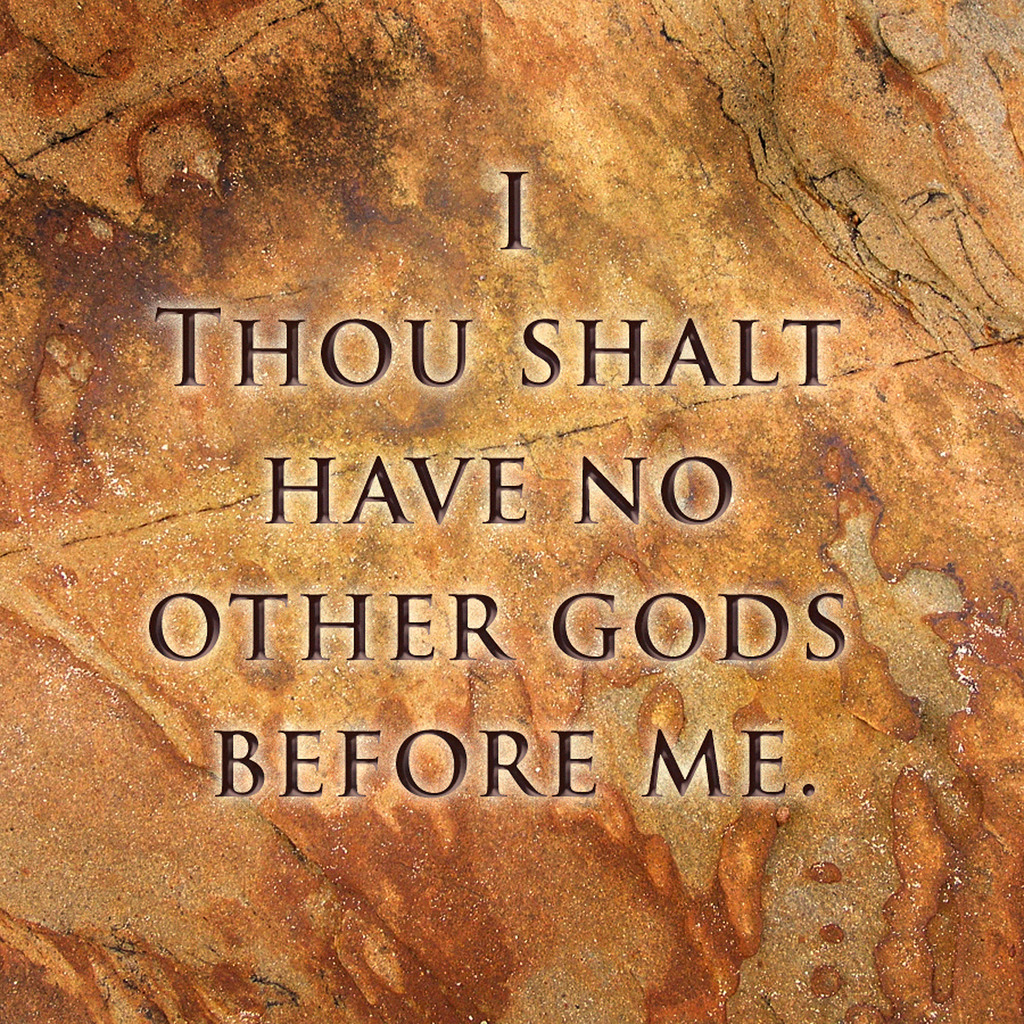
The First Commandment: “You shall have no other gods before Me”

Recently Pastor Tony Phelps has been teaching through the Ten Commandments using the Westminster Larger Catechism.

Recently, I’ve started to use the Westminster Larger Catechism’s exposition of the Ten Commandments as the basis for the homily before our corporate confession of sin. I plan to spend four Sundays on each commandment. And beginning with this post, I plan to share these homilies in my upcoming blogs, starting now:

If ever you think you’re doing pretty well in the Christian life. If you’re not feeling much like a sinner, but pretty darn holy. It’s time to sit yourself down and carefully read the Westminster Larger Catechism on the Ten Commandments. It’s a thorough, biblical exposition of each commandment – what duties each one requires, and what sins each one forbids. In fact, it’s so thorough, that we will only be able to sample it. But as we do, it will be more than sufficient to show us our sin and drive us to our Savior. …

Here is his four-part series on the First Commandment:

Part 1: http://reformation500.com/2013/05/20/yielding-all-obedience-submission-to-him-with-the-whole-man-fail/

(See also J.W. Wartick: http://jwwartick.com/2013/05/06/law-gospel-lutheran/)

Part 2: http://reformation500.com/2013/05/27/another-first-commandment-fail-ignorance-of-the-one-true-god/

Part 3: http://reformation500.com/2013/06/03/first-commandment-fail-3-bold-curious-searching-into-his-secrets/

Part 4: http://reformation500.com/2013/06/10/one-more-first-commandment-fail-legalism-and-the-deification-of-man/

Tony Phelps is pastor of Christ Our Hope PCA in Wakefield RI, the second largest PCA church in RI. (He says, “at the moment, there are only two; come to think of it, that makes us the smallest PCA church in RI.)

Monday, May 13, 2013

Thomas Howard asks “how do you think the Reformation ought to be commemorated in 2017?”

http://www.firstthings.com/blogs/firstthoughts/2013/05/13/protestant-reformation-approaching-500/

Howard was a convert in 1984, before the rest of the “Catholic Convert” industry happened. He writes now:

Several years ago I came across the then Lutheran theologian Jaroslav Pelikan’s notion that the Reformation is best remembered as a “tragic necessity.” Pelikan elaborated:

The tragedy of the Reformation consists in the loss by both sides of the some of the very things each claimed to be defending against the other; its final outcome was not what Rome or the reformers had wanted. Yet the necessity of the Reformation consists in the loyalty of the reformers to the best and highest in Roman Catholic Christianity and their obligation to summon Rome back to it. Partisans on both sides have difficulty acknowledging the Reformation was indeed a tragic necessity. Roman Catholics agree that it was tragic, because it separated many millions from the true church; but they cannot see that it was really necessary. Protestants agree that it was necessary, because the Roman church was so corrupt; but they cannot see that it was such a tragedy after all. . . . [Whatever the case] an honest assessment of the Reformation belongs to any . . . effort at meeting the present situation between Protestantism and Roman Catholicism.

Let me suggest that, as the Reformation quincentennial approaches, Catholics ought to try to think about why so many, then and now, felt the necessity of the Reformation. Conversely, Protestants ought to consider why Catholics, then and now, have perceived it as tragic. That might not answer all questions, mend all divisions. But it might not be a bad place to start.

My response:

We should remember that if the Reformation was a “tragic” necessity, the tragedy was caused by Rome. That’s the first thing that needs to be recognized. There was tragedy before the first Protestant. Centuries-worth of tragedy.

In that vein, the Reformation was, as Philip Schaff said, “the turning point of modern history”.

Schaff said: http://bit.ly/13gbCgP

The Reformation of the sixteenth century is, next to the introduction of Christianity, the greatest event in history. It marks the end of the Middle Ages and the beginning of modern times. Starting from religion, it gave, directly or indirectly, a mighty impulse to every forward movement, and made Protestantism the chief propelling force in the history of modern civilization.

I think we ought to begin by considering whether Schaff or Pelikan was more correct.

http://triablogue.blogspot.com/2012/10/reformation-season.html

Tuesday, March 05, 2013

The Vatican vs the heresy of “Americanism”

Roman Catholic “Social Teaching” today seems to be the one bright light among the darkness of the sex abuse scandals for contemporary Roman Catholics, but in reality, according to Paul Bassett, it is a very recent invention, learned, it seems from Roman interactions in the good old US of A:

On Faith, Freedom and Roman Catholic History

[The] “mystical equality of all people” [written of by the Roman Catholic writer Joseph Pearce] is an innovation in 20th century Catholic anthropology. The Roman Church has historically been built on a caste system. So it was the Protestants who had to call Rome back to the doctrine which Mr. Pearce finds so dear.

The most blatant evidence for this caste system is the ruthless treatment that Jews received at the hands of the Roman Church. Professor David Kertzer describes the extent of this abomination:

Where the popes acted as temporal rulers, as they did in the Papal States until the States’ absorption into a unified Italy over the period 1859-70, discrimination against Jews was public policy…The popes and the Vatican worked hard to keep Jews in their subservient place…and they did all this according to canon law and the centuries-old belief that in doing so they were upholding the most basic tenets of Christianity.

So Pearce’s “mystical equality of all people” is historical amnesia within the context of the Roman Church.

Wednesday, January 30, 2013

“The Crucial Role of Union with Christ”, part 2

https://reformation500.wordpress.com/2013/01/29/the-crucial-role-of-union-with-christ-part-2/

... we “own” the righteousness of Christ because we are really are truly united to him; his righteousness is truly “in” us, as opposed to merely fictitiously attributed to us. The converse of that is also true: our sin is really and truly owned by Christ because we are really and truly united to him. That is one reason why he had to be “like” us, sharing our blood. In this second part, I look at the Old Testament evidence of union, which underlies the whole concept of sacrifice in the New Testament, and finish with pastoral advice on how this works out in the lives of Christians.

Old Testament evidence
Perhaps the most important evidence for the importance of union with Christ in the New Testament is the constant reference to Christ’s death as a sacrifice of the type described in the Old Testament. Paul, in Romans 3:35, starts out his presentation of the Gospel, which we have been tracing backward, by referring to Christ’s death as a “propitiation”, a direct reference to the temple sacrifice (cf. Hebrews 9:5, where this word is also used).

The sacrifices of the Old Testament are full of the imagery of union. In every case, the mode of offering is for the priest to lay his hand on the head of the animal to be sacrificed (Leviticus 1:4, 3:2, 3:8, 3:13, 4:4, 4:24, 4:29, 4:33) including the laying of both hands on the scapegoat (Leviticus 16:21). The essential symbolism of this laying on of hands is that of union…

Read more...

Monday, January 28, 2013

Reformation500: “The Crucial Role of Union with Christ”

Dr David Snoke, who is a founding elder at my home church, City Reformed PCA in Pittsburgh, has posted a new article at the Reformation500 blog:

The Crucial Role of Union with Christ, part 1
This problem lies at the root of many of the debates about the Gospel over the years, from the Reformation to the present-day debates with N.T. Wright. Wright accepts that our sins can be imputed to Christ, but he rejects the idea that Christ’s righteousness can be imputed to us…

The fundamental question before us is then how it can be just, that is, correctly judged, to impute Christ’s righteousness to us and to impute our sin to Christ. This leads to the question: is there ever any situation in which it is just to impute one person’s debt or credit to another? The answer is yes. Consider the following situations….

In all of these cases, the common element is that we feel that it is just to impute the debts and credits of one person to another if they are united together in a real union. They have become legally, or spiritually, one. In that case, justice actually demands imputation of the debt and credit of one member of the union to another. To the degree that I recognize the reality of the union, to that degree I feel the imputation as legitimate.

Our union with Christ is exactly of this nature. Christ’s death is our death if we are united to him, and his righteousness is our righteousness if we are united to him. In other words, the actual, real union with Christ is crucial for the imputation in the Gospel to be just. If we are not really united to Christ, then his death is nothing to us, and his life of no value to us….

New Testament evidence of union with Christ
The above argument fits with our sense of justice, but is it the teaching of the Bible? I believe that it is, and in fact, the Middle Eastern culture of the Bible would have made it much more understandable in those days.

The concept of union with Christ is clearly taught in Scripture, and has been affirmed by all orthodox Reformed traditions. The Bible has many different ways of presenting this picture. Jesus talks in John 15 of us being united to him like a branch on a vine:

Abide in me, and I in you. As the branch cannot bear fruit by itself, unless it abides in the vine, neither can you, unless you abide in me. I am the vine; you are the branches. Whoever abides in me and I in him, he it is that bears much fruit, for apart from me you can do nothing. (John 15:4-5)

This image of being “in” Christ, and simultaneously having him “in” us, is throughout the New Testament….

This (and I’m guessing there will be a part 2, and maybe more) is an excellent introduction to the concept of “Union with Christ” and also being “In Christ” in the Scriptures. I’d highly commend it to you.

Dave is also professor of Physics and Astronomy at the University of Pittsburgh. He’s the author of A Biblical Case for an Old Earth, he writes about “science from a Christian perspective” at http://www.christianscientific.org/, and he leads an apologetics group at the church.

Dave has a keen interest in history, too, and he’s also preached a number of Reformation-oriented sermons, and he’s also led a number of discussions on the topic.

I’m very pleased that a number of individuals now have become contributors for Reformation500, including Dave now, along with Andrew Clover [a frequent commenter here and a Lutheran convert], [PCA] Pastor Tony Phelps, and Paul Bassett [along with yours truly]. My hope is to enable a very robust discussion to take place there among all the church traditions that came out of the Reformation, in such a way that the broader evangelical community can benefit from the history, principles and Scriptural understanding that came into focus during that period.

Please take a minute to check it out if you haven’t already done so.