Sunday, September 08, 2013
Creative intelligence
Be still
Be still, for the presence of the Lord, the Holy One, is here.
Come bow before him now, with reverence and fear.
In him no sin is found, we stand on holy ground.
Be still, for the presence of the Lord, the Holy One, is here.
Be still, for the glory of the Lord is shining all around.
He burns with holy fire, with splendour he is crowned.
How awesome is the sight, our radiant King of light!
Be still, for the glory of the Lord is shining all around
Be still, for the power of the Lord is moving in this place.
He comes to cleanse and heal, to minister his grace.
No work too hard for him, in faith, receive from him.
Be still, for the power of the Lord is moving in this place.
Saturday, September 07, 2013
“Behold, I make all things …”
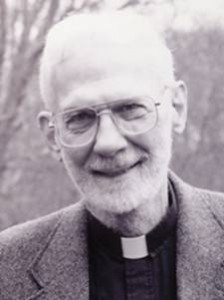
| Robert Farrar Capon, 1925-2013 |
Though he described himself as a “high churchman” and a “Thomist,” he was more simply a Protestant Episcopalian of the rather classic variety. His summation of the Reformation certainly showed it:
The Reformation was a time when men went blind, staggering drunk because they had discovered, in the dusty basement of late medievalism, a whole cellar full of fifteen-hundred-year-old, two-hundred proof Grace–bottle after bottle of pure distilate of Scripture, one sip of which would convince anyone that God saves us single-handedly. The word of the Gospel–after all those centuries of trying to lift yourself into heaven by worrying about the perfection of your bootstraps–suddenly turned out to be a flat announcement that the saved were home before they started…Grace has to be drunk straight: no water, no ice, and certainly no ginger ale; neither goodness, nor badness, not the flowers that bloom in the spring of super spirituality could be allowed to enter into the case.
This made me laugh and cry at the same time.
Friday, September 06, 2013
Science is circular
When young-earth creationists question the constancy of nature, however, typically it is not because they have independent evidence to question it but because their belief in a young earth requires that nature behave inconstantly…Consider their response to ice sheets in Antarctica and Greenland, which appear to accumulate at a steady rate by forming annual layers (much as trees form annual rings). If one drills ice cores (sometimes one or two miles deep), present rates of accumulation suggest that the cores record more than one hundred thousand years of natural history (which, of course, exceeds the age of a young earth). Young-earth creationists therefore counter that as one goes down the core, compression of the ice destroys our ability to distinguish annual layers. W. Dembski, The End of Christianity (B&H 2009), 60-61.
In challenging the constancy of nature, young-earth creationists tacitly admit that the world, even if it is not actually old, appears to be old…Gosse argued that creation ex nihilo requires God to create world that gives the appearance of age even at the instant of creation…Scientists holding to an older earth saw it as flying in the face of the scientific evidence. And theologians holding to a God of truth saw it as turning nature into a divine hoax.
In its favor, this approach [mature creation] does not entail a flat contradiction. God in his omnipotence could presumably have done things that way. But absence of contradiction is about all that can be said in its favor. The shafts of light that God created independently of the stars (and that seemingly arise from them) project onto the earth a history of the cosmos that never in fact happen. For instance, if human astronomers see what appears to be a supernova exploding in a galaxy millions of light-years away, [Henry] Morris's approach means that no supernova ever exploded. Rather, God specifically created a beam of light six thousand years ago that has only now reached earth and that gives the appearance of a supernova exploding. In Morris's approach, astronomy is not about how actual stars looked in the distant past but about how fake stars might look in a 3-D animation made by God. It is difficult, in my view, to reconcile such a God with a God of truth (64,66-67).
"All things are created twice: There's a mental or first creation, and a physical or second creation to all things." Creation always starts with an idea and ends up with a thing. Anything achieved must first be conceived. Creation is thus a process bounded by conception at one end and realization at the other (107).
God specifically created a beam of light six thousand years ago that has only now reached earth and that gives the appearance of a supernova exploding. In Morris's approach, astronomy is not about how actual stars looked in the distant past but about how fake stars might look in a 3-D animation made by God. It is difficult, in my view, to reconcile such a God with a God of truth.
Chronology and historical apologetics
To see the importance of nature's constancy to historical apologetics, however, one need not look only to such dramatic events as the Resurrection. Historiographical, archeological, and anthropological methods that presuppose the constancy of nature have been enormously helpful in confirming events, places, and persons recorded in Scripture. Using such methods, F. F. Bruce argues for the authenticity of Acts as a first-century document. Thus he infers that "the historical, geographical and political atmosphere of Luke-Acts as a whole, and of Acts in particular, is unmistakably that of the first century and not the second."
Young-earth creationists accept these research methods when they confirm events going back to Abraham as described in Genesis 12. Yet, when these same methods get pushed back before Genesis 12, they balk. The reason is that these methods give evidence of human activity that should not have survived a universal flood (which young-earth creationists place around 2500 BC, or 4,500 years ago). Accordingly, archeologists claim to find evidence of human writing at Uruk going back 5,000 years, well before Noah's flood on face-value reading of Genesis 6-8. Moreover, they claim to find evidence of artifacts, such as dolls, going back 7,000 years, well before the creation of Adam on a face-value reading of Genesis 1 and 2 (young-earth creationists place the creation of Adam around 4000 BC, or 6,000 years ago). W. Dembski, The End of Christianity (B&H 2009), 62-63.
What Should Christians Make Of Non-Christian Miracles?
Thursday, September 05, 2013
An evaluation of the NIV11
This looks informative:
"An Evaluation of the 2011 Edition of the New International Version" by Rodney Decker.
Speaking for myself, I usually read and quote from the ESV. I consider the ESV my primary English translation. But I read the NIV11 as well. Among others.
I try to read the Bible in other languages besides English when I can too. Although that's admittedly infrequent.
As Steve wrote, it's good to complement reading the Word of God with hearing it. I have a couple of different English audio Bibles I listen to from time to time.
Given this, perhaps it comes as no surprise to say I don't really have a terribly strong conviction over recommending a particular English translation. So long as it's not something like the NWT.
I do think, if possible, it'd probably be a good idea to try to tailor a translation to a particular person. Although this assumes, among other things, that we know the person well enough to say and that we ourselves are competent enough to do so.
For example, I have relatives and friends whose first and native language isn't English, although English is their primary language, if that makes sense. Similarly, I know people who are basically bilingual but seem to have average to maybe above average but far from great reading and listening comprehension, not to mention traces of accents, in both languages. In any case, some of these people have a difficult time grasping much if not most of how the ESV reads. (Forget the KJV!) So the NIV11 is actually helpful to them in ways that, say, the ESV ain't (e.g. the NIV11 reads a lot more clearly to them).
Anyway, just some of my random thoughts.
Matthew's Authorship In Light Of That Gospel's Early Prominence
Mystery of life's origin
Wednesday, September 04, 2013
Sorting out genealogies
Communication
"His solution seems to be the development of a more general approach that seeks to put yourself into the shoes of the historical everyman."
"My question is what does he mean by 'understand the OT?' It seems to me that he is making the mistake of conflating understanding with relating. I'll try to explain. He is focusing on the way of life of the characters in Genesis 1–11, but the book was not written by or to people who were familiar with this way of life. The original author likely found the idea of a 950 year old man to be every bit as foreign as we do."
"My point is that the ultimate goal in reading is not to know what life was like for Noah, rather it is to decipher the purpose for which Moses is recounting the story of Noah."
"I am concerned that this approach emphasizes the historical setting and diminishes communicative act. It produces a Discovery channel documentary rather than a sermon."
"But, what would make these things significant? Why would a familiarity with a day in the life of an Egyptian fisherman in the 2nd millennium BC help me understand a book written by and to people who were also probably not very familiar with a day in the life of an Egyptian fisherman?"
"I think this analysis does not sufficiently treat the Bible as communication. To claim that the Bible is communication means that it has an author and the author is writing to an audience to accomplish a purpose. The context that is most important is not the context of the people in the story, but the context of the people telling and hearing the story."
"In my opinion, issues like genre and rhetorical convention are far more helpful for determining the rules that govern communication than things like flora and fauna."
Fossils and suchlike
Hi Jim Pemberton,
As always, thanks for your thoughts. I appreciate them.
I'd like to please respond to what you said:
Given the diverse range of morphologies in life on Earth, since observed morphology is the basis for genetic relatedness between fossil remains
I'm not sure "observed morphology" is always necessarily the sole or main "basis for genetic relatedness between fossil remains" if that's what you're suggesting.
1. For one thing, if there's "genetic relatedness," then wouldn't this be based primarily on genetics?
At least as I understand it, though, the vast majority of fossils won't have enough genetic material to determine its "relatedness" to other fossils or beyond (e.g. where it fits in a phylogenetic tree).
2. I'm not sure if you're referring to the "observed morphology" of the fossil? Or, say, to the "observed morphology" of a living plant or animal or other organism, and somehow attempting to relate it back to the fossil?
3. More to the point, I would think other aspects could at times be equally relevant in determining a fossil's "relatedness" to other fossils. A few possibilities come to mind:
a. Where the fossil was found. Not just geographic location, but other aspects like sedimentary layer or if it was found in rock or under water.
b. The state or condition in which the fossil was found. The degree to which the fossil has fossilized. Or mineralized. Or the like.
c. If the fossil contained any "living" or non-fossilized parts.
d. If the fossil was found with other fossils.
e. If the fossil was found with other variables like sets of footprints (e.g. dinosaur trackways).
f. If the fossil made an imprint or impression that might have preserved other features of the fossil especially if the fossil itself was found less intact than its imprint.
g. And so forth.
4. "Observed morphology" may not always help determine "relatedness." Take convergent evolution. Say if we discovered fossils of a flying squirrel and a sugar glider. The fossils might share very similar morphological features. But neither is considered closely related to the other (e.g. one is a marsupial).
most scientists believe in common ancestry precisely because they recognize that spontaneous genesis of reproducible DNA isn't likely.
1. It might be pertinent to the topic if I start by saying I don't agree with neo-Darwinism. I've criticized it in the past.
2. Also, my original post didn't have reference to common ancestry as such. Rather I was referring to the origin of life. The first self-replicating molecule, as many scientists construe it, especially secular scientists.
3. There's a distinction between common ancestry or descent and universal common descent. All dog breeds share common ancestry since they're descended from wolves.
Generally speaking, I don't think most creationists would disagree with common descent, per se. However, they would (rightly in my view) take issue with universal common descent.
4. I don't think the predominant reason "most scientists believe in common ancestry" is "precisely because they recognize that spontaneous genesis of reproducible DNA isn't likely."
In fact, many scientists argue for some self-replicating molecule for the origin of life. I would think most secular scientists would argue for this or something akin to it.
Many if not most secular scientists seem to hold to some sort of primordial soup model which would involve certain preconditions as well as one or more molecules gaining the ability to self-replicate. They may not argue specifically for DNA as that molecule. Although the usual suspects do seem to be proteins or nucleic acids (e.g. RNA).
Of course, there are many other disparate theories. But if we had to pick one, then something like this would probably be it.
5. That said, not every scientist's opinion on the matter is equally relevant. A quantum physicist could be a poor person to adjudicate the question, whereas a biochemist might be better, for example. It depends on what we're talking about exactly.
6. Besides, if it were true most scientists "recognize that spontaneous genesis of reproducible DNA [if by this you mean a self-replicating molecule as the origin of life] isn't likely," then I would think this would be a reason to doubt universal common descent.
Otherwise, they would entertain the idea that spontaneous genesis of reproducible DNA happened multiple times on Earth and evolved into different unrelated types of organisms.
1. Perhaps I'm missing something, but I don't see how this follows from your previous statement.
2. Nevertheless, it's an interesting idea.
3. However, I suspect the average secular scientist wouldn't necessarily have a problem entertaining this idea. Various self-replicating molecules rather than a single self-replicating molecule acted upon by natural selection along with genetic mutations leading to all the diversity that is life wouldn't seem to entail too many significant changes to the modern evolutionary synthesis, I don't think.
They might even say, if it unfolded as you describe, the "different unrelated types of organisms" may each eventually become extinct until one was left such that it became our last universal ancestor. Or perhaps they each eventually evolved and became able to interbreed.
Again I don't necessarily think a secular scientist would be too bothered by a theory which incorporates multiple ancestors. For example, there are at present two main theories for the origin of modern humans: the Out of Africa theory and the Multi-regional theory. In the Multi-regional theory, modern humans would have genetic material originating from Homo erectus, Homo neanderthalensis (aka Neanderthals), and Homo sapiens. Some secular scientists advocate this sort of stuff, and I think most would probably be perfectly fine if it turned out the Multi-regional theory was true. (Although the majority favor the Out of Africa theory.)
Christian universalism
But the serpent said to the woman, "You will not surely die..." (Gen 3:4).
The first universalist?
“Contend earnestly for the faith…”
![]() |
| Handing the Gospel from one person to the next |
Guard the Gospel:
Sadly, in spite of the plethora of materials available to believers, there is still a profound biblical illiteracy in Christian circles….
So, how do we guard the Gospel? Two ways. First, we continue in the things already delivered to us. Second, we pass the baton. Those are the rules….
The key to contending for the faith—to surviving the spiritual onslaught of the 21st century—is to guard the Gospel. The key to that is found in two simple phrases. One, “Continue in the things you have learned.” Back to the basics. Back to the Word as it has been entrusted to us. And two, entrust it to faithful disciples who will be able to teach others also.
That’s it. Guard the Gospel by continuing in the truth already revealed, then pass the baton. Proclaim the truth faithfully, guard it diligently, and pass it on carefully. That is how we contend earnestly for the faith once for all delivered to the saints. That is how we guard the Gospel Paul entrusted to Timothy, now entrusted to us….
http://www.str.org/Media/Default/Publications/1309%20Enhanced%20Solid%20Ground-Contend%20Earnestly-1.pdf
Tuesday, September 03, 2013
Making the cut
There is no magic objective standard to say when an organism is a person. We rely entirely on cultural perspectives to define when we grant that organism the rights and privileges of a full member of the culture. This does not imply that I personally approve of societies that treat a newborn as expendable, only that it’s clear that there is no objective or scientific boundary. We always rely on an arbitrary definition.
http://freethoughtblogs.com/pharyngula/2013/09/03/anti-choicers-arguing-against-me-in-absentia/
Correlating the flood
The earliest historical records that we have, and here I mean written texts, go back to around 3400BC. (This is on conventional dating. There are huge problems in ancient chronology and we cannot be certain about dates that far back.) This earliest evidence comes from southern Iraq. Incidentally, we can’t read the text but it looks like writing. It’s not until about 3000BC or later that we can get anything that we can read, either from Iraq or Egypt. If you want to base evidence on things other than written texts, it gets rather difficult.
http://ap.org.au/images/2011AP/AP0211.pdf
Flooding
[Noel Weeks] The prominent alternative explanation is that the text is referring to a local flood in the Tigris/Euphrates’ valley. However, in both the Mesopotamian flood accounts and the biblical narrative the ark ends up in the north. The problem is that floods always take things downstream. Floods never take objects upstream. If this was a normal flood in the Tigris/Euphrates’ region, the ark would have gone downstream. The fact that it landed in the north in a mountain range goes against any local flood theory.
http://ap.org.au/images/2011AP/AP0211.pdf
BTW, I've been to Cappadocia, which isn't far from Ararat. There I walked along the ledge of a dry river valley.
Theistic explanations
Cambrian animal forms are the result of an unknown, theistic (directed) mechanism, designed for an unknown purpose.
In light of all the unknowns in these theistic “explanations,” one can hardly be blamed for concluding that “creation” and “design” are simply explanation names, not actual explanations. Compare to a naturalist saying, “X is the result an unknown, naturalistic (undirected) mechanism operating without a purpose.” It’s unclear why any of these unknown theistic explanations are supposed to be better than their unknown naturalistic counterparts.
Should Christians Love Their Country?
In Romans 13:7-8, toward the end of the classic New Testament text on Christians' obligations toward governing authorities, the Apostle Paul writes,
Pay to all what is owed to them: taxes to whom taxes are owed, revenue to whom revenue is owed, respect to whom respect is owed, honor to whom honor is owed. Owe no one anything, except to love each other; for the one who loves another has fulfilled the law.
We often stop reading at verse 7 and don't read verse 8 because many of our Bibles place a subtitle there, as if a new section is beginning. But given Paul's repeated and intentional use of the verb 'to owe' it is obvious that this [separating the verses] is a mistake. What Paul is telling us is that we owe taxes, revenue, respect, honor, and obedience precisely because this is what love demands. Indeed, if love did not call us to fulfill these obligations, we would not owe them at all. Paul is teaching us to view our obligations toward government and (as Holst seems willing to extend the scope of the passage) country as the expression of Christian love appropriate to this context. Even as we serve our country, in other words, we demonstrate the love of Christ.
Why does this matter? Insofar as America is turning increasingly away from the heritage of Christendom, and insofar as we do experience moral decline, our temptation as Christians will be to withhold our love for our country. One sees this all the time in the bitter reactions of some conservative Christians to President Obama. Because we have often confused our nationalistic patriotism for Christian love, then, when we believe we have lost the reason for our nationalistic patriotism, it will fall away with nothing but bitterness to replace it. The appropriate response here is not to jettison love, however, but to form our love according to the commandment of Christ.
AP interviews
FWIW:
Interviews with Noel Weeks here and here.
Interviews with J.P. Moreland here and here.
Interviews with Paul Helm here, here, and here.
An interview with Paul Barnett here.
An interview with Peter O'Brien here.
An interview with Tom Schreiner here.
Interviews with D.A. Carson here and here.
An interview with John Lennox here and an article by the same here.
An interview with Jonathan Sarfati here.
An interview with William Lane Craig here.
I also noticed interviews with Carl Trueman, Al Mohler, Ligon Duncan, Gerald Bray, Jerry Bridges, Sinclair Ferguson, Iain Murray, David Powlison, Mark Dever, among others.
Monday, September 02, 2013
Frame these pamphlets
"Learning at Jesus' feet: A Case for Seminary Training" by Prof. John Frame.
"Studying Theology as a Servant of Jesus" by Prof. John Frame.
Reppert on theological voluntarism
http://dangerousidea.blogspot.com/2013/08/theological-voluntarism-and-debate-over.html
He's committing a rather elementary philosophical blunder by confounding moral ontology with moral epistemology. Assuming for the sake of argument that Calvinism is morally counterintuitive, that hardly entails the further claim this reduces the distinction between right and wrong to an arbitrary divine fiat.
Indeed, Reppert's objection is ironic considering the fact that, in the past, he's appealed to skeptical theism as a part of his theodicy. He takes the position that God has a morally sufficient reason for permitting horrendous evils, appearances to the contrary notwithstanding. So Reppert himself finds it necessary to distance moral ontology from moral epistemology.