Showing posts with label Peter Pike. Show all posts

Thursday, April 07, 2022

It's probably best not to base your argument on logical fallacies...

 Yesterday, Timothy Keller tweeted out the following:

“Jesus's teaching consistently attracted the irreligious while offending the Bible-believing religious people of His day. However-our churches do not have this same effect which can only mean one thing. Our preaching and practices are not declaring the same message that Jesus did.”

Sadly, this statement contains several logical fallacies. We can start with the most obvious one being the false dilemma. When Keller says “this...can only mean one thing” he is clearly wrong. There are many things that it could mean, and it doesn't even take much imagination to think about what these other options could be. But Keller insists that no other options could possibly be relevant than that our churches today are not preaching the actual message of Christ.

Hey, isn't Keller a pastor preaching at a church? This can only mean one thing! Keller is admitting he doesn't preach the same message that Jesus did. See, I just used the same logical principal Keller did.

But, as I said, this false dilemma has many other alternatives. Some of the other things that he could have considered are overlooked by him because of other fallacies contained in the statement, so demonstrating these fallacies and why they are fallacies will help show why the false dilemma is, indeed, false.

Keller says that Jesus offended “the Bible-believing religious people of His day.” This, however, is anachronistic insofar as in Jesus's day, there was no complete Bible. The only Scripture that had been revealed at that point was the Old Testament, so there wasn't a single “Bible-believing” person of Jesus's day who actually believed the entirety of Scripture that we have today. Clearly, those who believe the New Testament along with the Old Testament are going to be in a different camp than those who believe solely in the Old Testament.

If you don't believe me, just ask a religious Jew. You'll find that they are still pretty well offended by the message Jesus taught, insofar as a religious Jew considers Jesus to be a false Messiah. Given this fact, one can immediately ask is Keller's follow up that “our churches do not have this same effect” even right in the first place? If our churches are offending the religious sensibilities of religious Jews, then clearly they are having the same effect that Keller points to.

A second matter to address is Keller's claim that Jesus's teaching “attracted the irreligious.” He clarified in a subsequent tweet that “Luke 15:1-3 shows Jesus attracting the 'sinners' and offending the religious” but there are some important distinctions to make with this. First, Luke 15:1-3 is the introduction to the parable of the Lost Sheep, and in it the people who are drawing near to Jesus are referred to as “the tax collectors and sinners.” Where does it say that these people are “irreligious”?

Is Keller claiming that tax collectors and sinners weren't religious? If so, that claim is belied by Luke 18:13, where a tax collector is unable to even lift his eyes to heaven but just cries out, “God, be merciful to me, a sinner!” That seems a rather odd statement for someone who is irreligious to say. On the other hand, if Keller is equating “religious” with “the actions of the Pharisees” then all the “irreligious” are simply non-Pharisees and not necessarily pagans or secular people, which seems to be a pretty non-standard definition of “irreligious” to say the least.

But adding in those qualifiers, if they are indeed what Keller means, reduces his statement to: “Jesus's teaching consistently attracted those who were not Pharisees while offending those who only believed in the Old Testament. However-our churches do not have this same effect....” And I just don't see how our churches do not have the same effect. As already mentioned, Christian churches do offend Jews who believe the Old Testament only, so that half already fails. And even if we grant that many churches draw people in the same mindset as the Pharisees (i.e., those who believe they are justified by outward actions that obscure their inner spiritual death), that does not imply that those same churches do not also draw those who are not Pharisees at the same time. It is actually possible to draw both sets of individuals at the same time. And as far as the actual irreligious, not just non-Pharisee, is concerned, I learned music theory in college from an atheist who attended services nearly every week because he enjoyed the music. Granted, he was going to a traditional church with old timey liturgy (I believe it was an Anglican church, but as this was more than 20 years ago I don't recall for sure).

And this brings me to the next part of the statement that isn't justified. Keller said, “Jesus's teaching consistently attracted the irreligious.” But is it Jesus's teaching that attracted people to Him? The Gospels themselves show that Jesus attracted many people who wanted to see signs and miracles, not because of what He was teaching. For example, John 6:2 states that the large crowd followed Jesus “because they saw the signs that he was doing on the sick.” And later, after the crowd followed Him across the sea, Jesus Himself said, “You are seeking me, not because you saw signs, but because you ate your fill of the loaves” (John 6:26).

Thus, even if we granted everything else Keller says, one cannot conclude from the difference in crowd attraction that it is because the teaching is different, when it is just as easy to say it is because Jesus performed miracles and the church does not have the ability to do so.

Ultimately, Keller's conclusion isn't completely wrong. When he says, “Our preaching and practices are not declaring the same message that Jesus did”, that is true of many churches in America, although it is also false of many churches in America. But setting aside the existence of the genuine churches, we do not determine whether a church is teaching the message Christ taught by asking if the same people are drawn to the church as Christ drew to Himself—that is not the standard by which fidelity to His message is found. You find out whether or not a church is teaching the message of Christ by reading the message of Christ and seeing if it's the same as what the church is teaching. It really is that simple. Does the teaching of a church line up with the words Jesus said which are recorded in Scripture?

Because Keller is focused on the wrong thing to try to prove his point, his point is full of logical fallacies that are easily dismantled. That, perhaps, is the greatest problem with his tweet. Whatever valid points he could have made are undermined by the poor way in which he chose to “prove” it.

Wednesday, March 09, 2022

Escaping Putin's War

In 1994 or 1995, the pastor of my church (who also happened to be my dad) held a missions conference where he invited several missionaries in to give presentations. The goal was to recruit missionaries to go to various places around the world and spread the Gospel. It was a resounding success because, by the end of it, two new missionaries had indeed been recruited.

They were my parents. When they joined Mission to the World, MTW asked them where they would like to serve, and without hesitation they said, “Siberia would be nice.” You see, my dad grew up in Alaska, and my mom met him there when they were both in college, so the cold temperatures weren't a deterrent to them. Rather, it was an invitation.

At the time, MTW responded, “We don't have anything in Siberia, or Russia as a whole, at the moment. But since you like cold temperatures, we have an opening in the high mountains of Ecuador. Would you be interested in that?” My parents agreed and began to train for that. If I remember correctly, it was when they were en route to language school that someone caught them and said, “I heard you wanted to go to Siberia. Would Ukraine be close enough?” and immediately my parents accepted that ministry instead.

And so it was that in April of 1996, while I was finishing up my senior year of high school, I was abandoned for several weeks, having to fend for myself against the wilds of civilization, making myself get up and attend high school even though ditching would have been more fun, while my parents took their first trip to Ukraine. And then, a couple of years later (1998—who said high school math taught me nothing?), my parents cured empty nest syndrome by boarding a plane which would take them to Europe, with their final destination being a little known city called Kherson.

Tuesday, September 07, 2021

Men Checking out of College

The Wall Street Journal today has an article called "A Generation of American Men Give Up on College".  In it, we find such statistics as: women make up 59.5% of college students today.  In fact, for the 2021-2022 school year, 3,805,978 women applied to colleges compared to just 2,815,810 men.  That's just under 1,000,000 more women than men, despite the fact that men actually make up 51% of the college-aged population in the US.

White it is true that women have a higher enrollment rate than men for nearly every racial and economic group, the most impact is found in the lack of white men enrolling.  As the article states, "Enrollment rates for poor and working-class white men are lower than those of young Black, Latino, and Asian men from the same economic backgrounds." Given the demographics of the United States, the fact that white men aren't even bothering to enroll in college while white women are is enough to result in the numbers we see.

The article goes on about how perhaps there needs to be support groups for men too, despite the fact that the objection has been, "Why would you give more resources to the most privileged group on campus?"  I find it ironic that the article actually quotes this without realizing the quote itself gives the reason why white men aren't going to college.

After spending K-12 being told that you are responsible for all that is evil in the world for free, why would you pay hundreds of thousands of dollars to be told the same thing for four more years?  Higher education made an environment intentionally focused on preaching hatred of white men, and now they discover that white men don't want to be there.  Insert surprised Pikachu face here. Furthermore, why would anyone willingly subject themselves to such psychological abuse when the classes taught in universities have, by and large, made a university degree completely worthless anyway?

You want a specific demographic to show up in a place? Start by not hating them. A lesson that can be applied in all areas of your life too, if you really want to.

Thursday, September 02, 2021

The Worrying State of Medicine

I spent about four hours today at a local Urgent Care facility. Without going into too much detail, the reason I had to do this was because the doctor's appointment I had scheduled for yesterday got canceled because my doctor got sent to cover ER shifts because of labor shortages in the medical industry. The immediate problem I was seeing her for is that my oxygen saturation levels, especially early in the morning, were getting worryingly low, and after starting a new medication I had gained six pounds in a single week, which could be seen as visible swelling in my legs. Since I was measuring my O2 levels with my own pulse/ox, I used the patient portal to say, “This is what I'm measuring. What should I do for the next two weeks before our rescheduled appointment?” Thus, today, I received a call where my doctor informed me I should go to the Urgent Care facility to get examined to make sure there wasn't anything major going on.

Now the fact that my primary doctor wasn't available for a scheduled appointment due to workplace shortages of medical professionals isn't the main focus here. It is certainly worrisome, but I think what might even be more so is the exchange I had with the doctor at the Urgent Care clinic. Since I wasn't getting enough oxygen and had obvious fluid retention from swelling, he ran a litany of tests on me including EKG and a chest X-Ray, even the universal COVID test, all of which came back as “good news” (thank God). But after he got the results back and he was explaining them to me, the doctor mentioned at one point that they'd had a little difficulty with one of the tests because my chest is so large. He then immediately said, “Not that I'm saying there's anything bad about being so large.”

And this is the point I want to bring up. I actually immediately said, “No, I know it's bad. In fact, the increased weight is precisely one of the very things I pointed out to you that had me so concerned.” I immediately saw his demeanor change, as if he was relieved to be able to speak honestly instead of being terrified of offending me, and he said, “Yes, if we could get rid of that weight, it would almost certainly help across the board with everything else here.”

So why did I find this exchange so problematic that I decided to write a blog post about it, especially given that it means I had to divulge (albeit obscurely) some health details I'd rather not talk about? Because I just experienced a doctor telling me something we both knew was a lie because he was afraid that I might be offended had he told me the truth.

There's real danger in this, though. I could have easily come away from that conversation telling everyone, “I went to Urgent Care and the doctor said my weight is fine” when the reality is the exact opposite. If he was so unwilling to state the objective fact that being overweight is detrimental to one's health, then what else are doctors afraid to tell patients? It's extremely worrisome if doctors will lie for the sake of one's ego instead of telling the truth for the sake of one's life.

In the meantime, I still have a case of “We Don't Know”, but at least I know my heart and lungs are sound right now, and I don't have Wuhan Bat Lung either. Prayers would be appreciated that someone in the medical field discovers what the proximate cause is. Or, God could just zap me. I'm fine with that too.

Tuesday, August 31, 2021

Increasing Diversity By Killing It

Veritasium recently highlighted what he calls "The Longest-Running Evolution Experiment" on YouTube. The experiment uses E. Coli bacteria and it's been running for 33 years.  This means that there have been 74,500 generations of bacteria.

To put that in perspective, assuming a generation in humans takes about 20 years, it would take humans 1,490,000 years to have this many generations.  For the record, if you ask a Darwinist, they will say that modern humans have only been around for 300,000 to 800,000 years.  Indeed, going back 1.5 million years, our ancestors would be Homo erectus.  The point is, there are huge differences between H. erectus and H. sapiens that supposedly came about in those roughly 75,000 generations.

On the other hand, if you look bacteria after the same 75,000 generations, they are basically unchanged to this day.  Not only that, but E. Coli can be found back well before this 33-year-old experiment began too. And in all that time, no mutant bacteria formed which would be classified as anything other than E. Coli.

But this is a bit aside the point I wanted to make in talking about this bacteria now.  The point raised by the video is that the E. Coli that exists today ought to have evolved to better fit into the environment of the laboratory, and comparing older strains with modern strains show that modern strains of bacteria are, in deed, "more fit."

This is, in fact, how evolution is typically presented. Organisms become "more fit" in their environment.  The problem is that this overlooks one extremely obvious point: becoming more fit for a particular niche environment does not mean that you are more fit as an organism, as a whole.  What I mean can be seen if we hypothesize a bacteria that has 50% capability of survival in a lab and 50% capability of surviving in a kitchen and 50% capability of surviving in a bathroom.  After thousands of generations, we measure that the bacteria now has a 95% capability of surviving in a lab, and that's all we measure. We then declare that the organism is "more fit", despite the fact that for all we know the new organism has a 0% capability of surviving in a kitchen and in a bathroom now.

The point can be even more readily made by considering what happens when a human feeds wildlife.  Birds, for example, may learn that to get food they just eat the seeds from a feeder all winter long. But what happens when the old woman who used to feed them dies and there's no more seeds?  The birds die too, because they have lost the ability to get food on their own.

So the question is, can birds that learn to eat seeds from a feeder be considered "more fit" than birds that know how to search for food on their own?  Only in the extremely specialized context of that specific environment and only assuming that environment never changes could such a bird be considered "more fit."  In all other points of view, it's actually harmful to the bird to make it dependent upon humans.  

E. coli naturally lives in the intestines of a human being.  Would we still consider the E. coli to be "more fit" if we discovered that all these lab grown bacteria would die if placed back into an intestine?  Does the fact that they are the best at living in the lab really mean the organism is "the best" itself, given that without being able to survive in humans, all of these bacteria have no ability to survive the instant there is no more funding for this experiment?

The reason that becomes important is more than just semantics. Evolution is supposed to explain why organisms become more complex over time, yet all these experiments actually show is organisms adapting to a single variable that we have artificially decided is the only thing we should measure for.  In fact, it ought to be predicted that they would become simpler as a result.  After all, if E. coli doesn't need to survive in the stomach because it's environment is now restricted to a laboratory, then the ability to survive in any other environments is wasted effort on the part of the organism.  It's better to streamline the organism and remove that ability.  But, clearly, this is reducing the available functionality, not increasing it.  And in fact, natural selection is a winnowing process by definition.  Death is not a creative function.  You do not increase diversity by killing off something.

So can you really call this an experiment in evolution?  Only in the sense that the bare-bones definition of "evolution" is change through time, and certainly these E. coli have changed through time. But to try to extrapolate from that some grand scheme of Darwinian progression is simply pushing the data way too far from what it actually provides.

Friday, August 27, 2021

Lest You Forget...

The current President has demonstrated he is not equal to the enormous responsibilities of his office; he cannot rise to meet challenges large or small. Thanks to his disdainful attitude and his failures, our allies no longer trust or respect us, and our enemies no longer fear us.

That's a pretty harsh indictment of Biden.

What?

That was the letter signed by more than 200 retired generals against Trump last year?

Oh.

Well, at least there are no mean tweets anymore. 

Surely this isn't evidence that God is upset with people who preach, but do not practice. Who tie up heavy burdens, hard to bear, and give rules like "don't misgender" and "check your privilege." God's not going to be upset with people who do their good deeds on Twitter for all to see while in secret they grope their interns. These people who cross sea and land to gain a single convert, and once they have that convert they turn them twice as woke as they themselves.

Don't harsh my buzz, and other things Boomers say. God is love. He understands you did your best.

I mean, you didn't, but you would have if it hadn't been for Netflix.  And that's the important part.

Thursday, August 26, 2021

The Vastness of Space

Last month, the Pentagon released its report on UFOs. Since then, I've been musing a bit on whether or not extraterrestrial life could exist. In itself, this is probably a pointless excursion, given that God can do whatever He wants and He may or may not have made other life out there somewhere without telling us. But something struck me as I thought about the various arguments put forth.

One argument is that there surely must be life out there since there are so many trillions of stars that there must be countless planets just like ours in solar systems far away, and if evolution can have life form here then surely life can form in these other planets too. Setting aside the fact that evolution already presupposes the existence of life in the first place and therefore can't create it, this argument seems to fly in the face of the “anthropic principal” presented by secularists. That is, the anthropic principal is the claim that the necessary fine tuning of all the variables needed in our local solar system for life to exist on Earth is not evidence of design, but rather is simply the result of the vastness of space. Given how big the universe is and how many “rolls of the dice” individual locations were enabled to have, some place had to have the ideal conditions which resulted in our existence.

The reason these two explanations run counter to each other is easily displayed by a simple question. Which is it? Is life so easy to form that the vastness of the universe is why aliens are probably out there, or is life so difficult to form because it needs such precise values that the vastness of the universe is needed for us to exist in our seemingly designed location?

The sad thing is, I don't think most secularists even realize these two views are at odds with each other.

Monday, August 16, 2021

Harmless as an enemy, treacherous as a friend

As we plod through the second year of "14 days to flatten the curve", I see that the relativity of time raises it's head once again.  "It will be three months before the Taliban can occupy Kabul" turned out to be closer to three days.  1975 is a bit before my time, but the pictures from Saigon and the pictures from Kabul bear a striking resemblance to each other.  Almost as though there is nothing new under the sun (I think I read that someplace).

The whole situation reminds me of a quote Mark Steyn attributes to Bernard Lewis sometime around the year 2010 or so: "The danger here is that America risks being seen as harmless as an enemy, and treacherous as a friend."  Well, I think America has gotten the "treacherous as a friend" part down pat, and has been that way for years.

This is why Christians should never put faith in governments, which are composed of sinners after all. Ours has been more interested in flying rainbow flags and keeping the military woke than it has been in planning how to exit a battlefield. Living your life as if God isn't watching is all fun and games until you find out He was watching.  Woe to you if God should find you not only harmless as an enemy, but treacherous as a friend too.

Monday, August 02, 2021

The Impossible Achievement

U.S. Women's Soccer has accomplished the impossible. They have made the majority of red-blooded Americans cheer for a women's soccer team.

It was the Canadian soccer team, but still...

Come Thursday, when the US Women's Soccer team goes to play for the Bronze, Americans will proudly cheer on the Australian team.

One cannot diminish the massive impact of what U.S. Women's Soccer has done.  Virtually any sports team representing their country would have the support of the majority of their country, so the fact that they got nearly everyone to cheer their failure truly is an achievement.

Then again, one can hardly say this was a "sports team representing their country".  That's why I can't just say, "When the US goes to play for the Bronze." Because they do not represent our country. They represent themselves.  

Perhaps that's why the country didn't support them in return.

Rapinoe famously went on a crusade a mere four years ago to eject Jaelene Hinkle from the team because Hinkle is an evangelical who refused to play in a scrimmage after U.S. Soccer required players to wear a rainbow jersey in it. That makes it all the more delightful that Rapinoe just lost to a Canadian team that has a transgender player on it.

Megan Rapinoe once famously yelled, "I deserve this!"

Yes.  Yes you do.

Friday, July 16, 2021

Good thing the infallible Pope is able to correct the mistakes of the former infallible Pope so Catholics can be certain of their traditions

 Pope Francis abrogates Pope Benedict's universal permission for Old Mass

“Previous norms, instructions, permissions, and customs that do not conform to the provisions of the present Motu Proprio are abrogated.”

I stand along with the Traditionalists in faith that sometime in the next thousand years a Pope will instruct us that Pope Francis is abrogated, so you can go ahead and get the jump on that future proclamation by ignoring Pope Francis now.  Imagine being a Protestant and not having such certainty.  I shudder to think.

Sunday, May 09, 2021

Maybe it's time to give the Germans a break

One question often brought up in studying World War II is the question of how the average German could have allowed the Gestapo and the S.S. to take over their country and kill so many people unopposed.

Perhaps we should ask the Canadians.

Wednesday, May 05, 2021

Is it a moral imperative to get off of Social Media yet?

For the past five months, I've stayed off Facebook completely and I am happy to report that the world did not end. I did not go crazy or suffer at all for this. In fact, I think I am probably more sane than before.

Even setting aside the political aspects that are so simple to dive into when it comes to Facebook and Twitter in particular, Social Media is really better described as Antisocial Media because it makes it easier for people to engage in their depravity. To that end, it serves as a great illustration that Calvinism has something going for it, insomuch as basically good people left to their own devices would end up shaping a social media platform that is basically good too. But what you actually find when people are left to their own devices is that they group together to bully those they disagree with, create cancel mobs to attack individuals who “step out of line”, will willfully pass on things they know are lies if it serves their own goals, and the more anonymous they are, the more corrupted they become.

The greatest irony of living in a culture where the average person has the most access to every single bit of information that they ever had in history, is that the average person will ignore all of it. It used to take a research team months of combing through dusty books in the reference section of libraries to find out information about what, say, a 19th century historical figure once said. Today, we can find that information in a thirty second long internet search, and that's “too much work”. So rather than check to see if Ronald Reagan really said, “Under no pretext should arms and ammunition be surrendered; any attempt to disarm the workers must be frustrated, by force if necessary”, we pass it on in our timeline because the meme looked cool. (For the record, the quote, which I actually did see on a picture of Ronald Reagan on Facebook, does indeed have an attribution, but it wasn't said by Reagan. The attribution is: Marx, Karl & Engels, Friedrich. “Address of the Central Committee to the Communist League.” London, England. March 1850.)

But while I can make my argument about the objectively evil nature of Social Media without touching on the political aspects of Social Media, the reality is that the political aspects cannot be ignored either. And it's those political aspects which drive the question I asked in the title. Silicon Valley very clearly has an iron grip on Social Media platforms, and Silicon Valley very definitely has a specific political bent. They are also not shy about using their power to enact that political change. The problem is the political change they implement is almost universally contrary to Biblical principles. And lest there be confusion, I don't mean in the sense of setting up a theocracy. I'm talking about the basic, bare-bones aspect of civic governing which the Bible condemns as being evil even in countries which were never in a covenantal relationship with Him are being promoted by the policies being pushed forward by Silicon Valley.

Naturally, one can still use those platforms to push for the Gospel. In that regard, one could make the claim that Social Media is like the printing press. It makes it possible to spread either good or evil messages, but the person who writes the message is the one responsible for whether or not it is used for good or evil.

Except that there are certain truthful statements that you can write on Facebook—statements which are merely affirmations of the Gospel—which will get your account banned. In that way, it's not like the printing press, for the printing press doesn't have editorial control over what people use it for. Mark Zuckerberg does have that control over what you say on Facebook. Jack Dorsey does have that control over what you say on Twitter. Susan Wojcicki does have that control over what you say on YouTube.

Also, we must be cognizant of the fact that these “free” platforms constitute the richest companies in the world right now, and you must ask yourself how is it possible for a company that does not charge users to access it to not only make money, but THAT MUCH of it? It's scarcely hidden that everything you do or say on those platforms is feeding social algorithms designed to modify your behavior, primarily into purchasing more things. That is, the platform is not the product—it is the bait. You are the product being sold to the advertisers.

But it's not just advertisers who are willing to buy your attention. If Microsoft, Toyota, or Dasani can purchase manipulation efforts to get you to buy their product, what makes you think a foreign government couldn't pretend to be a corporation seeking advertising when they are really pushing subversion? And what's to stop Silicon Valley from doing it themselves when they want more power under our own governmental structure?

Manipulation occurs on that level as well. Specific viewpoints are promoted while others are suppressed. This isn't an accident. This is the whole point of the Social Media ecosystem. This is designed to make you feel isolated and alone simply for holding to positions that they do not want you to hold, and it's designed to amplify positions they want you to hold far beyond their actual power. Look no further than the astonishing power that LGBT advocates have when the May 2018 Gallup poll showed that only 4.5% of Americans identify as LGBT. Now, if you “misgender” someone, you can actually lose your job, and the fact that everyone knows this despite the fact that those who live outside of cities (that is, the majority* of people in the US), rarely have even met a transgendered person.

This manipulation does have an effect, as evidenced by the way that people's views on social issues such as homosexual marriage have so rapidly shifted in recent years. True, one could argue the LGBT movement has always had a disproportionate amount of political power, but it is undeniable that things have changed much faster since the inception of Facebook (2004), YouTube (2005, bought by Google in 2006), and Twitter (2006).  It is not primarily through the influence of Hollywood, which has been blamed in the past. The numbers for the entertainment industry are in free fall, and they've burned off most of the cache of support they used to have. But regardless, pressure from Hollywood remained the same from the 90s through the early 2000s.  Yet Obama ran in 2008 on a platform opposed to gay marriage. By 2012, those who agreed with Obama's position a mere four years previously, were getting banned on the social media platforms. And by 2015, the Supreme Court ruled that gay marriage was now affirmed.

Today, social ideas, especially those relating to the so-called “Woke” movement, are still gaining traction at a rapid pace even through historically conservative Christian institutions. This is almost certainly traceable to the fact that those who are presenting woke content on social media are being promoted on the platform, while the voices of those who object to it are being banned. The disproportionate banning of voices from the right—voices who are nowhere near as extreme as the voices on the left which are being promoted—certainly is shifting the Overton Window ever more quickly to the left.

So, is it a moral imperative to avoid social media? I'll let you come to your own decision. But if you want to use it, for your own mental health, remember that the audiences there are not real. That is, they are not representative of how people really think. They are the cultivated result of social manipulation, and they are specifically designed to influence you on your own feed. The fact that you see some of what your friends have written on Facebook, for example, may make you think that you're getting a genuine sample of what your friends really think. You are not. Facebook commonly does not share every post that your friends have written, and often when they do display it to you it's hours or days later—anyone who uses the platform has run into the experience where they see a post from someone five days after they wrote it, while the entire time they saw the same four posts at the top of their feed. This is intentional, not accidental. Facebook is using their algorithms to decide when to parcel out data they have problems with so they can claim neutrality by delivering it while still manipulating you so you don't respond quickly or see it when the post is most relevant. And only a fool would think they are smart enough to avoid being manipulated when that manipulation is the basis by which Facebook is a multi-billion dollar company.

The only way to actually avoid the manipulation is to avoid social media altogether.


* And if you're wondering why I say that the majority of the US doesn't live in cities, according to https://www.census.gov/library/stories/2020/05/america-a-nation-of-small-towns.html, 39% of the US population lives in cities with more than 50,000 people (which comprise only 4% of all “incorporated places” in the US). Contrast that with the 37% of Americans who don't live in “an incorporated place” at all. The rest live in small towns, of which 76% have fewer than 5,000 people, and 42% of those had fewer than 500 people.

Monday, April 26, 2021

Death for Life

I have often heard the charge from atheists that the idea of divine justice requiring the death of Christ in order for us to be saved is simply a ludicrous belief to hold to. Of course, this conundrum isn't limited to atheists as there are many non-Christian theists (and even some who call themselves Christian) who have issues with substitutionary atonement as well, but I am most familiar with the atheist objections given the circles that I run in. Regardless of who makes the complaint, the objection seems to boil down to the fact that it seems to be illogical for someone to gain eternal life at the expense of the life of an innocent person.

What has struck me is that not only is it not illogical to have this understanding, but it's actually the way things already are in our everyday life. Recently, I've been in some discussions regarding diet. Specifically, I had surgery on my feet back in November, and through the recovery process I need to maintain a lot better control over blood sugar levels in my diet. As a result of this need, the wound care clinic that provides the post-op care required me to attend a diabetes nutrition class. Ironically enough, the dietitian in that class came to the conclusion that I need to eat even more carbohydrates. In fact, she recommended that I have upwards of 250 grams per day. I think anyone who's ever had to control their blood sugar ought to realize just how ridiculous following that advice would be. (Incidentally, I usually maintain around 50 grams of carbohydrates per day and still have fasting blood sugars that are a tad higher than they want.)

Anyway, the point is that I've been thinking about diet lately, so it was natural for my brain to consider that topic when I thought about the objection that penal substitution makes no sense. I made a simple observation, one that is obvious, but which most of us do not think about. That is, whether you are consuming meat products or vegetable products, you are eating things that were, at one point, alive.

We do not consume inanimate objects, like dirt. Our food is the product of living beings. And it's not just byproducts—some of which we can eat (e.g., milk, honey, fruit, etc.), but none of which provide enough nutrients on their own to sustain life. To live, we need to eat animals and entire plants, killing those creatures in the process.

In other words, to consider that eternal life requires the sacrifice of an eternal living Person is somehow incomprehensible is to ignore the fact that our mortal life already requires the sacrifice of mortal beings. We live every day because animals and plants have died. It didn't have to be this way. Plants, after all, can use photosynthesis and get their energy directly from the sun. In that aspect, there's no reason why God couldn't have created human beings, and even all other animals, with photosynthesis. So I have to think that the very fact that we consume plants and animals was already meant as a picture for us of the coming sacrifice Christ would make on our behalf as well.

Which, as a further thought exercise for the future, might also have some bearing on the supralapsarian vs. infralapsarian debate too. I leave that thought exercise up to the reader.

Wednesday, April 21, 2021

The 6%

George Barna teamed up with the Cultural Research Center at Arizona Christian University and conducted 30-minute long interviews with 2,000 people designed to discover what worldview they profess to hold, as well as what worldview they actually end up living in their lives (link to study here). It should not be much of a surprise that they found 88% of Americans “embrace an impure, unrecognizable worldview that blends ideas from these multiple perspectives.” In fact, “Biblical Theism” only scored a whopping 6% in the survey...but that still managed to get the majority out of the worldviews presented.

Those worldviews are:

  • Biblical Theism (6%)
  • Secular Humanism (2%)
  • Moral Therapeutic Deism (1%)
  • Postmodernism (1%)
  • Nihilism (1%)
  • Eastern Mysticism/New Age (< 1%)
  • Marxism/Critical Race Theory (<1%)

This study shows one of the problems with trying to pigeonhole people into one of these worldviews. The vast majority of people are Syncretists, wherein they grab a mishmash of things they like from various worldviews and smash them all together. Barna even explicitly labels them as such in his own results.

Of even greater concern than just the fact that only 6% of Americans can be considered Biblical Theists is the fact that when you take the numbers of characteristics that match “a moderately high number of beliefs or behaviors that meet various worldview specifications, but not quite enough to qualify as being a true adherent of that worldview” then the highest scoring trend in the US is those who hold to Moralistic Therapeutic Deism at 38%. Biblical Theists are in second place at 31%. This means that not only are 94% of Americans not Biblical Theists, but 69% of them aren't even close to being Biblical Theists.

It would be easy to say that syncretism isn't that bad. There's quite a bit of overlap between various views that people hold to, and besides Exodus 20:3 just says not to have another god before Yahweh, not to not have any other gods at all.

Of course the command in Exodus 20:3, “You shall have no other gods before me”, does not mean “Yahweh must be first on the list, but the other gods are okay after that.” “Before me” has a different understanding in older English, meaning “in the presence of”. For example, “I am going to be presented before the king.” Thus, the passage in Exodus carries that connotation, as in: “When you are present before me, you shall have no other gods.”

Still, I gather most readers here already know that. What may be a bit less obvious is the fact that when Israel committed most of her sins against God, such as those that led up eventually to the Babylonian captivity, Israel never really turned her back completely on God. That is, they didn't cease to offer sacrifices to Yahweh in order to add sacrifices to Baal. They simply sacrificed to both. Elijah points this out in 1 Kings 18:21, for example, asking the people of Israel, “How long will you go limping between two different opinions? If the LORD is God, follow him; but if Baal, then follow him.”

More could be mentioned, but I believe the point is made for the purposes of this post. Namely, the sin that caused the downfall of Israel was the very sin of syncretism that currently plagues the United States. God never made a covenant with the United States, even though He has made a covenant with His Church. How do you think a post-Christian American society will fare in the grand scheme of history?

Tuesday, April 20, 2021

Humanists Being Humanists....

American Humanist Association Board Statement Withdrawing Honor from Richard Dawkins

[Richard Dawkins's] latest statement implies that the identities of transgender individuals are fraudulent, while also simultaneously attacking Black identity as one that can be assumed when convenient. ...Consequently, the AHA Board has concluded that Richard Dawkins is no longer deserving of being honored by the AHA, and has voted to withdraw, effective immediately, the 1996 Humanist of the Year award.

I'm sure he's devastated by the removal of something he probably forgot he received since it is worth exactly zero cups of coffee down at Starbucks. Frankly, it's somewhat ironic that you have the AHA "withdrawing honor", something which in the atheistic universe is just made up and has no basis in objective reality according to their own criteria.

Actually, I guess it makes perfect sense as to why criticizing something that was just made up and has no basis in objective reality would result in the removal of an award which is just made up and has no basis in objective reality after all...

Still, we live in a world where something can be memory-holed and treated like it never happened due to something you say 25 years after the fact. Isn't progress grand?

Monday, November 23, 2020

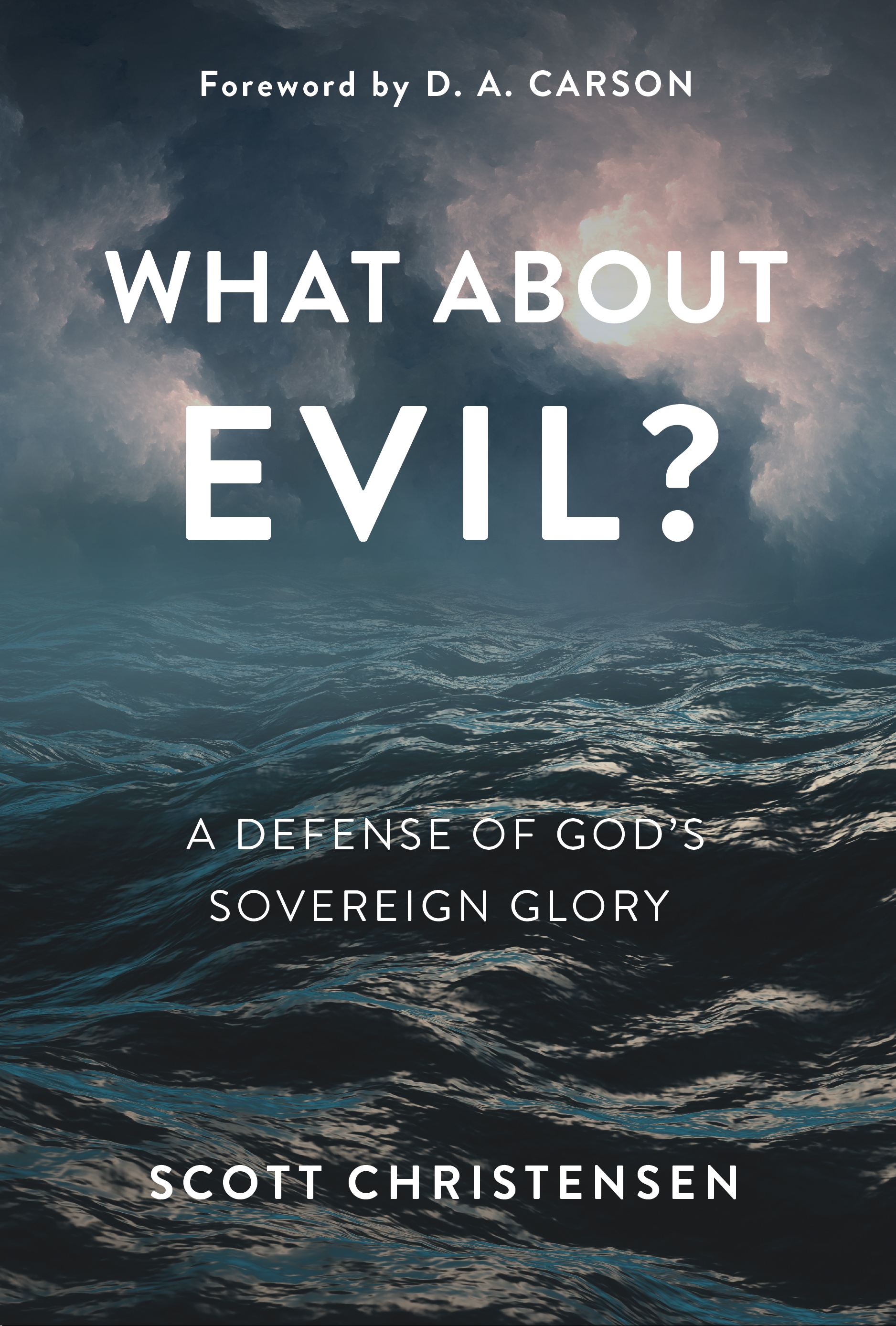
What About Evil? by Scott Christensen


What About Evil cover

Full disclosure: The following is a review of What About Evil? by Scott Christensen.  I am friends with Christensen on Facebook, although I cannot remember precisely the details of how we became Facebook friends. I suspect it’s either because of Triablogue or because of Steve Hays directly. I also received a review copy for free.  However, the following views are my own and are an honest assessment of Christensen’s book.

- - -

Christensen’s writing style is one that definitely connected with me.  When reading some authors, you can get the sense of overwhelming intellect. They use large words and technical phrases with skill, and you learn a lot from them but it also takes a lot of extra thinking to parse out those sentences.  Christensen’s style is the opposite.  It’s not that his writing is simplistic—far from it—but rather that he writes in such a manner that it is effortless to take in what he is writing about.  In other words, his meaning is plain, not convoluted. His metaphors are obvious, not strained.  And the end result is that reading a paragraph from his book is effortless.  Unlike reading a massive tome where it is a chore to grind out every sentence, Christensen’s style lends to quick, and enjoyable, reading.

Where this becomes a bit unusual is in instances where Christensen lists examples of what he is referring to.  For instance, when giving a list of natural disasters in his introduction (page 2), he includes “...the European Black Death (1347–51), Chilean earthquakes (1647), Krakatoan volcanoes (1883), Spanish flu pandemics (1918), Indonesian tsunamis (2004), Chinese coronavirus pandemics (2020), and endless twisters in Tornado Alley.” Because I am used to reading many technical treatises, my mind immediately asked “why do tornadoes not have any dates listed?  And why did he suddenly move from specific examples to the general example of tornados?  And why only tornadoes and not, say, hurricanes?” 

But of course, Christensen wasn’t trying to make any extra point by including tornadoes there.  He’s simply listing some common examples of natural evils, and the “oddity” of having tornados at the end, not fitting the format of the other items in the list, fits into Christensen’s folksy style.  This is the sort of list someone would make if they were talking extemporaneously in a conversation.

I hope none of that is taken as a criticism. In fact, I think the style of the book helps make it easier for a lay person to read.  And by pointing out the style is “folksy” that in no way means that the arguments Christensen puts forth have no weight.  Instead, it means that (in my opinion) more people will be able to benefit from this writing than if Christensen had used a more academic style.

Christensen quickly gets to the point in the book. He is looking into the various theodicies presented to oppose those who question the existence of God based on the existence of evil.  He looks at some of the more common theodicies, such as the “Free-Will Defense”, “The Natural-Law Defense”, and the “Greater-Good Theodicy” (among many others), concluding that while there are some good things in most defenses, for a Biblically-minded Christian, the view that is most faithful to Scripture is a version of the “greater-good theodicy” with “the best-of-all-possible-worlds defense.”  He dubs his own view the “Greater-glory theodicy”, in his words, “because it seeks to resolve the problem by examining what brings God the greatest glory” (p. 7).

The reason I like Christensen’s method is because he is geared so closely to holding to what the Bible teaches, and using that as the foundation for all else.  It places Christ, and His work in defeating evil, at the center of the entire context of evil in the first place.  As he writes, “[…]Christ is no conventional hero, and the cross is no conventional weapon. We do not naturally associate a hero’s victory with his death. … Yet surprisingly, in the cross, Jesus defeats evil.  Jesus defeats death by dying…. He becomes our hero by being treated as a villain” (pp. 8-9).

If you feel I’m giving away too much of the book, perhaps the low value of those page numbers will assuage you.  Christensen fully tells us all of this within the very introduction of his book!  This isn’t something he’s trying to hold off for later, to bait you in before revealing where he’s going.  As is keeping with Christensen’s “folksy” language, he has no reason to obscure anything with rhetoric and seems almost excited to get through the background information to get to the main point: the glorification of Christ.

Honestly, as someone who’s read a lot of philosophy on theodicies—and many of them quite well reasoned and argued—it’s nice to have one where the focus is so clearly on the majesty of Christ.

This is why I especially enjoyed that while Christensen took several chapters to discuss evil from a historical and philosophical standpoint, including discussing how the term can even be defined, he so quickly delves into what would even constitute a theodicy that honors God, especially in light of how secular the world is in modern days.  He examines the strengths and weaknesses of the common arguments in Chapters 5 and 6, (the weaknesses being where they lack Biblical support, and the strengths being where they have sufficient Biblical support), and then spends chapters 7 and 8 discussing the nature of God Himself and how the Bible discusses evil.  It is that Biblically-centered focus that I very much appreciated, and that’s not even getting into the section that Christensen himself identifies as the “heart” of his book: Chapters 10 – 13, where the redemptive theme of Scripture is seen as a monomyth—“one universal storyline that evokes a human longing for redemption.”  And if you’re looking for shortcuts, first of all I suggest not doing so.  But if you really want to get to the main argument, Chapter 12 of the book (specifically, beginning on page 281) presents the “greater-good theodicy” in detail.

Much more could, and should, be said about this work by Christensen.  There is a treasure of introductory-level Reformed theology throughout all its pages, and his defense being grounded in Scripture is definitely a breath of fresh air.  The Bible is the strength of the Reformed position, and Christensen does a wonderful job pulling together the various threads to support his view: philosophical, historical, and most of all theological.  While I am more intellectually driven and love the logic of the Reformed view, Chapters 10 and 11 (where Christensen spends time talking about the entire story of the Bible) was a nice change of pace.  As a dabbler in fiction, the purpose and intent of stories also speaks to me, and it’s nice for someone to remind me that God is an Author, just as much as He is an Architect or Mathematician.

My only regret is that when I read the majority of this book, it was during an unexpected foot surgery I had, and as a result the experience was not as physically pleasant as I wish it could have been.  I hope in another couple of months to re-read the book, from a new (unmedicated and pain-free) point of view to get another take on it.  It will be well worth reading again, and I highly recommend this to anyone who wants to increase their theodicy arsenal.  I rate this a solid A+, or 5 stars if we go by the Amazon scale, because it is well written, well researched, well informed, and, most of all, Biblically grounded.

Thursday, September 10, 2020

What Christians and atheists both get wrong about Intelligent Design

I recently had a conversation with a friend who brought up Intelligent Design (ID), and it reminded me of something I’ve mentioned several years ago. Given how much time has passed, I thought it was worth reiterating it now. And that is the strange fact that both atheists and Christians, especially Young Earth Creationists (YEC), both fall into the same error in thinking that ID requires the existence of God.  Atheists use this claim to argue that ID should not be taught in schools.  Christians tend to use ID as an apologetic to defend Creationism against Darwinism.

The problem is that when we see what ID claims, it’s nowhere near requiring a deity.  Put simply, ID states that the evidence we have for evolution does not make any sense if we hold to random processes causing it all.  Rather, the evidence that we see indicates that the way that organisms exist now makes sense only if they were designed to be specific ways.  That is, evolution only makes sense if it is teleological, not random.  (Teleological just means that it has an end or a goal in mind, something which Darwin specifically rejected.)

Now the temptation is that the intelligent designer of ID must be God, but that’s not actually what ID is saying.  ID is only saying that the evidence of what we see indicates that life on Earth has been designed by some form of intelligence.  Given that ID does not require a YEC view of time, this means that it is perfectly consistent with ID to limit the claims of ID strictly to something along the lines of, “The evolution of life on Earth over the past 4.5 billion years came about from an intelligent designer intending a specific outcome.”

Such a designer need not be any more intelligent than human beings already are.  In theory, if we wanted to do so, we could set up labs on Mars and grow some microscopic organisms, guiding their evolution in the lab by selecting certain breeds of organisms over others (the same as people already do for dogs and other animals), genetically modifying those that don’t have the required genetic sequences already in place to form new organisms, and we could release those organisms into the Martian wilderness.  We wouldn’t even really need a few billion years to tinker around with the life forms we’ve introduced there.  If we were to build up a sufficiently advanced life form that was able to be self-aware, and it surveyed its historical settings, looking at fossils left behind and so forth, our intelligent design of those life forms would look indistinguishable from how life forms came about on Earth, in this scenario.

Really, the only thing that is keeping humans from doing this right now is the fact that it takes a lot of time and money to get to Mars, and this isn’t something that very many people would want to spend those resources on.  But it’s easy to imagine an alien race very similar to human beings who might wish to tinker around on some planet.  They discover Earth and set up their labs on Earth, terraforming the planet and guiding the evolution of life until one day humans are on the planet.  Those aliens do not need to have any divine characteristics at all.  In fact, they could even by slightly stupider (on average) than human beings are, and still have a statistical chance of having enough smart aliens to pull off such a scenario.

And since ID is limited solely to the evolution of life on Earth, the fact that the evolution of life on Earth makes more sense from a teleological perspective than from a random perspective does not even imply the existence of God for the rest of the universe, because the aliens who created us may have come about from completely different methods.  Our evolution appears guided.  Perhaps if we saw the evidence of this hypothetical race’s origins, a completely different theory might be proposed that would not require God.

That is why ID is neither proof of the existence of God, nor should it be disbarred from being taught in schools.  It is also why Christian theists need to have better arguments against atheism (and the good news is, we do!).  Sure, ID can disprove Darwinism, but that doesn’t prove God when someone even slightly less intelligent than we are could replicate the results we see on Earth.  So while ID isn’t bad by any means, especially since it does help show how ludicrous Darwinism is, Christians need to be very wary about relying on ID as an apologetic silver bullet against materialistic Darwinists.

Wednesday, September 02, 2020

"Is David Wood's mockery Christ-like?"

1. David Wood defends his satire of Muhammad and Islam (it looks like this was filmed before Wood's most recent "mockery" which involved the "desecration" of the Quran):

The above is an excerpt, but the complete video is here:

2. I left my own comments regarding Wood's latest "mockery" in Peter's previous post.

Monday, August 31, 2020

Respecting the Unrespectable

My previous post about David Wood eating a portion of the Quran brought up some good discussion in the comments, and I wanted to bring out some of the key points here since I know there are some people who don’t read comments, and because this will help focus comments made on this post.  Thus far, the main Biblical passage being used against Wood’s tactics has been 1 Peter 3:15, with the focus being on the word “respect.”  So let’s examine the verse.

The first thing that should be noted is that 1 Peter 3:15 isn’t even a complete sentence.  It’s a portion of a sentence that, in the ESV, begins in the middle of verse 14 and goes to the end of verse 16.  The immediate context of the passage is Peter’s argument that if we are to suffer we should suffer for doing good, not for doing evil.  In establishing that context, Peter first asks: “Now who is there to harm you if you are zealous for what is good?” (1 Peter 3:13).  I have to take this as a rhetorical question since Peter knew Jesus suffered harm for being zealous for what is good, and he had suffered plenty at the hands of evil men.  That is why in the next verse he says, “But even if you should suffer for righteousness’ sake, you will be blessed” (1 Peter 3:14a).  So Peter basically begins by showing that it is less likely for us to suffer if we are doing good than if we are doing evil, but if we do suffer for doing good then we are blessed.

It is in this context that he then says, “Have no fear of them, nor be troubled, but in your hearts honor Christ the Lord as holy, always being prepared to make a defense to anyone who asks you for a reason for the hope that is in you; yet do it with gentleness and respect, having a good conscience, so that, when you are slandered, those who revile your good behavior in Christ may be put to shame.” (1 Peter 3:14b-16).  We will look at this sentence in more detail shortly below, but to confirm the context, immediately after this Peter writes: “For it is better to suffer for doing good, if that should be God’s will, than for doing evil.” (1 Peter 3:17).

So the context of the passage is the same throughout.  The sentence we are interested in is sandwiched between two statements about being persecuted for doing good.  Thus, 1 Peter 3:15, far from being a text telling you how you should approach every apologetic encounter, is actually focused on what a Christian should do when he is being persecuted.  In addition to the context being related to persecution, the exact wording of the text is saying only that we should always be “prepared to make a defense to anyone who asks you for a reason for the hope that is in you.”  This verse is not prescribing the way that you introduce the Gospel to another person, nor is it telling you how you should behave in your day to day life. It is telling you how to behave when someone asks you for the reason why you have hope, in the context of persecution.  And that makes sense, since without persecution, most people wouldn’t be curious as to why you have hope.  Hope in the face of persecution, on the other hand, is powerful.

Does this mean that we cannot expand from the immediate context and apply this to other contexts?  No, but it does mean that if you wish to apply this to other contexts then the onus is on you to provide a reason why the verse would apply to other arenas that it does not talk about in its own context.  In other words, 1 Peter 3:15 only says that we are to answer questioners—questioners who, in context, are persecuting us—with “gentleness and respect”.  The verse itself does not say that we are to treat every single person we come into contact with gentleness and respect—that needs to be argued for, not assumed.

Since people tend to miss things on controversial topics, let me be clear. I am not saying that this verse doesn’t apply to other contexts—I’m saying that if you wish to show that it applies to other contexts, you need to supply a reasonable argument making that case.  Simply saying, “1 Peter 3:15!” isn’t an argument.

Friday, August 28, 2020

How Dare You!

I know I'm more than a week late to the party, but this might be one of the most important videos online now, and not just because I found out about it due to Nameless Apologist taking offense at yet another thing that Manly Men do.  I encourage you to watch the entire video to get the full context of David Wood's actions here, but it is a bit long.  If you don't have time to watch the whole thing, you should at least familiarize yourself with the immediate context starting around the 1:40:00 mark.  But for the portion everyone is interested in, begin around 1:49:00.

That's right, David Wood...oh wait, I almost forgot. DOCTOR David Wood--who went to an actually accredited university (as opposed to an "unaccredited online university")--ate a page he tore out of the Quran!

To be fair, he spat it out after chewing for quite some time so he didn't actually eat it.  

But now Doctor Wood is being attacked by the girlie men who are afraid the feels of those who wish to murder ex-Muslims, to violate their wives, and to do unspeakable things to their children might be pained by seeing the satanic verses that inspired them to engage in such depravity gnawed on.  Especially since Allah couldn't even be bothered to cut the good Dr. Wood's aorta in retaliation.

Yes, that's right. Nameless Apologist is once again upset, not by the depravity that the demonic book drives people to commit, but by the fact that Dr. Wood did not show respect toward that evil book.  Consistency is only virtuous when you're actually hitting the target though.

How dare Dr. Wood not show at least the same respect that King Josiah showed to the Asherah poles in 2 Kings 23:14!  How dare Dr. Wood not show the same reverence that King Hezekiah showed the pagan altars in 2 Chronicles 31:1!  I mean, Nameless Apologist does not wish for us to use the example of Elijah and how he treated the prophets of Baal--he was quite adamant on this point since, he boldly declares, our hearts are black and wicked and we're not prophets. So let Josiah and Hezekiah be our examples then! They were also not prophets, and their hearts were just as "black" as ours are, having been redeemed.

But but but 1 Peter 3:15 says respect!

Yeah, and "respect" must mean what Nameless Apologist declares it to mean and it must be applied 100% in all circumstances no matter what.  Yes.  But...how much respect did Paul show Peter in Galatians 2:11-14, opposing him to his face in a shame-based society?  

You're not the apostle Paul!

Okay, but clearly you can still see that respecting a person doesn't mean respecting their idols. Right? When someone views an evil text as sacred, it is not respecting them to give RESPECT to those evil scriptures!

But they'll eat the Bible in retaliation!

So?

You know, I realized something. David Wood is a hero. Girlie men are sobbing about it.

I think 2020 is getting back to normal.