I disagreed with him on a lot of issues, but, as with anybody who does the sort of work he did, there's a lot to agree with him about and appreciate as well. Since there's so much that's false and fraudulent in religion and the paranormal, anybody who gives so much of his life to opposing that sort of thing is going to do some good in the process.
One of my memories of him is an appearance he made on "The Sally Jessy Raphael Show" in the 1980s. He was part of a panel with Ed and Lorraine Warren, Ed sitting next to Joe. You can watch it on YouTube. Go here for a segment in which Joe commented, "I've not met a house that I thought was haunted. I think the Warrens have never met a house that they didn't think was haunted." That's hyperbolic as far as the Warrens are concerned, of course, but it's a memorable way of expressing something that's true. Ed and Joe both went too far, in opposite directions.
You can read my response to Joe on the Enfield Poltergeist here. He called the magician Milbourne Christopher "one of the greatest influences on my early career as a magician turned paranormal investigator". Christopher visited the house where most of the events of the Enfield case occurred, and he probably witnessed some paranormal events while he was there. Some of those experiences were recorded on audio tape. You can read about Christopher's visit to the house and his involvement in the case more broadly here. It's a lengthy article, but you can go to the shorter section focused on Christopher to read the most relevant material.
Nickell's prominence in skeptical circles is reflected in some comments Robert Price made fifteen years ago:
"In appealing to the universal facts of human experience, Hume is being neither deductive nor circular. He is merely appealing to what everyone knows: the frequent reports of the extraordinary we hear from UFO abductees, Loch Ness Monster fans, people who see ghosts or who claim psychic powers, always seem to turn out to be bunk upon examination. Ask Joe Nickell. Ask James Randi. Ask the evangelical stage magician Andre Kole, who exposed Filipino 'psychic surgeons.'" (John Loftus, ed., The Christian Delusion [Amherst, New York: Prometheus Books, 2010], 277)
Nickell, Randi, and Kole are all dead now. There was already good evidence for the supernatural before any of them were born. There's more evidence for the paranormal now than there was then. (See, for example, here and here.) Looking to such people to debunk the paranormal as a whole has always been a false hope.

Showing posts with label Milbourne Christopher. Show all posts
Showing posts with label Milbourne Christopher. Show all posts
Sunday, March 09, 2025


Saturday, May 02, 2020
Are Magicians Misleading You About The Paranormal?
Yesterday, I posted an article about what skeptics of the Enfield Poltergeist actually experienced when they visited the house where the poltergeist was centered. Part of that post addressed the experiences of Milbourne Christopher, a famous magician who visited the house. Prior to visiting, he had researched paranormal cases for decades and had been a skeptic of the paranormal, and he was a skeptic of Enfield. The evidence suggests that he experienced paranormal events at the house, some occurring right in front of him, his arguments against the case are bad, and he never even attempted to explain (publicly, at least) the best evidence for the case. Yet, skeptics have been citing Christopher's comments on Enfield for decades.
We've discussed other examples of magicians who have behaved similarly. See here, here, and here regarding James Randi. And here on Joe Nickell. Go here for something on Richard Wiseman. And see the section of the post here on the Gold Leaf Lady and a magician who appeared on a television show about that case.
There's some value to the debunking work magicians have done on paranormal issues. But we need to keep in mind that magicians have biases and other weaknesses of their own. It makes sense to apply scrutiny to paranormal claims. Magicians can be, and often are, helpful in that process. But scrutiny needs to be applied to them and their work as well.
We've discussed other examples of magicians who have behaved similarly. See here, here, and here regarding James Randi. And here on Joe Nickell. Go here for something on Richard Wiseman. And see the section of the post here on the Gold Leaf Lady and a magician who appeared on a television show about that case.
There's some value to the debunking work magicians have done on paranormal issues. But we need to keep in mind that magicians have biases and other weaknesses of their own. It makes sense to apply scrutiny to paranormal claims. Magicians can be, and often are, helpful in that process. But scrutiny needs to be applied to them and their work as well.
Friday, May 01, 2020
What Enfield Skeptics Actually Experienced At The Hodgsons' House
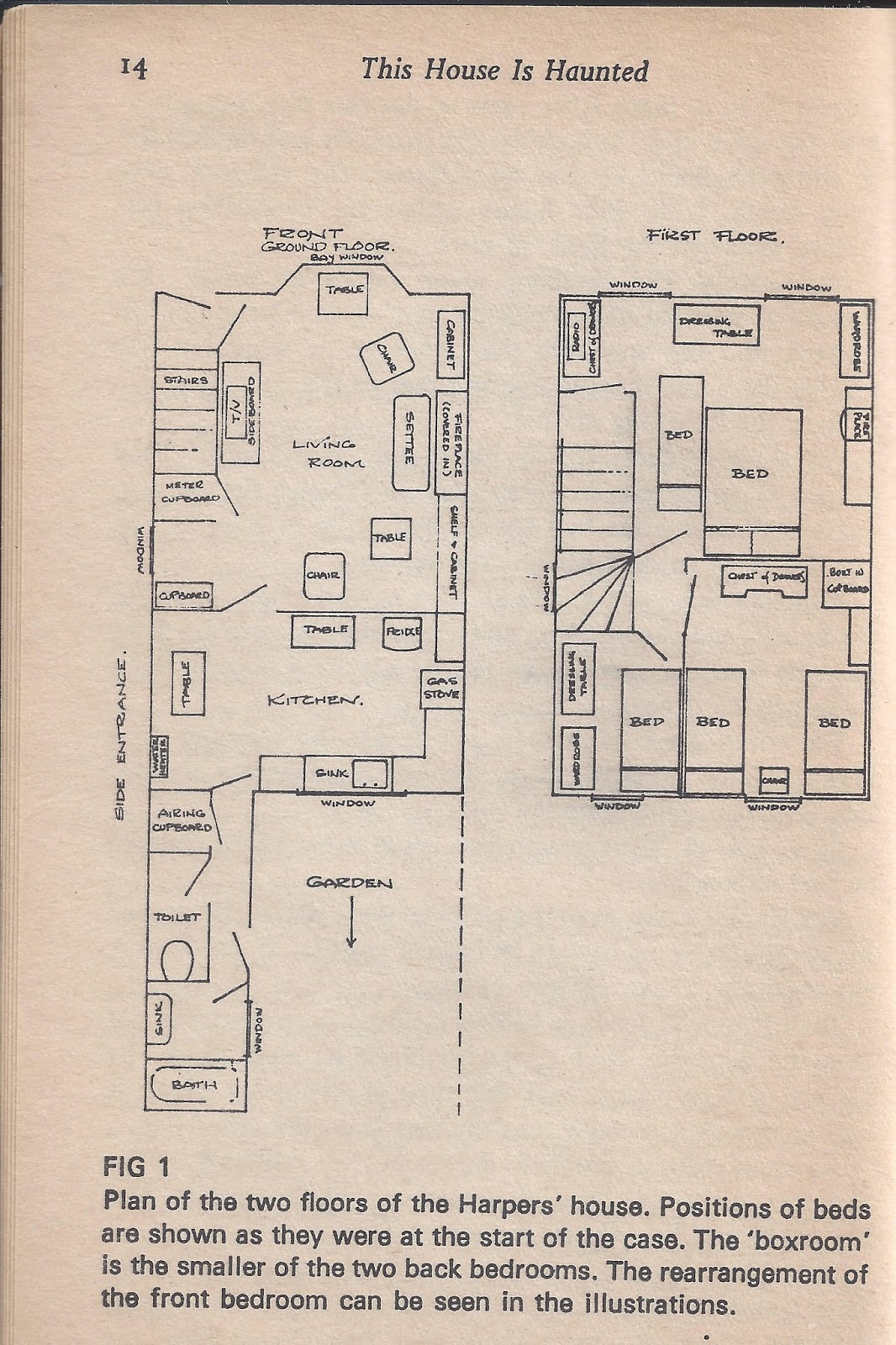
Some of the most prominent critics of the Enfield case are individuals who visited the house where most of the poltergeist phenomena occurred. People like Milbourne Christopher, John Beloff, and Anita Gregory claimed to have not experienced anything at the house, and their skepticism has been cited against the case for decades. Because I've now listened to Maurice Grosse and Guy Playfair's audio cassettes and because of some other information that's recently come to light, I want to revisit the subject of what these skeptics actually experienced when they were at the house. As we'll see, their experiences have often been misrepresented, and they do more to support than to undermine the authenticity of the case.
It's useful to know the layout of the house, so go here to see a floor plan. I'll use "MG" to designate a tape from Grosse's collection and "GP" to designate one from Playfair's. MG8A is Grosse's tape 8A, GP21A is Playfair's 21A, etc.
It's useful to know the layout of the house, so go here to see a floor plan. I'll use "MG" to designate a tape from Grosse's collection and "GP" to designate one from Playfair's. MG8A is Grosse's tape 8A, GP21A is Playfair's 21A, etc.
Thursday, May 04, 2017
The Enfield Poltergeist: Deborah Hyde's Skepticism
(Earlier posts in the series: part 1, part 2, part 3, part 4, part 5.)
In 2012, Deborah Hyde appeared on a television program with Janet Hodgson, the individual the Enfield Poltergeist centered around, and Guy Playfair, one of the chief investigators of the case. It was an opportunity for Hyde, a prominent skeptic of the paranormal in general, to cross-examine two witnesses and demonstrate the strength of the skeptical case against Enfield. How did she do?
Poorly. When she wasn't speaking in generalities that fail to address the details of the Enfield case, she was often misrepresenting the few details she did address.
In 2012, Deborah Hyde appeared on a television program with Janet Hodgson, the individual the Enfield Poltergeist centered around, and Guy Playfair, one of the chief investigators of the case. It was an opportunity for Hyde, a prominent skeptic of the paranormal in general, to cross-examine two witnesses and demonstrate the strength of the skeptical case against Enfield. How did she do?
Poorly. When she wasn't speaking in generalities that fail to address the details of the Enfield case, she was often misrepresenting the few details she did address.
Subscribe to:
Posts (Atom)