Andy Naselli has published and made freely available a paper in response to Ben Witherington on suffering and evil in Job titled, "From Typology to Doxology: Paul's Use of Isaiah and Job in Romans 11:34–35."

Thursday, November 21, 2013


Lloyd-Jones on cessationism
A commenter has left some documentation which is worth posting in its own right.
- In Chapter 8 of The Baptism and Gifts of the Spirit, a chapter titled “Gifts that Authenticate”, Martyn Lloyd-Jones tackles the issue of the gifts of the Holy Spirit:
“It has certain inherent difficulties, which often arise because of our ignorance of the spiritual realm, but at this time it is a very important matter for two main reasons. The first is that we need some supernatural authentication of our message; and secondly, it is important because of the danger attending it, because of the enemy, who can counterfeit to such an extent as almost to deceive, according to our Lord and Saviour, ‘even the very elect themselves” (152).
After a brief rehearsal of the New Testament passages showing God attesting the message by miraculous deeds (152-155), he asks:
“Now I believe I am right in saying that everyone who is a Christian in any sense at all is prepared to believe and to accept that these things happened, but it is here that the vital question arises—do we accept it as being only true of the early church? Was it only meant to be true of the early church? This is the question to which we must now address ourselves” (155).
He then addresses the arguments of “people who say, ‘Of course I accept everything that I find in the New Testament. I am sure it is historical and that these things actually happened. But that really does not apply to us now, it was only meant for that time’” (156), outlining the arguments of those who believe these extraordinary activities were meant to convince unbelieving Jews (156), that they were intended for the beginning of the Christian church to get the church going (156-157), and that they occurred only until the New Testament canon was completed, with their appeal to 1 Corinthians 13.8-10 (157-159). -
(Cont...)
Lloyd-Jones rejects this cessationist argumentation:
“There, then, is an outline of the argument that is being put forward at the present time, and which has been put forward very largely during this present century. Let me begin to answer it by giving you just one though at this point. It is this: the Scriptures never anywhere say that these things were only temporary – never! There is no such statement anywhere. ‘Ah but’, says somebody, ‘what about that passage from 1 Corinthians 13?’ Well, I would have thought that that chapter is sufficient answer in and of itself to this particular criticism. You see what we are asked to believe by that kind of exposition” We are told that the coming of the New Testament Scriptures puts us into a place of perfection; whereas if you look at verse 12 it actually says: ‘For now we see’ – that is the apostle and others. The apostle is included with all other Christian believers before the New Testament canon, much of which was written by Paul himself, had been completed. We read: ‘Now we see through a glass, darkly; but then’ – when the Scriptures have come and are complete – ‘face to face: Now I know in part; but then’ – which they say means the completion of the Scriptures – ‘shall I know even as also I am known.’
“You see what that involves? It means that you and I, who have the Scriptures open before us, know much more than the apostle Paul of God’s truth. That is what it means and nothing less, if that argument is correct. It means that we are altogether superior to the early church and even to the apostles themselves, including the apostle Paul! It means that we are not in a position in which we know ‘face to face’ that ‘we know, even as also we are known’ by God because we have the Scriptures. It is surely unnecessary to say more.
“What the apostle is, of course, dealing with in 1 Corinthians 13 is the contrast between the highest and the best that the Christian can ever know in this world and in this life and what he will know in the glory everlasting. The ‘now’ and the ‘then’ are not the time before and after the Scriptures were given, because that, as I have said, puts us in a position entirely superior to the apostles and prophets who are the foundation of the Christian church and on whose very work we have to rely. It is inconsistent, and contradictory – indeed, there is only one word to describe such a view, it is nonsense. The ‘then’ is the glory everlasting. It is only then that I shall known, even as also I am known; for then we shall see him as he is. It will be direct and ‘face to face’. No longer, as Paul puts it again in 2 Corinthians 3:18– as an image or a reflection, but direct, absolute, full and perfect knowledge.
“So you see the difficulties men land themselves in when they dislike something and cannot fully understand it and try to explain it away. All things must be judges in the light of the Scriptures, and we must not twist them to suit our theory or argument. Let me finish with this general statement – there is nothing in the Scripture itself which says that these things are to end, and further, every attempt to make the Scriptures say that leads to the same dismal, impossible conclusions that we have already seen in the case of 1 Corinthians 13.
“My friends, this is to me one of the most urgent matters at this hour. With the church as she is and the world as it is, the greatest need today is the power of God through his Spirit in the church that we may testify not only to the power of the Spirit, but to the glory and the praise of the one and only Saviour, Jesus Christ our Lord, Son of God, Son of Man” (159-160).
- D. Martyn Lloyd-Jones, The Baptism and Gifts of the Spirit, Baker Book, 1994 -
FAITH HEALING AND JAMES MAYNARD
“My Dear Gerald,
“Many thanks for your most kind letter. Strangely enough an almost identical one arrived from the authorities of the Sudan Interior Mission except that they had no reference to Maynard James’s booklet.
“With regard to the latter my attitude is this. He belongs to ‘The Church of the Nazarenes’ and they are very good people with whom I am in agreement apart from one thing, namely, that they believe the Baptism with the Holy Spirit confers entire sanctification. In other words they are really the followers of the teaching of John Wesley on holiness. When Maynard James originally sent me this booklet I pointed out of course our disagreement at this point but was able to say that I thought his terms of ‘tongues’ was excellent and balanced.
“On this question of faith-healing I certainly agree with him. I expressed my disagreement with the view put in the Christian Medical Fellowship publication at the time. I think it is quite without scriptural warrant to say that all these gifts ended with the apostles or the apostolic era. I believe there have been undoubted miracles since then. At the same time most of the claimed miracles by the Pentecostalists and others certainly do not belong to that category and can be explained psychologically or in other ways. I am also of the opinion that most, if not all, of the people claiming to speak in tongues at the present time are certainly under a psychological rather than a spiritual influence. But again I would not dare to say that ‘tongues’ are impossible at the present time.”
(D. Martyn Lloyd-Jones: Letters 1919-1981, Banner of Truth, 1994, pp. 201-202) -
LLOYD-JONES DISAGREEMENT WITH WARFIELD ON CESSATIONISM: MIRACULOUS HEALING
“There was a measure of different between Dr Lloyd-Jones and other members of the Christian Medical Fellowship on this subject [miraculous healing]. The tendency of these colleagues, in his opinion, came too near to excluding any expectation of the supernatural or, at least, to excluding the possibility of gifts of healing on the grounds of Warfield’s argument that being the ‘accompaniments of apostleship’ they ceased with the apostolic age. A Memorandum on Faith Healing, published ‘for private circulation’ by the CMF in 1956, argued for the cessation of such miraculous gifts but although the committee which produced this Memo was chaired by ML-J he did not accept that part of the argument....”
“In passing it is important to note that the strength of B. B. Warfield’s influence in UCCF and CMF circles was related to ML-J’s advocacy of his writings. It was ML-J who had done most to re-introduce Warfield’s writings in England with the testimony that for conservative evangelicals probably no works have ‘proved to be of greater practical help and a greater stimulus’ than those of ‘the greatest exponent, expounder and defender of the classic Reformed faith in the 20th century’ (Introduction to Biblical Foundations, IVF, 1958). This explains why ML-J in his addresses to CMF colleagues made such a point of disagreeing with the Princeton divine whose influence, in all other respects, he rejoiced to see extended”
Iain H. Murray, D. Martyn Lloyd-Jones: The Fight of Faith 1939-1981, The Banner of Truth Trust, 1990, p. 786

The Antichrist or the Pope? I Smell a Conspiracy
In the Amazon Hot New Releases in Christian Theology for my book and the Popes, you can interpret this two ways:
(1) I am edging out the Pope in the Amazon rankings.
Or
(2) The Chris Pinto interpretation: since my book and the Pope's were published within 24 hours, and since Scott Hahn who wrote the foreword to Pope Francis' book attended the same seminary as I did, Gordon-Conwell Theological Seminary, he must smell a Jesuit conspiracy!

(1) I am edging out the Pope in the Amazon rankings.
Or
(2) The Chris Pinto interpretation: since my book and the Pope's were published within 24 hours, and since Scott Hahn who wrote the foreword to Pope Francis' book attended the same seminary as I did, Gordon-Conwell Theological Seminary, he must smell a Jesuit conspiracy!
Calvinism is Flourishing in China
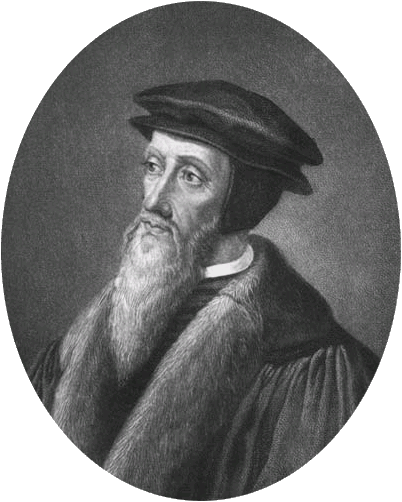 Calvinism is Flourishing in China
John Calvin was a Frenchman, but he is being remembered in Geneva this week because it was here that he built Calvinism. Invited to reform the city in 1541, almost as what would now be called a management consultant, he formed an alliance with the city fathers. Over the next 20 years of preaching and pastoring they turned this tiny city, with a population then of only 10,000, into a model of church government and theology which has changed the world.
His followers now form the third-largest Christian grouping in the world. The world alliance of reformed churches claims 75 million members, and while this is a lower headline figure than the Anglican Communion's 80 million, it is not inflated by 25 million nominal Anglicans in Britain.
Although Calvinism is shrinking in western Europe and North America, it is experiencing an extraordinary success in China. I spent some time on Monday talking to the Rev May Tan, from Singapore, where the overseas Chinese community has close links with mainland China. The story she told of the spread of Calvinist religion as an elite religion in China was quite extraordinary. There may be some parallels with the growth of Calvinism in South Korea, where the biggest presbyterian churches in the world are to be found, but it's absolutely unlike the pattern in Africa and Latin America. There, the fastest growing forms of Christianity are pentecostal, and they are spreading among the poor.
But in China neither of those things are to be true.
Calvinists despise pentecostalists. They shudder at unbridled emotion. If they are slain in the spirit, it is with a single, decorous thump: there's to be no rolling afterwards. And in China, the place where Calvinism is spreading fastest is the elite universities, fuelled by prodigies of learning and translation. Wang Xiaochao, a philosopher at one of the Beijing universities, has translated the two major works of St Augustine, the Confessions and the City of God, into Chinese directly from Latin. Gradually all the major works of the first centuries of the Christian tradition are being translated directly from the original languages into Chinese.
All of this is happening outside the control of the official body which is supposed to monitor and supervise the churches in China. Instead, it is the philosophy departments at the universities, or the language departments and the departments of literature and western civilisation that are the channel.
"The [officially recognised] churches are not happy with universities, because it is not within their control. And their seminaries are not at the intellectual level of the universities," says Dr Tan. "Chinese Christianity using Chinese to do Christian thinking has become a very interesting movement."
Read more
HT: Peter Escalante
Wednesday, November 20, 2013
Was Martyn Lloyd-Jones a cessationist?
I'm going to comment on a few statements by Frank Turk:
The problem with your question, however, is that is stands on one faulty assertion: that if I have experienced any of the ordinary outworking of the Holy Spirit, I have to concede all on-going extraordinary outworkings of the Holy Spirit. I don’t have to do any such thing – especially when they are allegedly presented to me for my personal “amen,” what I find is a list of hunches, anecdotes, oceans of people who cannot be accounted for, and not anything that looks even like the moment in Acts 3 when Peter and John healed the Lame Beggar – let alone Lazarus or Eutychus.
Are the examples of Spurgeon's clairvoyance just lucky" hunches"? How does that reflexive, dismissive attitude differ from Paul Kurtz, James Randi, or Martin Gardner? And that's just one set of examples. What about examples from the Covenanters? Are those just lucky hunches?
What's wrong with anecdotal evidence? Remember, cessationism posits a universal negative. Although you can't extrapolate a general pattern from anecdotal cases, you don't need to. It only takes one good counterexample to disprove a universal negative.
On the one hand, MarArthurites say church history disproves noncessationism. On the other hand, if they are going to summarily discount every counterexample as "anecdotal" or a lucky "hunch," then the appeal to church history is just a sham. They don't really care about testimonial evidence from church history.
You think Spurgeon would endorse the so-called Charismatic ministries today? Or that Lloyd-Jones was somehow commending the Pentecostals when he was condemning them?
This is another example of Turk trying to win the debate by controlling the terminology. The question at issue isn't if Lloyd-Jones was Pentecostal, but whether he was a cessationist. Commenting on demonic possession, Lloyd-Jones says:
So the work of healing is done by means of prayer but, secondly, there is also exorcism, which is the casting out of evil spirits. It may be that this is a subject that we have neglected, not only on the mission field, but, perhaps, in this country of ours as well. Clearly, power to cast out devils is available to those who are spiritual. Not Against Flesh and Blood (Christian Focus Publications), 89.
And here's a more extensive exposition of his position, including more examples:
Was Spurgeon clairvoyant?
I'm going to comment on a statement by Frank Turk. But before I get to that, let's put the debate in context by furnishing some background information:
While preaching in the hall, on one occasion, I deliberately pointed to a man in the midst of the crowd, and said, `There is a man sitting there, who is a shoemaker; he keeps his shop open on Sundays, it was open last Sabbath morning, he took nine pence, and there was four pence profit out of it; his soul is sold to Satan for four pence!' A city missionary, when going his rounds, met with this man, and seeing that he was reading one of my sermons, he asked the question, `Do you know Mr Spurgeon?' `Yes,' replied the man `I have every reason to know him, I have been to hear him; and under his preaching, by God's grace I have become a new creature in Christ Jesus. Shall I tell you how it happened? I went to the Music Hall, and took my seat in the middle of the place: Mr Spurgeon looked at me as if he knew me, and in his sermon he pointed to me, and told the congregation that I was a shoemaker, and that I kept my shop open on Sundays; and I did, sir. I should not have minded that; but he also said that I took nine pence the Sunday before, and that there was four pence profit; but how he should know that, I could not tell. Then it struck me that it was God who had spoken to my soul through him, so I shut up my shop the next Sunday. At first, I was afraid to go again to hear him, lest he should tell the people more about me; but afterwards I went, and the Lord met with me, and saved my soul.'
While preaching in the hall, on one occasion, I deliberately pointed to a man in the midst of the crowd, and said, ‘There is a man sitting there, who is a shoemaker; he keeps his shop open on Sundays, it was open last Sabbath morning, he took ninepence, and there was fourpence profit out of it; his soul is sold to Satan for fourpence!’ A city missionary, when going his rounds, met with this man, and seeing that he was reading one of my sermons, he asked the question, ‘Do you know Mr. Spurgeon?’ ‘Yes,’ replied the man, ‘I have every reason to know him, I have been to hear him; and, under his preaching, by God’s grace I have become a new creature in Christ Jesus. Shall I tell you how it happened? I went to the Music Hall, and took my seat in the middle of the place; Mr. Spurgeon looked at me as if he knew me, and in his sermon he pointed to me, and told the congregation that I was a shoemaker, and that I kept my shop open on Sundays; and I did, sir. I should not have minded that; but he also said that I took ninepence the Sunday before, and that there was fourpence profit out of it. I did take ninepence that day, and fourpence was just the profit; but how he should know that, I could not tell. Then it struck me that it was God who had spoken to my soul through him, so I shut up my shop the next Sunday. At first, I was afraid to go again to hear him, lest he should tell the people more about me; but afterwards I went, and the Lord met with me, and saved my soul.'
“I could tell as many as a dozen similar cases in which I pointed at somebody in the hall without having the slightest knowledge of the person, or any idea that what I said was right, except that I believed I was moved by the Spirit to say it; and so striking has been my description, that the persons have gone away, and said to their friends, ‘Come, see a man that told me all things that ever I did; beyond a doubt, he must have been sent of God to my soul, or else he could not have described me so exactly.’ And not only so, but I have known many instances in which the thoughts of men have been revealed from the pulpit. I have sometimes seen persons nudge their neighbours with their elbow, because they had got a smart hit, and they have been heard to say, when they were going out, ‘The preacher told us just what we said to one another when we went in at the door.
The Autobiography of Charles H. Spurgeon (London: Curts & Jennings, 1899), 2:226-27.
Let's compare that with some biblical examples:
But a man named Ananias, with his wife Sapphira, sold a piece of property, 2 and with his wife's knowledge he kept back for himself some of the proceeds and brought only a part of it and laid it at the apostles' feet. 3 But Peter said, “Ananias, why has Satan filled your heart to lie to the Holy Spirit and to keep back for yourself part of the proceeds of the land? (Acts 5:1-3).
24 But if all prophesy, and an unbeliever or outsider enters, he is convicted by all, he is called to account by all, 25 the secrets of his heart are disclosed, and so, falling on his face, he will worship God and declare that God is really among you (1 Cor 14:24-25).
But when Naaman had gone from him a short distance, 20 Gehazi, the servant of Elisha the man of God, said, “See, my master has spared this Naaman the Syrian, in not accepting from his hand what he brought. As the Lord lives, I will run after him and get something from him.” 21 So Gehazi followed Naaman. And when Naaman saw someone running after him, he got down from the chariot to meet him and said, “Is all well?” 22 And he said, “All is well. My master has sent me to say, ‘There have just now come to me from the hill country of Ephraim two young men of the sons of the prophets. Please give them a talent of silver and two changes of clothing.’” 23 And Naaman said, “Be pleased to accept two talents.” And he urged him and tied up two talents of silver in two bags, with two changes of clothing, and laid them on two of his servants. And they carried them before Gehazi. 24 And when he came to the hill, he took them from their hand and put them in the house, and he sent the men away, and they departed. 25 He went in and stood before his master, and Elisha said to him, “Where have you been, Gehazi?” And he said, “Your servant went nowhere.” 26 But he said to him, “Did not my heart go when the man turned from his chariot to meet you? Was it a time to accept money and garments, olive orchards and vineyards, sheep and oxen, male servants and female servants? (2 Kgs 5:19-26).
8 Once when the king of Syria was warring against Israel, he took counsel with his servants, saying, “At such and such a place shall be my camp.” 9 But the man of God sent word to the king of Israel, “Beware that you do not pass this place, for the Syrians are going down there.” 10 And the king of Israel sent to the place about which the man of God told him. Thus he used to warn him, so that he saved himself there more than once or twice.11 And the mind of the king of Syria was greatly troubled because of this thing, and he called his servants and said to them, “Will you not show me who of us is for the king of Israel?” 12 And one of his servants said, “None, my lord, O king; but Elisha, the prophet who is in Israel, tells the king of Israel the words that you speak in your bedroom.”32 Elisha was sitting in his house, and the elders were sitting with him. Now the king had dispatched a man from his presence, but before the messenger arrived Elisha said to the elders, “Do you see how this murderer has sent to take off my head? Look, when the messenger comes, shut the door and hold the door fast against him. Is not the sound of his master's feet behind him?” (2 Kgs 6:8-12,32).
These are Biblical examples of prophetic clairvoyance, involving extrasensory knowledge of what people are thinking or planning. Private conversations. That sort of thing. Compare that with Spurgeon's self-reports.
Now for Frank's statement:
Your question assumes Spurgeon gave up his “experiences” without any comment or reference to what we should make of Charismatic outbursts.
In fact, as I read the evidence on the internet, you are the person who invented the argument that Spurgeon was, in fact, some kind of cautious Charismatic – and for that, you should be hung out to dry. Only Sam Storms has had the temerity to say that even if we accept the reports with no comment, Spurgeon himself did not see them as “charismatic gifts,” but the army of people foisting this argument on the world cannot see this glaring problem. In the same way we should interpret Isaiah’s view of Isaiah as normative, we should see Spurgeon’s view of Spurgeon as normative and not make the man into some sort of imbecile who cannot detect the presence of God. We should interpret Spurgeon’s experiences the way Spurgeon did and not the way you (conveniently) frame them.
Spurgeon rejected the idea of ongoing Apostolic, miraculous gifts. Saying he didn’t because he had some experiences of intuition or wisdom is like saying that there are more prophets in the past we ought to be looking for because they had words from God --but because they denied they were actually God’s words, we may have lost them. That is: we can’t really trust people to know if God spoke to them or not. If I were looking to score points, I’d say, “but of course, that’s actually how you frame modern prophecy,” but I am not looking to score points. I’m trying to answer this question in spite of its lopsided and (it seems) self-ignorant biases.
Spurgeon rejects your argument here. I’ll let him speak for himself about his own life and experience.
http://teampyro.blogspot.com/2013/11/a-cornucopia-of-good-will.html
i) Frank is recasting the issue in tendentious terms. The issue isn't how to classify Spurgeon's theology, but how to classify his experience. Whether Spurgeon would classify himself as a charismatic is a red herring. The real question is how we should classify his experience. This is not, in the first place, a question of how to classify the man, but how to classify his experience. Do these cases qualify as prophetic knowledge, or even the "gift of prophecy," according to Biblical exemplars? Frank's reply is evasive.
To take a comparison: suppose a patient goes to the doctor. Not only does he describe his symptoms, but he tells the doctor that he's sure he was suffering a heart attack.
However, the doctor disregards the patient's self-diagnosis. He's only interested in the patient's symptoms. Based on the symptoms (and other tests), the doctor will perform his own diagnosis. The fact that the patient interprets his symptoms as angina is irrelevant to his actual condition. Maybe it's just heartburn or acid reflux. There's an elementary distinction between the patient's self-reported symptoms, and the patient's self-diagnosis.
ii) Spurgeon's experience is cited because he's a prima facie credible witness. So what's the best explanation for his apparently supernatural insights? In theory, these are the possibilities:
a) The primary or secondary sources were forged. These attributions are spurious.
I can't disprove that. However, Spurgeon was a famous man who lived in the 19C. The primary source material is extant. He's widely studied by church historians and other scholars. Is there any evidence that the sources were forged? The onus is on the skeptic.
b) It was just coincidental.
Given the detailed specificity of the cases, it's implausible to chalk it up to coincidence, especially when the examples are cumulative. That's a last-ditch explanation, if you had an a priori commitment to a naturalistic explanation.
c) Spurgeon was mistaken.
It's hard to see how he could be mistaken about anything that specific. Where's the ambiguity?
d) Spurgeon was lying.
That's possible. However, Spurgeon didn't make his reputation as a clairvoyant. And it comes down to the question of which is more plausible: was Spurgeon a conman or a devout Christian? If you're an atheist, then a naturalistic explanation is always preferable. But why would a Christian opt for that explanation in Spurgeon's case?
e) Spurgeon was a demoniac.
If (d) is implausible, (e) is even less plausible.
Hope for Carl Trueman: “When chess beats lingerie models”

It appears as if the current World Chess Championship (between champion Viswanathan Anand of India and Magnus Carlsen of Norway) is garnering higher viewership on the GQ site than is a photo spread featuring Victoria’s Secret models.
Fully 700,000 viewers tuned in when NRK started up its live broadcasts during the weekend, reported media website Kampanje. Even though the games going on in Chennai, India begin mid-morning in Norway (10:30am local time), NRK is claiming strong viewership in a country of just 5 million people….
India has seen massive coverage itself in all media outlets as expected, but going beyond the plain game summaries….
Still, the story that stood out far beyond any other, was reported by GQ Magazine. GQ is a specialized magazine for men’s fashion and style, and recently published a massive photoshoot of 100 models in Victoria Secrets lingerie….
That it was massively popular is no surprise, but what was a surprise, as tweeted by GQ itself, was that this story was losing out to another story posted the same day. You guessed it: the world chess championship….
I am glad to see that a real confessional Presbyterian has finally joined the discussion at First Things. Perhaps that is an admission that their Friday regular is not a real Protestant? That, too, would be a common grace.
Tuesday, November 19, 2013
Red Dawn
Years ago there was a hokey Cold War film called Red Dawn. Turns out, it was half right–only the invasion force is actually directed from 1600 Pennsylvania Avenue rather than the Kremlin.
http://www.nbcdfw.com/news/local/North-Texas-Drivers-Stopped-at-Roadblock-Asked-for-Saliva-Blood-232438621.html
http://www.nbcdfw.com/news/local/North-Texas-Drivers-Stopped-at-Roadblock-Asked-for-Saliva-Blood-232438621.html
MacArthurite mythmakers
I'm going to comment on the latest delusional statements by Ed Dingess.
I have argued in previous posts that those who accuse John MacArthur's "Strange Fire" of painting the mainstream charismatics (whatever that is) with a fringe brush do so without any evidence whatever. In fact, I have argued that all the evidence suggest that men like Carson and Grudem are the ones on the fringe while the mainstream is busy speaking gibberish, barking like dogs, and singing the praises of Benny Hinn and Joel Olsteen. Well, Fred Butler has shared a post by Mennoknight over at "Watch Your Life and Doctrine Closely" that I think you might find enlightening. The argument from bloggers like Hays simply does not comport with the facts.
Here we see a legend in the making. This is how legends are born, as well as how legends are perpetuated. And, unfortunately, it's a hallmark of a cult mentality. Cults create legendary histories about their theological opponents. Cult members get their "facts" from the cult leaders. Their knowledge of the outside world is mediated through the writings of the cult leader. They accept his version of the facts as undoubtedly true. They don't to back to read what their opponents firsthand.
The legendary history goes unchallenged within the cult, both because of the general groupthink mentality as well as because questioning the in-house legends would render you suspect in the eyes of your fellow adherents. That would be disloyal. Mustn't express skepticism about what your elders and better tell you.
One legendary meme which MacArthurites are perpetuating is the attribution that cessationists should judge continuationism by its best representatives because we think the charlatans aren't truly representative of the charismatic movement. We think that's just the lunatic fringe, whereas the reputable spokesmen reflect the mainstream. MacArthurites keep drilling this meme into the minds of their dutiful followers.
However, I've never said that someone like Benny Hinn is just a fringe figure in the charismatic movement. Dingess imputes to me an argument I never use, then proceeds to disprove the argument he imputed to me. The exercise is circular from start to finish.
To begin with, there's an elementary difference between judging a movement and judging its ideology. Whether the ideology is true or false is something we ought to judge by considering the best arguments of its most sophisticated exponents.
If these freaks were not the mainstream, how is it that they have such large followings, live such lavish lifestyles, and are able to sell so many books and have so many people watching their programs? The only way this many Charismatic leaders can rise to such prominence and live such lucrative lifestyles is because they are supported by the mainstream of the Charismatic movement. There is no other plausible explanation.
As noted above, he's attacking an argument I never made. The whole post is an exercise in misdirection. But since he brings it up, let's consider his argument.
There are estimated to be around 500 million charismatics worldwide. Of course, that's a loose figure. But let's grant the figure for the sake of argument. If someone has a more accurate figure, feel free to mention it.
Now, as a statistical share of the overall movement, it only takes an infinitesimal fraction to support a lavish lifestyle. Let's take some comparisons. The Bhagwan Rajneesh had a fleet of 93 Rolls Royces, private jets, and diamond-studded Swiss watches. Yet there were only a few thousand members of his commune. Fewer than many megachurches.
Or take Joel Gregory, short-lived successor to W. A. Criswell. He became disillusioned when he discovered all the perks of being senior pastor of the SBC flagship: the mansion, the expense account, free airfare, memberships in exclusive country clubs, luxury box seats at Dallas Cowboy games. He wrote an exposé of his experience: Too Great A Temptation: the Seductive Power of America's Super Church.
It didn't require a wide following to foot the bill. Just the members of his local church. A big church, to be sure, but a church is not a movement.
Unfortunately, there's a perpetual appetite for schlockmeisters. Hal Lindsey and Tim LaHaye made a killing off of their pulp Dispensational bestsellers. So we could turn Ed's argument against Dispensationalism. But even if Lindsey and LaHaye reflect the Dispensational "mainstream" of the movement, it wouldn't be intellectually honest to judge the truth or falsity of Dispensationalism by that sociological phenomenon.
But I am sure Steve Hays will do his best to find one...even if it costs him what little remains of his credibility at this point.
I didn't realize that Dingess was the Tooth Fairy Godmother of my credibility. Who knew that Ed Dingness confers or withholds credibility?
Manumission
Infidels like to raise moral objections to Christianity. For instance, they try to tar Christianity with the evils of slavery and racism. By way of comment:
i) You have slavery under secular regimes. Stalin had forced labor camps for his public works projects.
ii) Of course, when an atheist does it, fellow atheists assure us that that has nothing essentially to do with atheism. But why not?
Even if, for the sake of argument, we say that Stalin's policy wasn't motivated by atheism, there's still the question of how an atheist is in any position to condemn it. From a naturalistic evolutionary standpoint, why is it wrong of human animals to enslave members of their own species?
iii) There's also the question of how to interpret the historical record. Let's take some examples. From what I've read, the first slave code in South Carolina was enacted in 1690. It was oppressive and unjust. However, it's striking to consider what it didn't regulate. It didn't outlaw manumission. Then the code was amended in 1712 to outlaw the manumission of the children of white men and slave women. And it was not until 1841 that a general prohibition against manumission was enacted. For 150 years prior, that was permissible under some circumstances. So this is clearly a rear-guard action.
This means that even if a master wanted to manumit his slaves, he no longer had the authority to do so. The law didn't recognize the status of his emancipated slaves. Likewise, the perceived need to enact these laws presumes that whites had to be prevented from emancipating slaves. In that case, you can't just assume that any given white Southerner was racist. For if they all supported the institution of slavery, why these belated laws to eliminate loopholes in the system? Clearly, some were undermining the system by releasing their slaves.
On a related note, atheists may think the anti-miscegenation laws were motivated by theories of white superiority. To safeguard the purity of Aryan bloodlines. But from what I've read, the anti-miscegenation laws were originally designed to protect slavery. The children of slaves were slaves. But what about the children of slaves and a white mother or father? Since white parents were free, would their children be free? From what I've read, the purpose of the anti-miscegenation laws was forestall that dilemma. As such, anti-miscegenation laws ironically expose the morally arbitrary nature of race-based slavery. And Jim Crow-era anti-miscegenation laws reflect the same motivations and internal tensions. They prohibit white behavior as much as black behavior.
Critical biblicism
i) "Biblicist" is typically a term of abuse. Likewise, those who use "biblicist" as a term of abuse frequently distinguish between (bad) solo Scriptural and (good) sola Scriptura. Keith Mathison popularized this distinction. Unfortunately, it's an unstable distinction which Catholic apologists can and do exploit.
I think it would be better to distinguish between, say, naive biblicism and critical biblicism.
ii) By "naive biblicism" I mean the illusion of presuppositionless exegesis. That we come to the Bible as a blank slate, and Scripture pencils its theology directly onto our blank slate.
It's become a popular cliche to point out that this is self-delusive. We all bring certain preconceptions to our reading of Scripture. This may involve general cultural conditioning or specific theological conditioning. This is called the hermeneutical circle.
iii) Some Christians, such as "confessional Calvinists," think the solution to "biblicism" is confessionalism. A document like the Westminster Confession supplies the presuppositions. That's our hermeneutical grid. But there are a couple of basic problems with that solution:
a) It simply relocates the problem. It substitutes naive confessionalism for naive biblicism. Solo confessionalism for solo scripturalism. For just as there's no such thing as the presuppositionless exegesis of Scripture, there's no such thing as the presuppositionless exegesis of the Westminster Confession. We're not 17C Puritans. We don't naturally inhabit their intellectual universe. The deceptively simple language of the Confession conceals centuries of theological debate. Modern readers coming to the text bring their own presuppositions. Unsuspecting readers don't catch the historical connotations of period usage.
b) A deeper problem is this: the Confession itself needs to derive its theology from Scripture. If you begin with the Confessional as your interpretive grid, then that prejudges the meaning of Scripture. That takes the truth of the Confession for granted. The Confession needs to be used as a summary of some key Biblical doctrines, rather than the interpretive key.
iv) Some people never get beyond the hermeneutical circle. They think that's an inescapable recipe for hermeneutical relativism. Since we all bring presuppositions to Scripture, we never break out of that viciously circular exercise.
But that fails to distinguish between naive biblicism and critical biblicism. You can cultivate an awareness of your hitherto unquestioned presuppositions. Once you become self-conscious of your operating presuppositions, you can compare and contrast your operating presuppositions with the teaching of Scripture. Scripture can correct your presuppositions. Give you new presuppositions. It's a dialectical process in which some of your governing assumptions are confirmed by the study of Scripture while others are challenged and overturned.
One way of becoming presuppositionally self-aware is to acquaint yourself with competing interpretations or competing theological traditions. That can make you conscious of interpretive possibilities which wouldn't otherwise occur to you. Help your break out of one myopic way of looking at the text. You can then test these alternatives against the text of Scripture. Which has more explanatory power? Which is able to harmonize and integrate more data?
v) It's also quite possible to get your interpretation right the very first time. Much of Scripture is pretty straightforward.
Subscribe to:
Posts (Atom)